
BERGER LAHR FT2000 Modules
BERGER LAHR FT2000 Series: Comprehensive Module Range and Technical Overview The BERGER LAHR FT2000 series represents a mature generation of…
Model: WD3-007
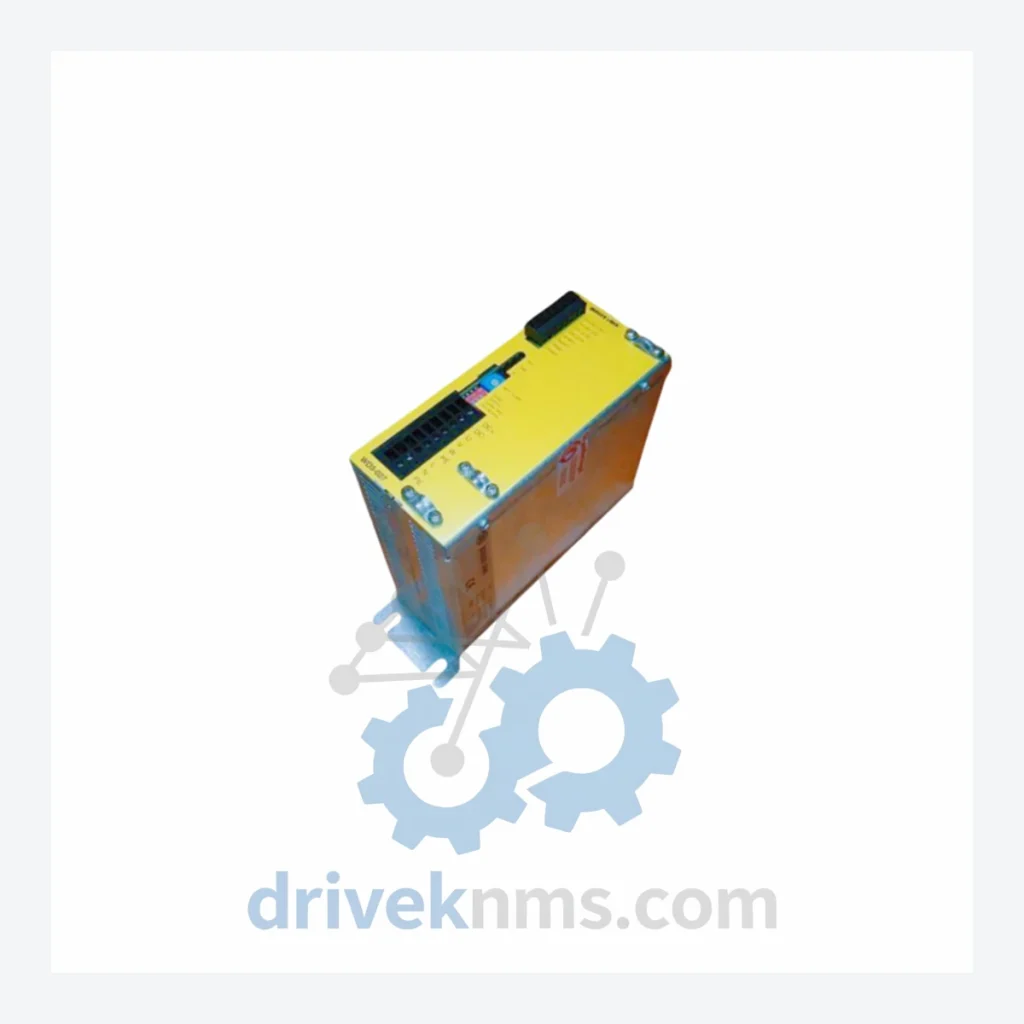
Product Overview
Commercial availability is handled through direct RFQ, model verification and export-oriented follow-up rather than public cart checkout.
Datasheet Preview
Use attached product manuals when available. If the manual is not public yet, request the full file directly through RFQ.
Commercial Path
Product pages on DRIVEKNMS are designed to verify model, brand and series first, then move the buyer into one clean quotation path.
Technical Dossier
When a Berger Lahr WD3-007 stepper drive fails on your production line, the clock starts immediately. This module is no longer manufactured. Standard procurement channels will return nothing. The alternative — a full motion control system upgrade — carries engineering costs, PLC reprogramming, mechanical re-integration, and weeks of downtime that routinely exceed seven figures for mid-scale automated facilities. DriveKNMS maintains verified physical stock of the WD3-007. This is not a listing placeholder. Securing one unit today is the difference between a controlled maintenance window and an unplanned production halt.
| Manufacturer | Berger Lahr (acquired by Schneider Electric) |
| Part Number | WD3-007 |
| Series | WD3 |
| Product Type | Stepper Motor Drive / Controller |
| Country of Origin | Germany |
| Discontinuation Status | Discontinued – No longer in production |
| Typical System Compatibility | Berger Lahr WD3 series stepper motor systems; legacy CNC and automated positioning equipment |
Note: Electrical parameters for this specific variant are not published here to prevent misapplication. Please contact us with your system documentation for confirmation before ordering.
The Berger Lahr WD3 series was a workhorse in precision positioning and CNC-adjacent automation throughout the 1990s and early 2000s. These drives were embedded into equipment that, in many facilities, still runs critical production processes today — packaging lines, textile machinery, semiconductor handling, and precision assembly stations.
Following Schneider Electric's acquisition of Berger Lahr, the WD3 product line was phased out. Replacement drives from the current Schneider catalog are not pin-compatible and require motor re-sizing, new cabling, and in most cases, motion controller reprogramming. For a facility running 10 to 50 of these axes, that is not a maintenance task — it is a capital project.
The practical strategy adopted by plant engineers who have navigated this before is straightforward: identify the remaining service life of the broader machine, calculate the statistical failure rate of the drive, and pre-position enough WD3-007 units to cover that window. A machine with 8 to 12 years of remaining productive life, running one shift, may require two to four spare drives to reach end-of-life without a forced upgrade. The cost of those spares is a fraction of one unplanned downtime event.
This is asset protection through parts inventory — not a workaround, but an established maintenance discipline in industries where legacy automation equipment carries significant embedded value.
Obsolete drives sourced from the secondary market carry real risk if not properly evaluated. DriveKNMS applies a 5-step inspection protocol to every WD3-007 unit before it is offered for sale:
What warranty applies to an obsolete part like the WD3-007?
DriveKNMS provides a 90-day warranty covering functional defects identified under normal operating conditions. Given the discontinued status of this part, we recommend testing the unit in a controlled environment before committing it to live production.
How do I confirm the unit is genuine and not a counterfeit?
All WD3-007 units sourced by DriveKNMS are inspected against known-good reference units. Manufacturer markings, label formats, and internal construction are verified. We do not source from unverified liquidation channels.
Should I buy more than one unit?
For any system where the WD3-007 is a single point of failure, holding at least one cold spare is the minimum responsible position. For critical production lines or multi-axis systems, a two-to-three unit reserve is standard practice. The cost of storage is negligible against the cost of a production stoppage while sourcing a replacement on the open market.
Can you source additional units if I need more than one?
Contact us with your quantity requirement. We maintain ongoing sourcing relationships and can advise on availability timelines for larger reserve orders.
Related Paths
BERGER LAHR FT2000 Series: Comprehensive Module Range and Technical Overview The BERGER LAHR FT2000 series represents a mature generation of…
BERGER LAHR VRDM-5910/50-LVC: Sourcing Strategy & Asset Return Value in a Constrained Global Supply Chain The BERGER LAHR VRDM-5910/50-LVC is…
BERGER LAHR TLD Series: Comprehensive Module Range and Technical Overview The BERGER LAHR TLD series represents a family of modular…