
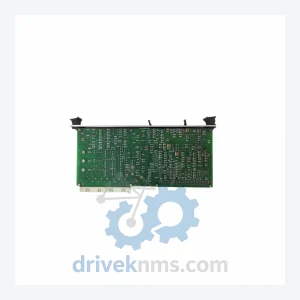
Yokogawa K9634DA-01 TCD Card Modules
Yokogawa K9634DA Series: Comprehensive Module Range and Technical Overview The Yokogawa K9634DA series TCD (Thermocouple/mV Input) cards are field-proven I/O…
Model: NFPW442-10
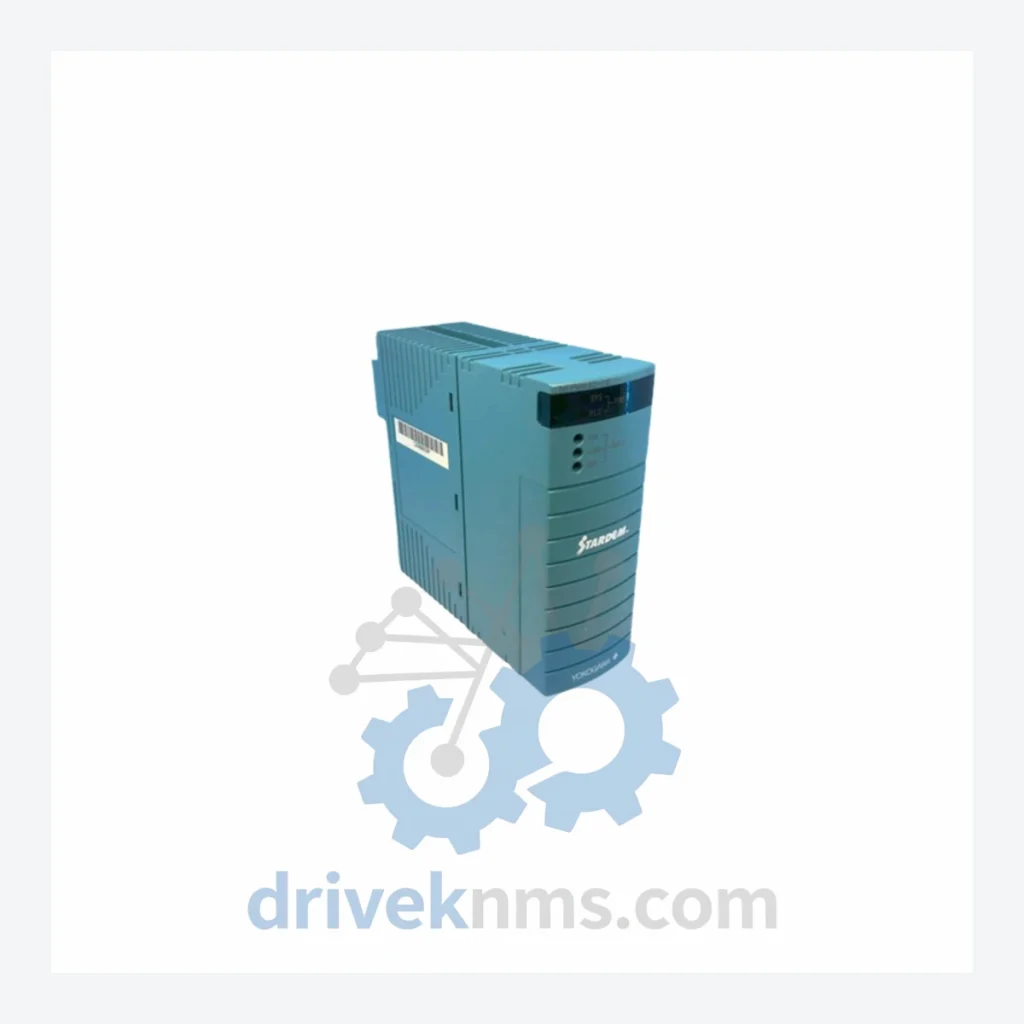
Product Overview
Commercial availability is handled through direct RFQ, model verification and export-oriented follow-up rather than public cart checkout.
Datasheet Preview
Use attached product manuals when available. If the manual is not public yet, request the full file directly through RFQ.
Commercial Path
Product pages on DRIVEKNMS are designed to verify model, brand and series first, then move the buyer into one clean quotation path.
Technical Dossier
When a power supply module fails inside a Yokogawa CENTUM-series distributed control system, the consequences extend far beyond a single line stoppage. A full DCS migration — engineering assessment, hardware procurement, software re-engineering, operator retraining, and production downtime — routinely costs manufacturing facilities between USD 2 million and USD 8 million per control domain. The NFPW442-10 is a discontinued component. Replacement units are no longer manufactured. Every month that passes, the pool of available stock shrinks. DriveKNMS maintains verified physical inventory of this module, sourced through controlled industrial channels, inspected before dispatch.
If your facility is running a CENTUM CS, CENTUM CS 1000, or CENTUM CS 3000 platform and this module is flagged as a critical spare, the window to secure replacement units is narrowing.
| Parameter | Detail |
|---|---|
| Part Number | NFPW442-10 |
| Manufacturer | Yokogawa Electric Corporation |
| Country of Origin | Japan |
| Module Type | Power Supply Module |
| Compatible Platform | Yokogawa CENTUM CS / CS 1000 / CS 3000 DCS |
| Product Status | Discontinued / Obsolete – No longer in production |
| Condition Available | New surplus / Refurbished (tested) |
Note: Electrical parameters such as input voltage range, output ratings, and power capacity are not published here to prevent inaccurate data from being used in safety-critical decisions. Please contact us for the verified datasheet.
The Yokogawa CENTUM platform was the backbone of process automation across petrochemical, power generation, pulp and paper, and pharmaceutical facilities throughout the 1990s and 2000s. Many of these systems remain in active production service today — not because operators are unaware of the discontinuation, but because the cost and risk of migration outweigh the cost of maintenance, provided spare parts remain accessible.
The NFPW442-10 power supply module sits at the infrastructure layer of the CENTUM I/O subsystem. A failure at this level does not degrade performance gradually — it causes a hard shutdown of the affected control node. In redundant configurations, a failed primary power supply module triggers automatic failover, but leaves the system exposed until the faulty unit is replaced. In non-redundant installations, the impact is immediate and total.
There is no cross-compatible substitute from current Yokogawa product lines. The CENTUM VP architecture uses a fundamentally different hardware platform. Fitting a VP-series power supply into a CS-series cabinet is not a drop-in operation — it requires bus adapter engineering, firmware reconfiguration, and in most cases, a full I/O module audit. The NFPW442-10, by contrast, installs directly into the existing slot with no engineering intervention.
For plant managers and maintenance engineers operating legacy DCS infrastructure under capital expenditure constraints, the following framework has been applied successfully across facilities in Asia, the Middle East, and Europe to defer system retirement without compromising process reliability:
1. Criticality-Based Spare Parts Classification
Categorize every module in your CENTUM system by failure impact and lead time. Power supply modules, communication cards, and CPU modules belong in the Tier 1 category — items where a single failure causes a process shutdown and where no current-generation substitute exists. The NFPW442-10 is a Tier 1 component. Facilities that maintain a minimum of two units on-hand per control domain have consistently avoided unplanned downtime from this failure mode.
2. Condition-Based Monitoring for Power Infrastructure
Power supply modules in legacy DCS systems are subject to electrolytic capacitor degradation over time. Capacitors in units manufactured before 2005 are approaching or have exceeded their rated service life. Implementing periodic output voltage ripple measurement — a non-invasive test requiring only a calibrated oscilloscope — allows maintenance teams to identify modules approaching failure before they cause a process trip. This test costs nothing beyond technician time and can extend the reliable service life of existing modules by two to four years.
3. Controlled Spare Parts Procurement Before Market Depletion
The secondary market for CENTUM CS-series hardware is finite. Distributors who held surplus stock from original equipment manufacturers have been drawing down inventory since the platform's end-of-life announcement. Facilities that delay procurement until a failure event occurs frequently face lead times of 8–16 weeks or are unable to source units at all. Procuring two to four units now, while verified stock is available, is a lower-cost risk mitigation measure than any alternative.
4. Firmware and Configuration Documentation
Before any module replacement, ensure that the current firmware version and all configuration parameters are documented and stored offline. For CENTUM CS systems, this data is held in the engineering workstation. A hardware failure that coincides with a loss of configuration data compounds the recovery time significantly. This documentation step costs nothing and eliminates a common source of extended downtime.
5. Vendor Qualification for Obsolete Parts
Not all secondary market suppliers apply consistent quality standards to refurbished industrial hardware. When sourcing discontinued modules, require evidence of functional testing, capacitor inspection records, and firmware version verification. DriveKNMS applies a structured inspection protocol to all refurbished units before dispatch.
DriveKNMS applies a 5-step inspection protocol to all NFPW442-10 units before shipment:
Step 1 – Visual and Mechanical Inspection: Full board inspection for physical damage, pin corrosion, solder joint integrity, and connector condition. Units with corroded or deformed pins are rejected at this stage.
Step 2 – Electrolytic Capacitor Assessment: Capacitors are tested for capacitance value, equivalent series resistance (ESR), and leakage current. Capacitors showing degradation beyond manufacturer tolerance are replaced with equivalent-rated components before the unit proceeds.
Step 3 – Firmware Version Verification: The firmware version is read and recorded. Units are supplied with firmware version documentation so the receiving facility can confirm compatibility with their existing CENTUM engineering workstation configuration.
Step 4 – Functional Power Output Test: Each unit is powered under load and output parameters are measured and recorded. Units that do not meet specification are not dispatched.
Step 5 – Final Packaging and Documentation: Units are packed in anti-static packaging with desiccant. A test record is included with each shipment.
Q: What warranty applies to the NFPW442-10?
A: DriveKNMS provides a 12-month warranty on all tested and refurbished units. New surplus units are supplied as-is with the inspection record as the quality assurance document. Warranty terms are confirmed in writing at the time of order.
Q: How do I confirm the unit is genuine Yokogawa and not a counterfeit?
A: All units supplied by DriveKNMS are sourced from traceable industrial channels. Each unit carries the original Yokogawa part markings. We provide photographs of the physical unit, including board markings and serial number, prior to shipment upon request.
Q: Should I purchase more than one unit?
A: For any facility running a CENTUM CS platform in active production, holding a minimum of two NFPW442-10 units as on-site spares is the standard recommendation. The secondary market supply of this module is not replenished. Once current stock is exhausted, sourcing lead times become unpredictable. The cost of two spare modules is a fraction of one hour of unplanned production downtime in most process industries.
Q: Can you supply in volume for long-term spare parts programs?
A: Contact us directly to discuss volume requirements and long-term supply agreements. We work with facilities management teams and MRO procurement departments on structured spare parts programs for legacy DCS platforms.
Related Paths
Yokogawa K9634DA Series: Comprehensive Module Range and Technical Overview The Yokogawa K9634DA series TCD (Thermocouple/mV Input) cards are field-proven I/O…
Yokogawa UT350-01 Digital Indicating Controller – Obsolete UT Series Spare Part When a Yokogawa UT350-01 fails on the plant floor,…
YOKOGAWA NFDR Series: Comprehensive Module Range and Technical Overview The YOKOGAWA NFDR series relay output modules are core field control…