
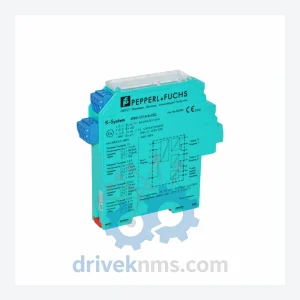
PEPPERL+FUCHS KFD2-STC4-EX1.2O Signal Isolator – NAMUR Series
PEPPERL+FUCHS KFD2-STC4-EX1.2O Signal Isolator: Sourcing Strategy & Asset Return Value in a Constrained Global Supply Chain The KFD2-STC4-EX1.2O is a…
Model: SCD2-STC-EX1
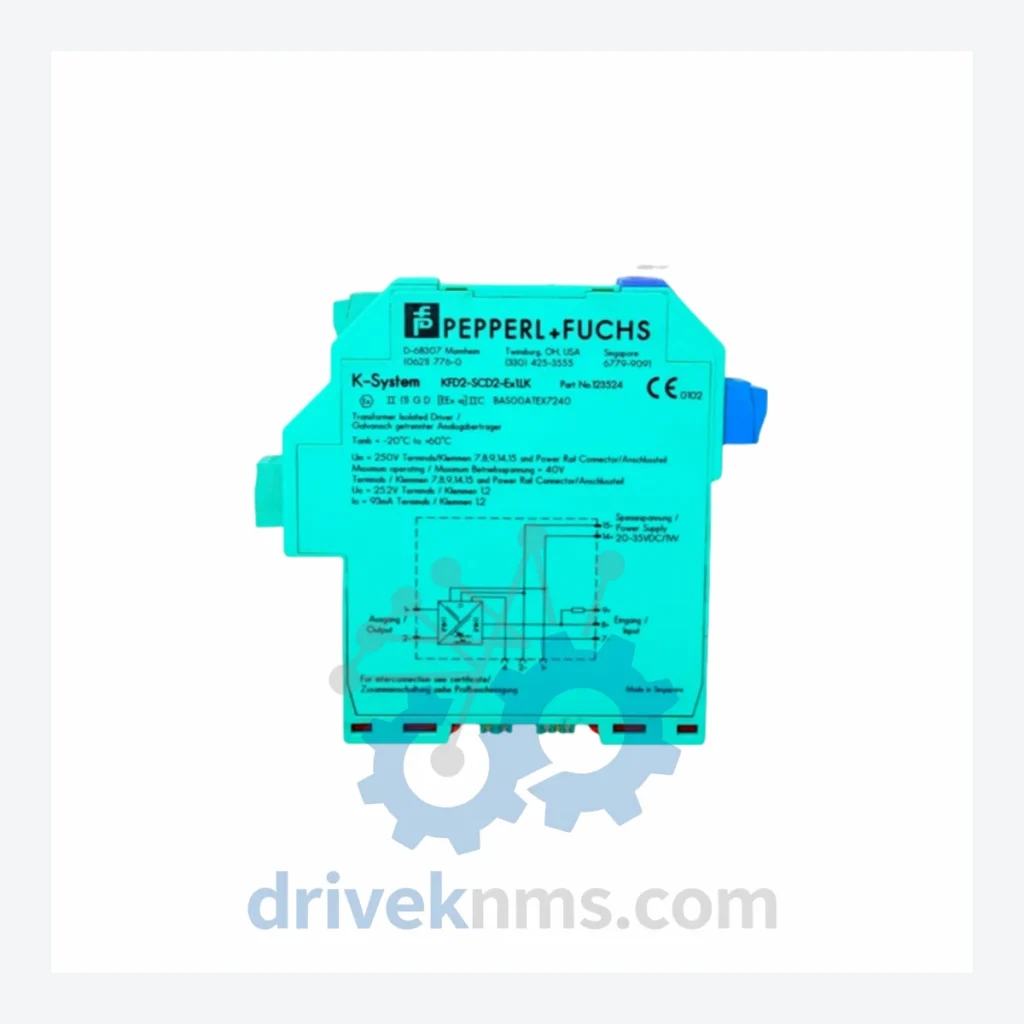
Product Overview
Commercial availability is handled through direct RFQ, model verification and export-oriented follow-up rather than public cart checkout.
Datasheet Preview
Use attached product manuals when available. If the manual is not public yet, request the full file directly through RFQ.
Commercial Path
Product pages on DRIVEKNMS are designed to verify model, brand and series first, then move the buyer into one clean quotation path.
Technical Dossier
When a Pepperl+Fuchs SCD2-STC-EX1 transmitter power supply fails in a hazardous-area process loop, the consequences extend far beyond a single module. This unit is a core component of intrinsically safe signal conditioning architectures — the kind embedded in refineries, chemical plants, and offshore platforms that were engineered to run for 20 to 30 years. Replacing it is not a matter of ordering a substitute. The SCD2-STC-EX1 has been discontinued, and its absence from the supply chain forces plant engineers into a choice between two costly paths: source the original part, or fund a full system migration.
A full migration of a legacy hazardous-area I/O and signal conditioning infrastructure — including engineering, validation, shutdown scheduling, and recommissioning — routinely costs between USD 500,000 and several million dollars per production unit. Against that figure, securing a verified spare SCD2-STC-EX1 from DriveKNMS represents a fraction of the cost and eliminates months of project risk.
DriveKNMS maintains sourced inventory of hard-to-find Pepperl+Fuchs components specifically to support facilities that cannot afford unplanned downtime or premature capital expenditure.
| Parameter | Detail |
|---|---|
| Manufacturer | Pepperl+Fuchs |
| Model / Part Number | SCD2-STC-EX1 |
| Series | SCD (Signal Conditioning, Discontinued) |
| Function | Transmitter Power Supply with HART signal pass-through capability |
| Protection Concept | Intrinsic Safety (Ex i), suitable for Zone 1 / Zone 2 hazardous areas |
| Country of Origin | Germany |
| Product Status | Discontinued / Obsolete – No longer in active production |
| Typical System Compatibility | Pepperl+Fuchs SCD series DIN-rail signal conditioning systems; legacy DCS I/O marshalling cabinets |
Note: Electrical parameters such as supply voltage range, output current, and Ex certification codes are not published here to prevent inaccuracy. Verified datasheet documentation is provided upon confirmed inquiry.
The SCD2-STC-EX1 belongs to a generation of signal conditioning hardware that was designed for long-cycle industrial environments — specifically, processes where the cost of change is measured not in component price but in shutdown duration and regulatory re-certification. These modules sit at the boundary between field instruments and control system I/O, translating 4–20 mA transmitter signals into forms the DCS or PLC can process, while maintaining the galvanic isolation and intrinsic safety barriers required by hazardous-area classification.
When this module is no longer available through standard distribution, the facility faces a structural problem. The surrounding infrastructure — cable schedules, marshalling cabinets, Ex documentation, and loop drawings — was built around the SCD2-STC-EX1's form factor and electrical interface. Substituting a different manufacturer's module requires re-engineering the barrier calculations, updating the Ex documentation, and in many jurisdictions, re-submitting for third-party safety certification. None of that is fast, and none of it is cheap.
Facilities that have extended the operational life of their SCD-series installations by 5 to 10 years beyond the original design horizon have done so through a deliberate spare parts strategy: identifying critical single-point-of-failure modules, sourcing verified stock before failure occurs, and maintaining a documented inventory of tested spares. The SCD2-STC-EX1 is precisely the type of module that warrants this approach. It is not a commodity item that can be substituted without engineering consequence. Holding one or two verified units in a controlled spare parts store is a low-cost insurance policy against a high-cost event.
For plant managers facing pressure to defer capital replacement projects, the arithmetic is straightforward. The cost of a verified SCD2-STC-EX1 spare is orders of magnitude below the cost of an unplanned production stoppage or an accelerated migration project. The risk is asymmetric, and the mitigation is available.
DriveKNMS applies a structured 5-step quality process to all obsolete and legacy components before dispatch:
Test records are retained and available to the customer upon request.
What warranty applies to a discontinued part like the SCD2-STC-EX1?
DriveKNMS provides a 90-day functional warranty on all tested obsolete components. This covers failure under normal operating conditions and excludes damage caused by incorrect installation or operation outside the module's rated parameters.
How do I know the unit is genuine and not a counterfeit?
All Pepperl+Fuchs components sourced by DriveKNMS are inspected for manufacturer markings, label authenticity, and physical construction consistency with known-genuine units. Functional test results are documented. We do not source from unverified secondary markets.
Should I buy more than one unit?
For any module that is confirmed discontinued and installed in a critical process loop, holding a minimum of one verified spare on-site is standard practice. For facilities with multiple SCD2-STC-EX1 units in service, a proportional spare holding — typically 10–20% of installed quantity — provides meaningful protection against a multi-point failure scenario. DriveKNMS can advise on quantity based on your installed base.
Can you supply other SCD-series Pepperl+Fuchs modules?
Yes. Contact us with your full bill of materials for SCD-series components and we will advise on availability across the range.
© 2026 DriveKNMS. Status: DRAFT
Related Paths
PEPPERL+FUCHS KFD2-STC4-EX1.2O Signal Isolator: Sourcing Strategy & Asset Return Value in a Constrained Global Supply Chain The KFD2-STC4-EX1.2O is a…
Pepperl+Fuchs KFD2-STC4-1 Transmitter Power Supply – Obsolete KFD2 Series Spare Part When a KFD2-STC4-1 fails in an operating plant, the…
Pepperl+Fuchs KFD2 Series: Comprehensive Module Range and Technical Overview The Pepperl+Fuchs KFD2 series is a family of DIN-rail-mounted signal conditioners…