
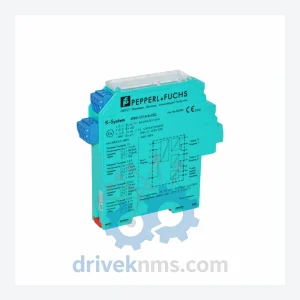
PEPPERL+FUCHS KFD2-STC4-EX1.2O Signal Isolator – NAMUR Series
PEPPERL+FUCHS KFD2-STC4-EX1.2O Signal Isolator: Sourcing Strategy & Asset Return Value in a Constrained Global Supply Chain The KFD2-STC4-EX1.2O is a…
Model: KFD2£SR2£EX2.W
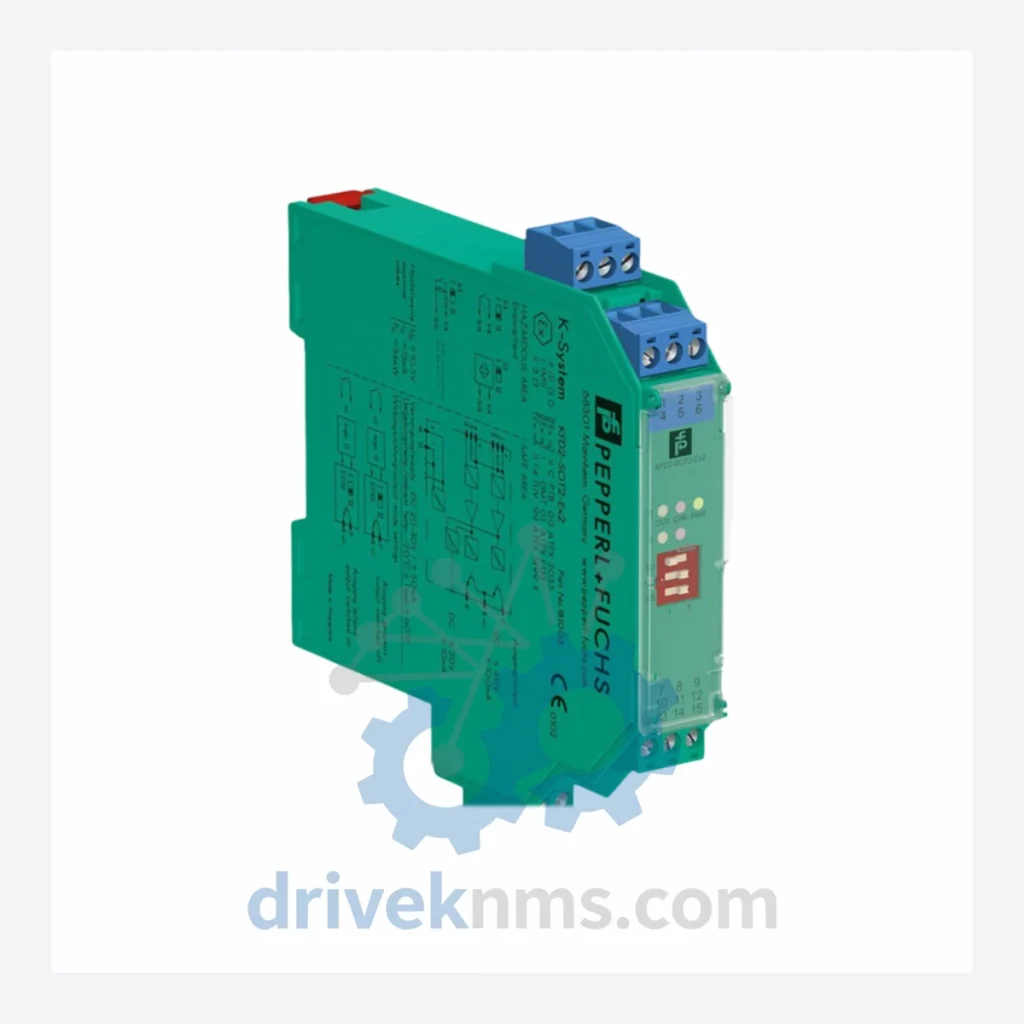
Product Overview
Commercial availability is handled through direct RFQ, model verification and export-oriented follow-up rather than public cart checkout.
Datasheet Preview
Use attached product manuals when available. If the manual is not public yet, request the full file directly through RFQ.
Commercial Path
Product pages on DRIVEKNMS are designed to verify model, brand and series first, then move the buyer into one clean quotation path.
Technical Dossier
The Pepperl+Fuchs KFD2 series is a family of DIN-rail-mounted signal conditioners and isolating switching amplifiers designed for intrinsically safe (Ex ia) field device interfacing in Zone 0/1/2 hazardous areas. Deployed across global heavy industry — including petrochemical refineries, offshore platforms, nuclear auxiliary systems, and large-scale chemical processing plants — the KFD2 range serves as the backbone of NAMUR-compliant field signal transmission between the hazardous area and the safe-side control system (DCS/PLC). The series is certified to ATEX, IECEx, and FM standards, and is compatible with major DCS platforms including Emerson DeltaV, Honeywell Experion, ABB 800xA, and Siemens PCS 7. Its 22.5 mm slim housing and K-System power rail bus architecture allow high-density marshalling cabinet installations with centralized power distribution, eliminating the need for individual module power supplies.
The KFD2 series was introduced as part of Pepperl+Fuchs' K-System platform, succeeding the earlier KFA and KFD (first generation) isolator families. The core architectural shift in the KFD2 generation was the adoption of the K-System power rail, which allows up to 40 modules to share a single 24 V DC bus via a backplane rail, eliminating individual terminal block wiring for power. Early KFD2 modules used discrete optocoupler-based isolation; later revisions incorporated transformer-based galvanic isolation for improved noise immunity in high-EMI environments such as motor control centers.
The KFD2 series spans multiple functional sub-families: SR (switching amplifier/repeater), SB (solenoid driver), UT (universal temperature transmitter), WAC (frequency converter), CD (current driver), and SOT (solenoid output). Compatibility across revisions is generally maintained at the terminal and rail level, though firmware-dependent variants (e.g., HART-transparent models) require attention when substituting. As of 2024, the KFD2 series is in a mature/sustained phase — Pepperl+Fuchs continues to manufacture and support the full range, but new installations increasingly specify the KFD3 platform. For existing KFD2 installations, long-term maintenance sourcing remains the primary procurement driver.
Switching Amplifiers / Repeaters (SR Sub-family)
Solenoid Drivers (SB Sub-family)
Temperature Transmitters (UT Sub-family)
Current Drivers / Analog Output (CD Sub-family)
Frequency / Pulse Converters (WAC Sub-family)
Solenoid Output Modules (SOT Sub-family)
DriveKNMS maintains a dedicated inventory program for the KFD2 series, with particular focus on variants that have been discontinued or placed on extended lead time by Pepperl+Fuchs' standard distribution channels. Models such as the KFD2-SR2-EX2.W, KFD2-UT2-EX1.D, and early-revision KFD2-CD-EX1.32 are frequently required for like-for-like replacement in certified SIL-rated loops where substitution with a newer model would require re-validation. DriveKNMS sources these units from decommissioned plant inventories, certified refurbishers, and authorized surplus channels, with full traceability documentation provided. All units are supplied with original Pepperl+Fuchs datasheets, CE/ATEX certificates, and where applicable, calibration records. For plant operators running KFD2-based marshalling cabinets beyond the standard 15-year lifecycle, DriveKNMS offers bulk reservation agreements to secure multi-year spare parts supply.
Each KFD2 module processed by DriveKNMS undergoes a structured verification protocol prior to dispatch. Functional testing is performed on a dedicated K-System test rack with a calibrated 24 V DC K-System power rail, replicating the operational bus environment. For switching amplifier variants (SR sub-family), NAMUR sensor simulation is applied to both channels using a precision resistor decade box, and relay output switching is verified against the specified switching threshold (typically 1.2 mA / 2.1 mA for NAMUR). For temperature transmitter variants (UT sub-family), RTD and thermocouple simulation is applied across the full input range, and 4–20 mA output linearity is verified against the factory calibration curve. HART communication integrity is verified using a HART communicator on HART-transparent models. Visual inspection covers terminal block condition, housing integrity, label legibility, and K-System bus connector pin condition. Units failing any parameter are quarantined and not dispatched.
Related Paths
PEPPERL+FUCHS KFD2-STC4-EX1.2O Signal Isolator: Sourcing Strategy & Asset Return Value in a Constrained Global Supply Chain The KFD2-STC4-EX1.2O is a…
Pepperl+Fuchs KFD2-STC4-1 Transmitter Power Supply – Obsolete KFD2 Series Spare Part When a KFD2-STC4-1 fails in an operating plant, the…
Pepperl+Fuchs SCD2-STC-EX1 Transmitter Power Supply – Obsolete SCD Series Spare Part When a Pepperl+Fuchs SCD2-STC-EX1 transmitter power supply fails in…