
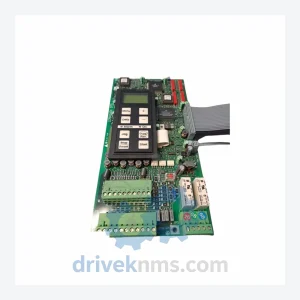
Danfoss 175H3828 DT5 175H7068 Power Board – FC Series
Danfoss 175H3828 DT5 175H7068 Power Board: Strategic Sourcing in a Constrained Supply Chain The Danfoss 175H3828 (also referenced as DT5…
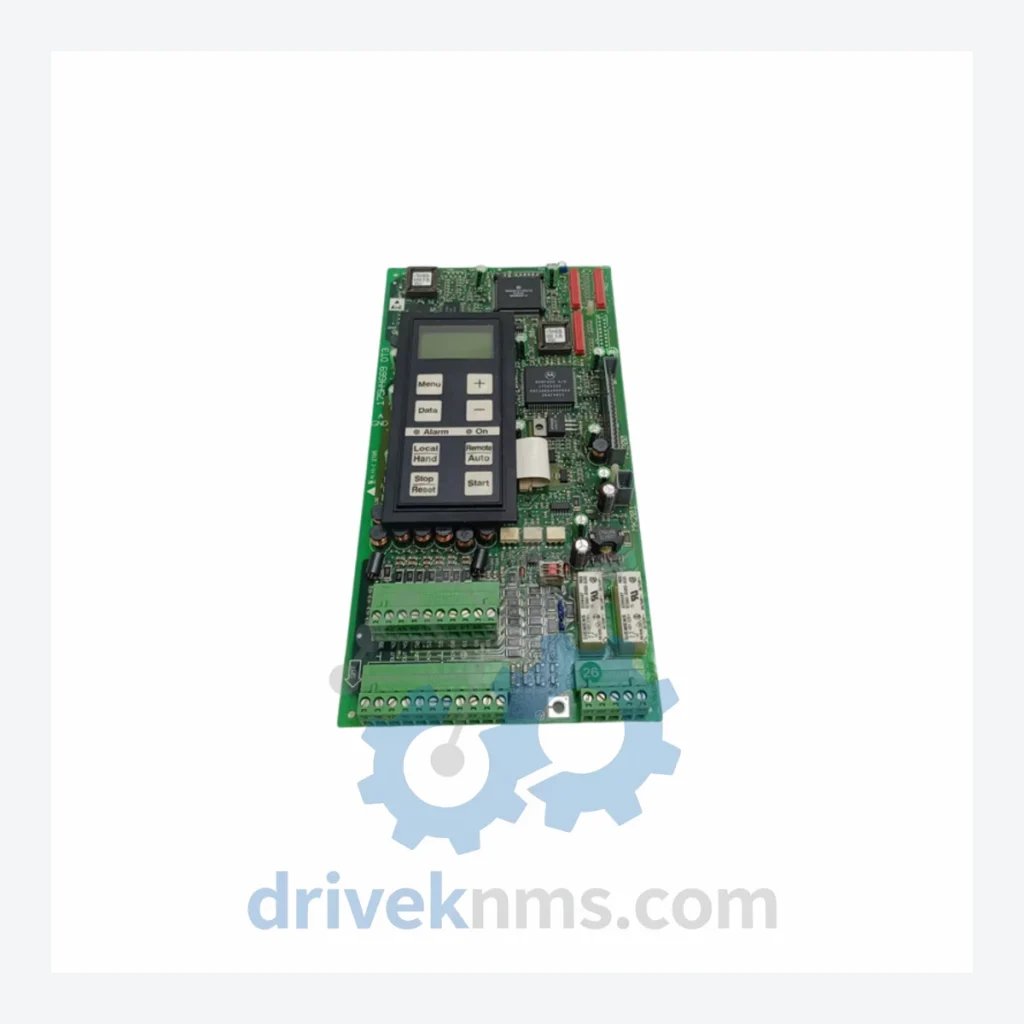
Model: 175H4669 DT3
Product Overview
Commercial availability is handled through direct RFQ, model verification and export-oriented follow-up rather than public cart checkout.
Datasheet Preview
Use attached product manuals when available. If the manual is not public yet, request the full file directly through RFQ.
Commercial Path
Product pages on DRIVEKNMS are designed to verify model, brand and series first, then move the buyer into one clean quotation path.
Technical Dossier
When a control board fails in a legacy Danfoss VLT drive system, the consequences extend far beyond the cost of the component itself. A single unplanned line stoppage can cascade into days of lost production. If the failed module is discontinued and no replacement is available, plant management faces a forced decision: undertake a full drive system upgrade — a project that routinely runs into hundreds of thousands of dollars in engineering, commissioning, and retraining costs — or locate the original spare part and restore operations within hours. The Danfoss 175H4669 DT3 Control Board is precisely that kind of component. It is no longer in active production. Facilities that have not secured a spare are operating under measurable risk. DriveKNMS maintains verified stock of this board specifically to serve operations that cannot afford the alternative.
| Parameter | Detail |
|---|---|
| Part Number | 175H4669 |
| Variant / Revision | DT3 |
| Component Type | Control Board (PCB Assembly) |
| Manufacturer | Danfoss |
| Product Series | VLT Series (Legacy) |
| Country of Origin | Denmark |
| Production Status | Discontinued – No longer manufactured by Danfoss |
| Typical Application | Variable frequency drive (VFD) control logic, signal processing, and drive parameter management in legacy VLT installations |
Note: Electrical parameters (input voltage range, current ratings, communication interface specifications) vary by the specific VLT drive frame in which this board is installed. We do not publish unverified parameters. Contact us with your drive nameplate data for compatibility confirmation.
The Danfoss VLT drive family was deployed extensively across water treatment, HVAC, material handling, and process manufacturing installations from the 1990s through the 2000s. Many of these systems remain in service today — not because operators are unaware of newer technology, but because the cost and disruption of replacing a functioning drive system is difficult to justify against a capital budget. The control board is the decision-making core of the drive. It manages speed reference signals, protection logic, fault diagnostics, and communication with supervisory systems. When it fails, the drive is inoperable. There is no workaround.
The 175H4669 DT3 is not interchangeable with later-revision boards without firmware and parameter reconfiguration — a process that requires specialist knowledge and introduces commissioning risk. For most facilities, a direct board replacement is the only operationally safe path. Sourcing that replacement from a supplier with verified stock, rather than from unvetted secondary market channels, is the difference between a controlled maintenance event and an extended outage.
Facilities running legacy Danfoss VLT drives alongside control systems such as Siemens S5/S7 PLCs, Allen-Bradley SLC 500, or older SCADA architectures face compounded risk: replacing the drive may require re-engineering the entire control interface. Maintaining the original hardware eliminates that exposure entirely.
For plant managers operating under capital expenditure constraints, the most cost-effective strategy for aging drive systems is not replacement — it is structured asset protection through critical spare inventory. The following approach has been applied successfully across process industries to defer system retirement by a decade or more:
1. Identify single-point-of-failure components. The control board is the highest-risk single component in any VFD. A mechanical failure in a power module can often be isolated; a control board failure takes the entire drive offline. Holding one spare board per drive model in active service eliminates this risk category entirely.
2. Prioritize discontinued parts over available ones. Components still in production can be sourced reactively. Discontinued parts cannot. Procurement of obsolete spares should be treated as a capital protection decision, not a maintenance budget line item.
3. Establish a documented spare parts register. For each legacy drive in service, record the control board part number, revision, firmware version (where accessible), and the location of the nearest verified spare. This register becomes a critical document during any unplanned outage.
4. Negotiate long-term supply agreements with specialist distributors. Spot-market availability of discontinued parts is unpredictable. Suppliers who maintain dedicated obsolete parts inventory — and can provide condition verification — offer a fundamentally different risk profile than general surplus dealers.
5. Schedule proactive board inspection during planned shutdowns. Even boards that are functioning should be inspected for early signs of electrolytic capacitor degradation, pin corrosion, or thermal stress damage. Replacing a board during a planned window costs a fraction of an emergency replacement during production.
Discontinued components sourced from the secondary market carry inherent condition uncertainty. DriveKNMS applies a structured 5-step quality process to every obsolete board before it is offered for sale:
Step 1 – Electrolytic Capacitor Assessment. Capacitor aging is the primary failure mode in legacy control boards. Each board is inspected for capacitor bulging, electrolyte leakage, and ESR deviation from specification.
Step 2 – Pin and Connector Inspection. All edge connectors, terminal pins, and solder joints are examined under magnification for oxidation, corrosion, and cold-joint indicators.
Step 3 – PCB Surface Inspection. Board traces are checked for thermal damage, delamination, and contamination. Conformal coating integrity is assessed where applicable.
Step 4 – Firmware Version Verification. Where the board carries embedded firmware, the revision is documented and disclosed. Customers are advised of any known compatibility constraints between firmware revisions and specific drive configurations.
Step 5 – Functional Classification and Documentation. Each board is classified as New Old Stock (NOS), Tested Serviceable, or Refurbished, with the classification disclosed in writing prior to sale. No board is shipped without a condition report.
The 175H4669 DT3 is a direct drop-in replacement for the original board in compatible VLT drive frames. Installation does not require drive reprogramming in standard configurations — parameters stored in the drive's memory or operator panel are retained independently of the control board. This means maintenance personnel can complete a board swap without specialist drive commissioning support, eliminating the engineering labor cost that accompanies most drive-level repairs.
There is no requirement to modify existing wiring, reconfigure PLC I/O mappings, or update SCADA tag databases. The replacement board restores the drive to its pre-failure operating state. For facilities where engineering resources are limited or where the original drive commissioning documentation is no longer available, this characteristic is operationally significant.
What warranty applies to a discontinued control board?
DriveKNMS provides a 90-day warranty against defects in material and workmanship on all tested and refurbished boards. New Old Stock boards carry a 180-day warranty. Warranty terms are confirmed in writing at the time of sale.
How do I confirm the board is genuine and not a counterfeit?
All boards sourced by DriveKNMS are inspected for manufacturer markings, date codes, and component authenticity indicators. Condition classification and sourcing documentation are provided with each unit. We do not sell boards that cannot be traced to a verifiable supply chain.
Should I purchase more than one unit?
If your facility operates more than one drive of the same model, holding a minimum of one spare board per two drives in service is a defensible risk management position. For critical production lines where downtime cost exceeds the value of the spare by a factor of ten or more, holding one spare per drive is justified. Stock of discontinued parts is finite and non-replenishable — availability today does not guarantee availability at the time of your next failure.
Can this board be used in a drive that has been in storage?
Yes, subject to the drive itself being in serviceable condition. We recommend a full drive inspection — including DC bus capacitor reformation — before returning any long-stored VFD to service, regardless of control board condition.
© 2026 DriveKNMS. Status: DRAFT
Related Paths
Danfoss 175H3828 DT5 175H7068 Power Board: Strategic Sourcing in a Constrained Supply Chain The Danfoss 175H3828 (also referenced as DT5…
Danfoss 175Z Series: Comprehensive Module Range and Technical Overview The Danfoss 175Z series represents a broad family of relay modules,…
Danfoss AK-PC 530 084B8007 Pack Controller: Global Sourcing Strategy & Asset Return Value The Danfoss AK-PC 530 (084B8007) is a…