
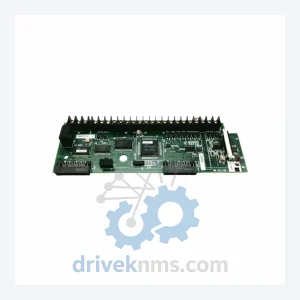
Hitachi 2B021918-1 Circuit Board – Obsolete Hitachi Series Spare Part
Hitachi 2B021918-1 Circuit Board – Obsolete Hitachi Series Spare Part When a circuit board like the Hitachi 2B021918-1 fails in…
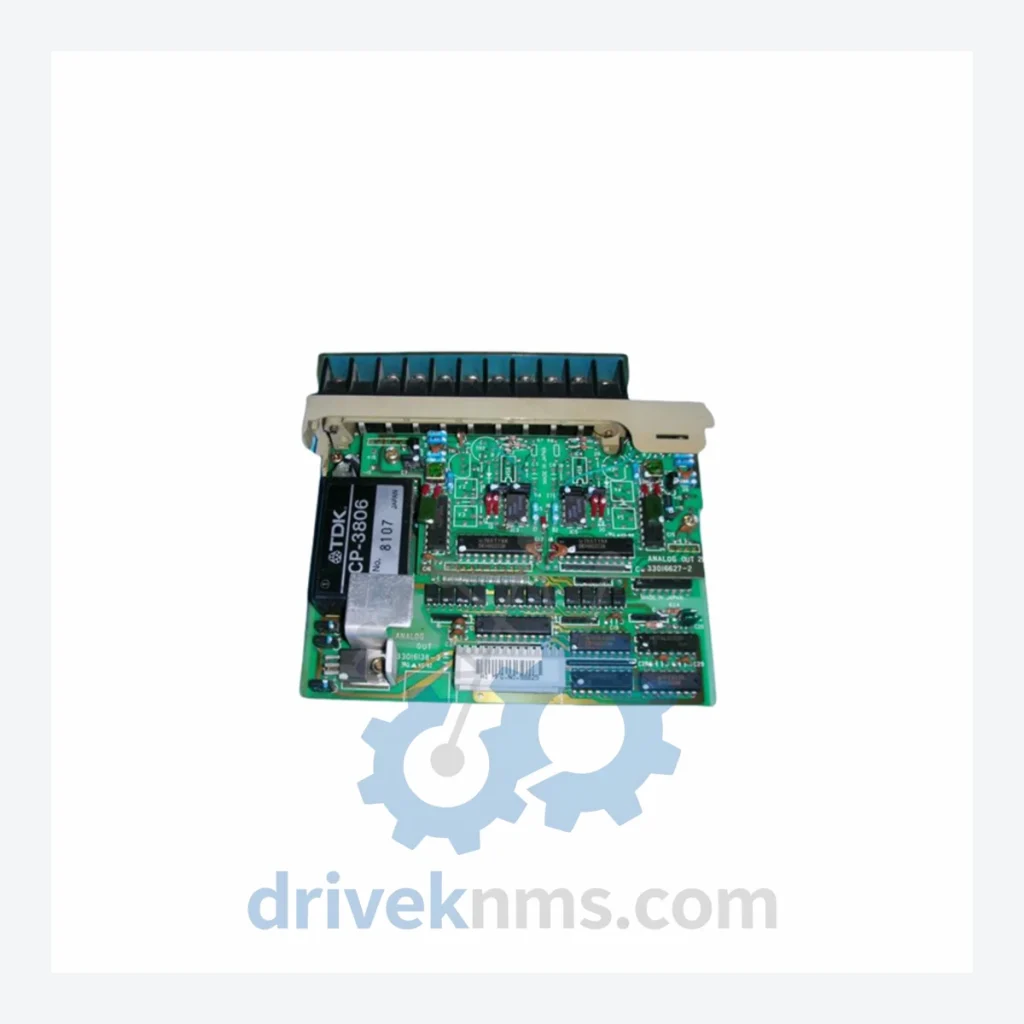
Model: AGM-OD 33016138-3
Product Overview
Commercial availability is handled through direct RFQ, model verification and export-oriented follow-up rather than public cart checkout.
Datasheet Preview
Use attached product manuals when available. If the manual is not public yet, request the full file directly through RFQ.
Commercial Path
Product pages on DRIVEKNMS are designed to verify model, brand and series first, then move the buyer into one clean quotation path.
Technical Dossier
The HITACHI AGM Series represents a core component family within Hitachi's HIZAC EH-series distributed control and programmable logic controller architecture. Deployed extensively across global heavy industry — including petrochemical complexes, nuclear power auxiliary systems, steel rolling mills, and offshore refinery platforms — the AGM series provides the analog signal conditioning backbone for process-critical control loops. Its modular backplane architecture allows integration into both standalone PLC racks and multi-drop DCS configurations, making it one of the most widely installed Hitachi I/O families in Asia-Pacific and Middle Eastern industrial facilities built between the 1990s and 2010s.
The AGM series was introduced as part of Hitachi's second-generation HIZAC EH modular control platform, succeeding the earlier H-series fixed I/O controllers. Early AGM modules operated on a parallel backplane bus with 5V TTL logic levels and required dedicated rack power supplies rated at 5VDC/3A. Mid-generation revisions introduced optically isolated analog front-ends, improving common-mode rejection ratios (CMRR) to >80dB and enabling direct connection to 4–20mA transmitter loops without external signal conditioners.
Later AGM variants incorporated surface-mount component technology, reducing board-level failure rates and extending MTBF ratings. Compatibility across AGM generations is constrained by backplane connector pinout revisions — AGM modules with suffix -3 and -4 are generally cross-compatible within EH-150 and EH-300 rack families, while earlier suffix -1 and -2 variants require verification against rack revision documentation. As of 2020, Hitachi has formally discontinued new production of the AGM series, transitioning customers toward the EH-RIO remote I/O platform and the newer H-8000 series DCS. This places the entire AGM catalog in end-of-life (EOL) status, making third-party spare parts sourcing the primary maintenance pathway for installed base operators.
Analog Output Modules
Analog Input Modules
Digital Input Modules
Digital Output Modules
Communication & CPU Modules
With Hitachi's formal EOL declaration on the AGM series, OEM new-stock availability has ceased through standard distribution channels. DriveKNMS maintains a dedicated inventory of tested AGM series modules sourced from decommissioned plant equipment, controlled factory overstock, and verified secondary market channels. All units are cataloged by part number suffix to ensure rack-revision compatibility before dispatch.
For operators running extended plant lifecycles — common in nuclear auxiliary systems and continuous-process chemical facilities where control system replacement projects span 5–15 years — DriveKNMS provides lifecycle extension support including: board-level component repair for common failure modes (DAC chip degradation, optocoupler aging, electrolytic capacitor replacement), functional equivalency assessment for cross-series substitution, and documented test reports for each refurbished unit.
Procurement teams managing AGM spare parts budgets are advised to consolidate multi-year requirements into single purchase orders where possible, as secondary market availability for specific suffix variants (particularly -3 and -4 suffixes) is declining year-on-year.
AGM series modules present specific test challenges due to their parallel backplane bus architecture and mixed analog/digital signal paths on a single PCB. DriveKNMS applies the following test protocol to all AGM units prior to shipment:
Test records are retained for 3 years and available upon request for quality-audited procurement processes.
Related Paths
Hitachi 2B021918-1 Circuit Board – Obsolete Hitachi Series Spare Part When a circuit board like the Hitachi 2B021918-1 fails in…
Hitachi MVL-D64DT PLC Controller – Obsolete H Series Spare Part When a Hitachi MVL-D64DT fails on the production floor, the…
HITACHI MVH-D40DT Basic Module: Supply Continuity Strategy for Procurement Managers The HITACHI MVH-D40DT is a discontinued basic module from HITACHI's…