Technical Dossier
Product Details And Specifications
Bosch Rexroth IPC300 Series: Comprehensive Module Range and Technical Overview
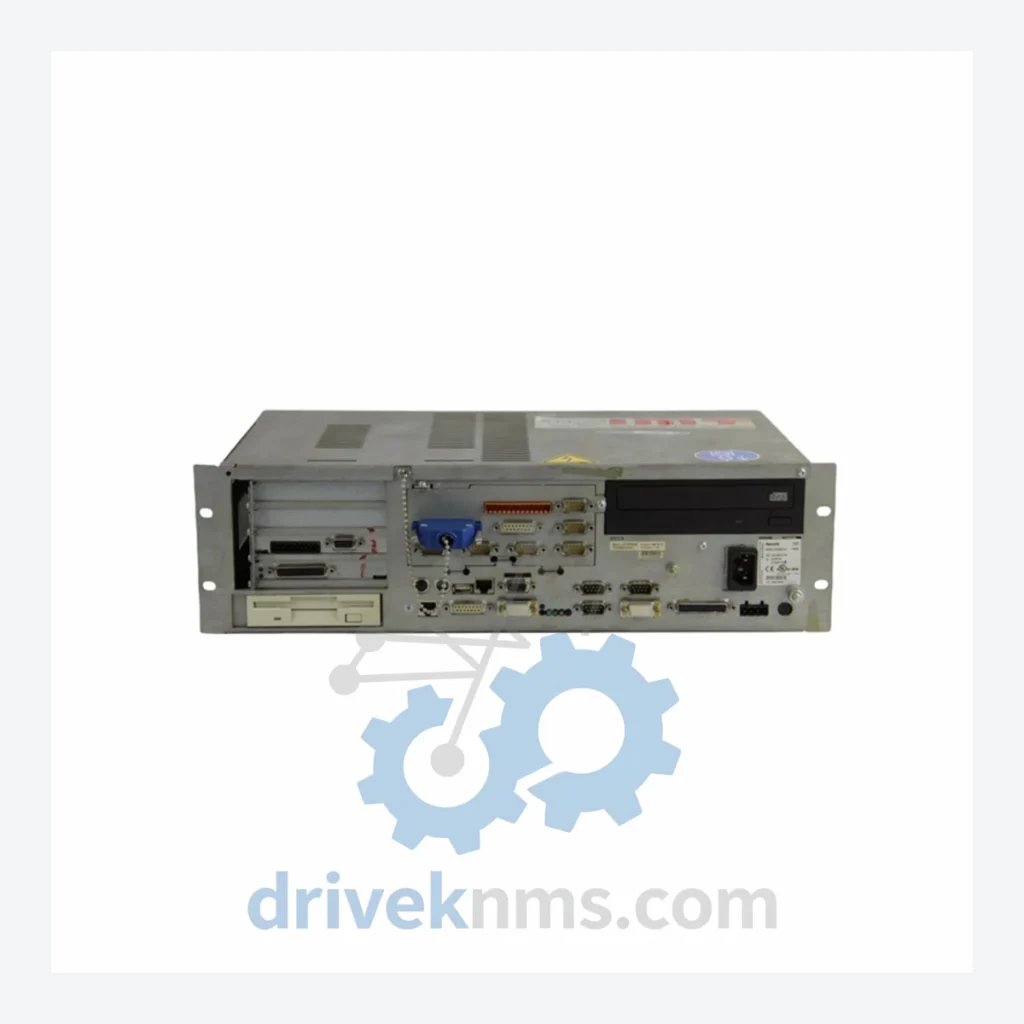
The Bosch Rexroth IPC300 series represents a line of ruggedized industrial panel PCs and control computers engineered for deployment in process-critical environments including petrochemical plants, nuclear power facilities, offshore platforms, and continuous-process refineries. Built on the Rexroth IndraControl platform, IPC300 units serve as human-machine interface (HMI) hosts, DCS workstation nodes, and standalone machine controllers. Their fanless or semi-fanless thermal designs, wide-temperature-range certifications, and long-term availability commitments made them a preferred embedded computing platform across European and Asian heavy industry from the mid-2000s through the 2010s. The series integrates directly with Rexroth IndraMotion, IndraLogic, and IndraWorks engineering environments, as well as third-party SCADA platforms via standard OPC-UA and Profibus/PROFINET interfaces.
The Evolution of IPC300 Architecture
The IPC300 family was introduced as a successor to Rexroth's earlier BTV and IPC200 panel PC lines, addressing the demand for higher processing throughput and expanded I/O connectivity in distributed control architectures. Early IPC300 variants shipped with Intel Celeron M and Pentium M processors paired with 512 MB to 1 GB DDR SDRAM, targeting Windows XP Embedded and Windows CE runtime environments. Mid-generation revisions introduced Core 2 Duo and Atom-class processors, extended RAM support to 4 GB DDR2, and added CompactFlash-to-SATA boot media options to reduce mechanical failure risk in vibration-intensive installations.
The IPC300P3 variant specifically denotes a panel-mount form factor with a third-generation processor platform, typically featuring a 15-inch or 19-inch resistive or PCAP touchscreen, dual Ethernet ports (one for machine network isolation), multiple USB 2.0/3.0 ports, and a DVI or DisplayPort video output. The architecture supports both real-time OS extensions (RTX, INtime) for deterministic control tasks and standard Windows 7/10 IoT environments for HMI applications. Compatibility with legacy Rexroth fieldbus cards (Profibus DP, SERCOS II/III, CANopen) is maintained through PCIe expansion slots, preserving investment in existing automation infrastructure.
As the IPC300 series has entered its end-of-active-production phase, Rexroth has transitioned new designs toward the IPC300R (rack-mount) and the newer IndraControl XM/XC embedded controller families. However, the installed base of IPC300 units in long-lifecycle process industries ensures continued demand for spare parts, repair services, and compatible replacement modules through at least 2030.
IPC300 Full Catalog & Functionalities (SKU List)
The following SKUs represent verified models within the Bosch Rexroth IPC300 series. Each entry reflects a distinct hardware configuration or form-factor variant:
IPC300P3: Panel PC, 3rd-gen CPU platform, touchscreen HMI controller node.
IPC300P1: Panel PC, 1st-gen CPU, Celeron M, Windows XP Embedded baseline unit.
IPC300P2: Panel PC, 2nd-gen CPU, Core 2 Duo, expanded RAM, SATA boot media.
IPC300P4: Panel PC, 4th-gen CPU, Haswell-class, Windows 7/10 IoT, PCIe x4 slot.
IPC300R1: 19-inch rack-mount variant, 1st-gen CPU, dual-PSU option, DIN rail adapter.
IPC300R2: Rack-mount, 2nd-gen CPU, RAID-1 SSD support, extended temperature range.
IPC300R3: Rack-mount, 3rd-gen CPU, PROFINET IRT onboard, dual GbE NIC.
IPC300C1: Compact desktop variant, fanless, Atom N2600, 12V DC power input.
IPC300C2: Compact desktop, Core i3/i5 option, mSATA + 2.5-inch HDD dual storage.
IPC300-15T: 15-inch resistive touch panel, standard brightness, IP54 front panel.
IPC300-19T: 19-inch resistive touch panel, high-brightness 500 cd/m², IP65 front.
IPC300-21W: 21.5-inch widescreen PCAP touch, full HD 1920×1080, industrial glass.
IPC300-KB: Keyboard/trackball front-panel accessory module for IPC300 panel series.
IPC300-CF8: 8 GB CompactFlash boot media module, pre-formatted for IndraWorks OS image.
IPC300-SSD64: 64 GB industrial-grade SSD replacement module, SATA II, wide-temp rated.
IPC300-RAM2G: 2 GB DDR2 SO-DIMM memory upgrade module, IPC300P2/P3/R2/R3 compatible.
IPC300-PSU24: 24V DC internal power supply module, replacement unit for panel variants.
IPC300-PBDP: Profibus DP master/slave PCIe fieldbus expansion card for IPC300 chassis.
IPC300-PNET: PROFINET controller PCIe card, IRT-capable, for IPC300R3 and IPC300P4.
Sourcing Hard-to-Find & Obsolete IPC300 Parts
DriveKNMS maintains a dedicated inventory program for end-of-life and long-tail Bosch Rexroth IPC300 components. As Rexroth has formally discontinued active production of several IPC300 sub-variants, procurement through standard distribution channels has become unreliable. DriveKNMS sources IPC300 units and sub-assemblies through certified secondary-market channels, including decommissioned plant equipment, factory overstock, and authorized repair-and-return programs.
For operators running IPC300-based DCS or HMI nodes in facilities with 10–20 year maintenance horizons (nuclear, petrochemical, water treatment), DriveKNMS offers lifecycle extension packages: pre-tested spare unit reservation, long-term storage under controlled conditions, and documented chain-of-custody records for regulatory compliance. Units are available as complete assemblies or as component-level spares (mainboard, display assembly, PSU module, storage media).
Contact DriveKNMS with your exact part number, hardware revision, and required quantity. Response within 24 hours for standard inquiries; emergency same-day response available for critical plant situations.
Quality Control for the IPC300 Range
IPC300 units processed by DriveKNMS undergo a structured verification protocol adapted to the specific hardware architecture of each variant. Panel units (IPC300P-series) are tested for touchscreen calibration accuracy, backlight uniformity, and front-panel IP-rating integrity. Rack-mount units (IPC300R-series) are verified for PCIe slot electrical integrity, dual-PSU failover switching, and RAID controller functionality where applicable.
All units undergo: (1) POST and BIOS/UEFI configuration verification against factory defaults; (2) 48-hour burn-in under simulated load at elevated ambient temperature (50°C); (3) fieldbus communication test using loopback adapters for any installed Profibus, PROFINET, or SERCOS cards; (4) storage media read/write cycle verification with sector-level error logging; (5) visual and dimensional inspection of backplane connectors, expansion slots, and front-panel sealing gaskets. Test records are retained and available upon request for quality-audited procurement processes.