
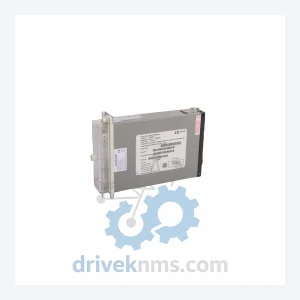
ALSTOM MVAJ105RA0802A Protection Relay – MiCOM Series
ALSTOM MVAJ105RA0802A Protection Relay: Supply Continuity Strategy for a Discontinued Critical Component The ALSTOM MVAJ105RA0802A is a numerical protection relay…
Model: CTL4100-01
Product Overview
Commercial availability is handled through direct RFQ, model verification and export-oriented follow-up rather than public cart checkout.
Datasheet Preview
Use attached product manuals when available. If the manual is not public yet, request the full file directly through RFQ.
Commercial Path
Product pages on DRIVEKNMS are designed to verify model, brand and series first, then move the buyer into one clean quotation path.
Technical Dossier
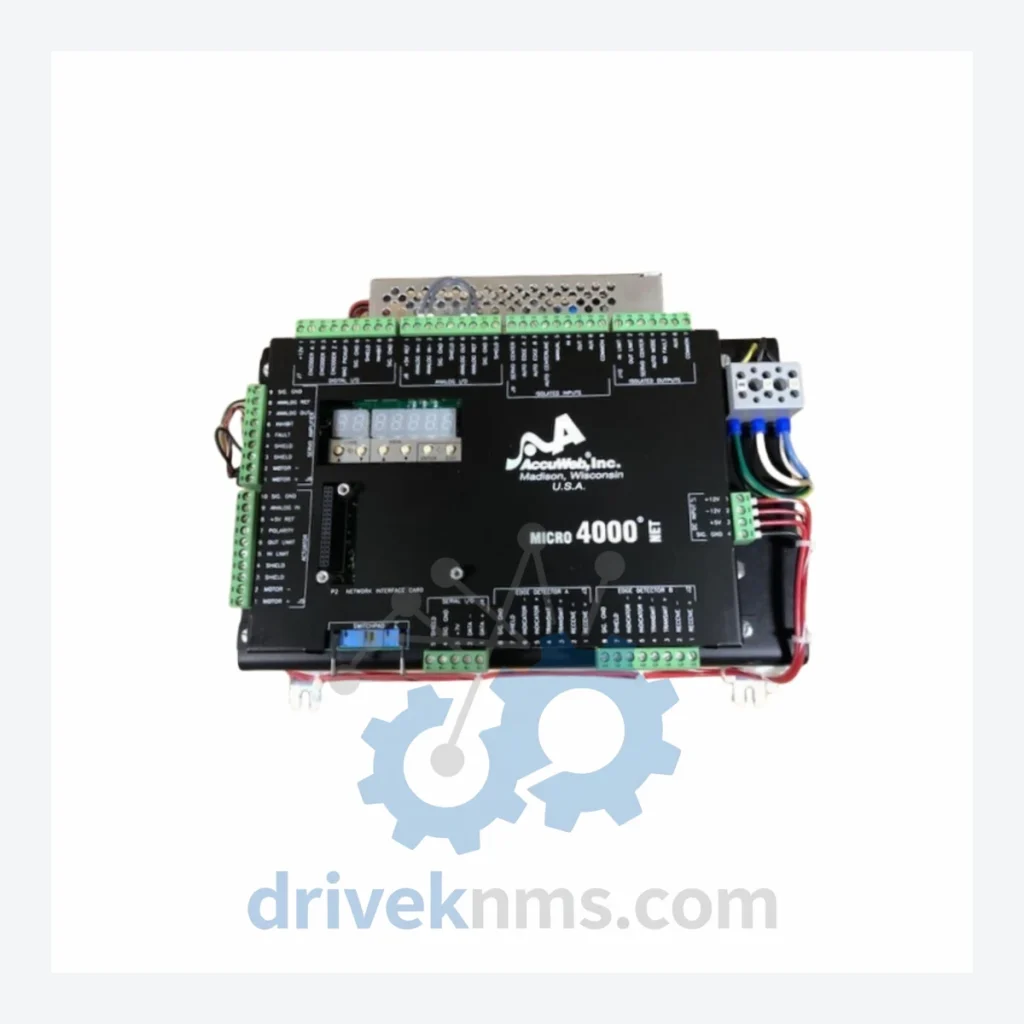
The ACCUWEB MICRO CTL4100 series is a dedicated web guiding controller platform engineered for continuous-process industrial environments including paper mills, film extrusion lines, printing presses, converting operations, and textile manufacturing. Deployed across heavy industry segments in North America, Europe, and Asia-Pacific, the CTL4100 architecture provides closed-loop lateral position control for moving webs, sheets, and strips. Its installed base spans chemical processing plants, packaging lines, and specialty film facilities where uninterrupted web alignment is a process-critical requirement. The CTL4100-01 controller serves as the primary processing unit within this platform, interfacing with edge sensors, actuator drivers, and operator interface panels to maintain web position within defined tolerance windows. The series occupies the mid-tier of ACCUWEB MICRO's controller hierarchy, positioned above entry-level single-board controllers and below the fully networked ACCUWEB ELITE platform.
The CTL4100 platform was introduced as a successor to ACCUWEB MICRO's earlier analog-based web guide controllers, transitioning the control logic from discrete analog circuitry to a microprocessor-based digital architecture. Early revisions of the CTL4100 series used RS-232 serial communication for sensor interfacing and relied on potentiometer-based manual offset adjustment. Subsequent hardware revisions introduced RS-485 multi-drop capability, enabling a single CTL4100-01 controller to address multiple sensor heads on a shared bus. Later firmware generations added PID gain scheduling, allowing the controller to adapt loop parameters based on web speed signals received from external tachometer inputs. Compatibility considerations are significant for maintenance operations: CTL4100-series controllers manufactured prior to firmware revision 3.x use a different EEPROM parameter map than post-revision-3 units, meaning parameter backup files are not cross-compatible without conversion. Actuator driver modules from the CTL4100-D sub-series maintain backward electrical compatibility with CTL4100-01 controller outputs, but require jumper reconfiguration when substituting across hardware generations. The CTL4100 series has entered the mature/end-of-production phase; ACCUWEB MICRO's current equivalent platform is the ACCUWEB ELITE series. For facilities committed to CTL4100 infrastructure, long-term maintenance support through authorized spare parts distributors is the primary continuity strategy.
The following SKUs represent the documented CTL4100 series module range, classified by functional category. Each entry reflects a discrete hardware assembly with a defined role within the web guiding system architecture.
Controllers & Processing Units
Sensor Interface & Input Modules
Actuator Driver & Output Modules
Communication & Network Adapters
Power Supply & Auxiliary Modules
CTL4100 series modules present specific test challenges due to their mixed analog/digital architecture and backplane-dependent communication structure. DriveKNMS applies the following verification procedures to all CTL4100 units prior to dispatch. Power supply modules (CTL4100-PS-01, CTL4100-PS-02) are load-tested at rated output current for a minimum 2-hour burn-in period with voltage regulation and ripple measured at full load. Controller boards (CTL4100-01 through CTL4100-04) are bench-tested using a dedicated CTL4100 backplane fixture that replicates the electrical environment of the target system, with firmware version confirmed and parameter memory verified against factory defaults. Sensor interface cards are tested with representative sensor signal sources to confirm analog input scaling, offset calibration, and signal conditioning response. Actuator driver modules are verified for output linearity across the full command range using a calibrated load. Communication adapter modules are tested for bus integrity and protocol compliance using network analyzers. Each unit is issued a test record documenting measured parameters, firmware revision, and inspection date prior to shipment.
Related Paths
ALSTOM MVAJ105RA0802A Protection Relay: Supply Continuity Strategy for a Discontinued Critical Component The ALSTOM MVAJ105RA0802A is a numerical protection relay…
MOORE 16137 Series: Comprehensive Module Range and Technical Overview The MOORE 16137 Series represents a core component family within Moore…
Yaskawa YPHT11014-1A Circuit Board – Obsolete Drive Control Spare Part When a Yaskawa YPHT11014-1A circuit board fails in a production…