
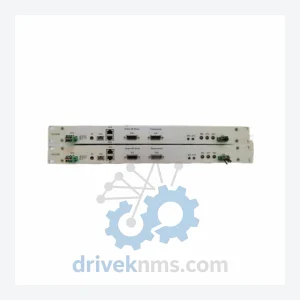
Rofin Sinar 101111198 Laser Controller – Power Supply Series
Rofin Sinar 101111198 Laser Controller: Global Sourcing Strategy & Asset Return Value The Rofin Sinar 101111198 is a precision laser…
Model: K.3784.06
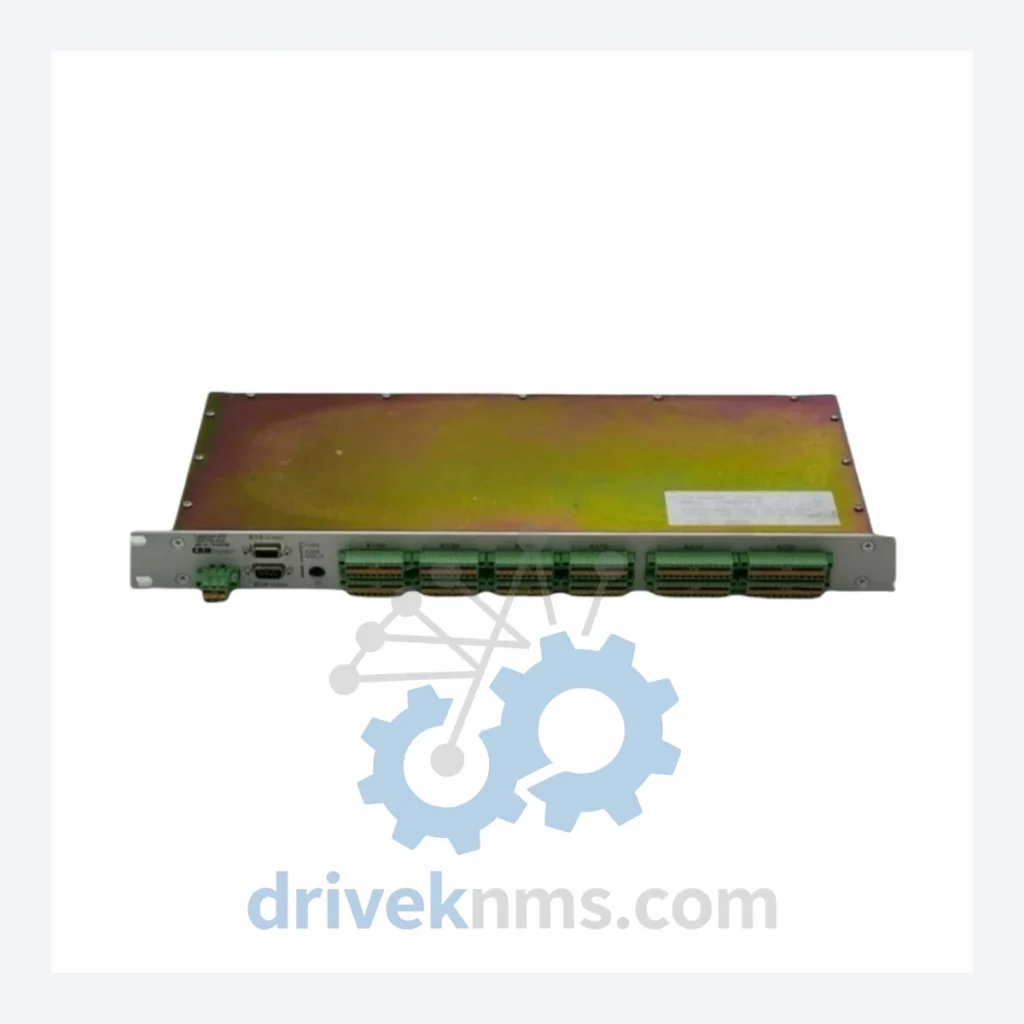
Product Overview
Commercial availability is handled through direct RFQ, model verification and export-oriented follow-up rather than public cart checkout.
Datasheet Preview
Use attached product manuals when available. If the manual is not public yet, request the full file directly through RFQ.
Commercial Path
Product pages on DRIVEKNMS are designed to verify model, brand and series first, then move the buyer into one clean quotation path.
Technical Dossier
When a Rofin-Sinar laser control unit fails on the production floor, the clock starts immediately. For facilities still operating legacy Rofin-Sinar CO₂ or solid-state laser platforms, the K.3784.06 is not a commodity component — it is the nerve center of the entire laser system. A single failed unit can halt cutting, welding, or marking lines that took years and millions of dollars to commission. Replacing the entire laser platform to resolve one failed control board is a decision that carries capital expenditure in the range of $500,000 to several million dollars, plus months of re-integration engineering, retraining, and production downtime. DriveKNMS maintains verified stock of the K.3784.06 specifically to prevent that outcome.
| Parameter | Detail |
|---|---|
| Part Number | K.3784.06 |
| Manufacturer | Rofin-Sinar Technologies |
| Component Type | Laser Control Unit / Control Board |
| Country of Origin | Germany |
| Discontinuation Status | Obsolete – No longer manufactured or supported by OEM |
| Compatible Systems | Rofin-Sinar legacy CO₂ and solid-state laser platforms (series-dependent; confirm with your system documentation) |
| Condition Available | New Old Stock (NOS) / Professionally Refurbished |
Note: Electrical parameters specific to this control unit vary by laser platform configuration. DriveKNMS does not publish unverified specifications. Contact us with your system model for compatibility confirmation.
Rofin-Sinar was acquired by II-VI Incorporated (now Coherent Corp.) in 2016. Legacy product lines, including control electronics such as the K.3784.06, have progressively exited OEM support cycles. Facilities running Rofin-Sinar laser systems installed in the 1990s through early 2010s now face a hard reality: the original manufacturer no longer stocks, repairs, or provides documentation updates for these components.
The K.3784.06 control unit governs core laser operating parameters — power regulation, beam modulation sequencing, and safety interlock logic — within its host system. There is no generic substitute. Any attempt to retrofit a non-OEM control board requires custom firmware development, hardware interface adaptation, and full laser safety re-certification. In regulated manufacturing environments (automotive, aerospace, medical device), that re-certification process alone can consume six to twelve months and significant engineering budget.
The only operationally sound strategy for facilities not yet ready to retire their laser infrastructure is to secure verified replacement units while they remain available on the secondary market. DriveKNMS specializes in exactly this sourcing window — the period between OEM discontinuation and complete market depletion.
For plant managers and maintenance engineers facing pressure to justify continued operation of aging laser systems, the economic case is straightforward when the numbers are examined honestly.
A Rofin-Sinar laser system with a replacement value of $800,000 to $2,000,000 that still performs within specification represents a functioning capital asset. The decision to retire it is driven not by performance failure but by parts availability risk. Eliminating that risk through strategic spare parts procurement changes the retirement calculus entirely.
A structured approach to extending asset life 5–10 years beyond OEM support end-of-life involves three operational pillars:
1. Critical Spare Identification: Map every single-point-of-failure component in the laser system — control boards, power supply modules, beam delivery optics, and motion control cards. The K.3784.06 is a primary candidate on any Rofin-Sinar platform where it is installed.
2. Inventory Positioning: Procure a minimum of one verified spare unit per production line. For high-utilization facilities running two or three shifts, a two-unit buffer is the defensible standard. The cost of two K.3784.06 units is a fraction of one day of unplanned production downtime on a laser-dependent line.
3. Condition Monitoring and Scheduled Inspection: Establish a 6-month inspection cycle for installed control units — checking for electrolytic capacitor degradation, connector oxidation, and thermal stress indicators. Early detection of component aging allows planned replacement during scheduled maintenance windows rather than emergency response during production hours.
This approach has been validated across industrial facilities in automotive body-in-white, electronics manufacturing, and precision metal fabrication sectors. The total cost of a 5-year spare parts program for a legacy laser system is consistently less than 8–12% of the capital cost of a new system installation.
Every K.3784.06 unit processed by DriveKNMS passes a structured 5-stage quality protocol before it is offered for sale:
Stage 1 – Visual and Mechanical Inspection: Full board examination for physical damage, burn marks, cracked solder joints, and connector pin integrity. Units with structural compromise are rejected at this stage.
Stage 2 – Electrolytic Capacitor Assessment: Capacitors are the primary failure mode in control electronics of this age. Each unit undergoes ESR (Equivalent Series Resistance) measurement. Capacitors showing degradation are replaced with specification-matched components.
Stage 3 – Firmware Version Verification: Where firmware is embedded, version identification is documented and cross-referenced against known compatible releases. Units with unverifiable or corrupted firmware states are flagged and disclosed.
Stage 4 – Pin and Connector Corrosion Inspection: All interface connectors are inspected under magnification for oxidation, corrosion, and contact deformation. Affected contacts are treated or the unit is rejected.
Stage 5 – Functional Bench Test (where applicable): Units are powered and tested against baseline operational parameters where test fixture compatibility permits. Test results are documented and available upon request.
The K.3784.06 is designed as a direct replacement within its host Rofin-Sinar laser platform. For maintenance teams, this means:
Drop-in Replacement: The unit installs into the existing mechanical and electrical interface without modification to the host system chassis or wiring harness.
No Reprogramming Required: Control parameters are stored in the host system's configuration, not in the replacement unit. Swap procedures follow standard Rofin-Sinar maintenance documentation.
No Engineering Reconstruction: Unlike third-party retrofit solutions, a verified OEM replacement unit eliminates the need for custom integration work, safety re-certification, or software adaptation — preserving the existing system's validated operating state.
Immediate Operational Restoration: Facilities can return to production within the time required for physical installation and system restart, not weeks or months of integration work.
Q: What warranty applies to an obsolete part like the K.3784.06?
A: DriveKNMS provides a 90-day warranty covering functional defects identified under normal operating conditions. Extended warranty terms are available for volume orders — contact us to discuss.
Q: How do I know the unit is genuine and not a counterfeit?
A: All units are sourced through verified industrial channels. Physical markings, board revision codes, and component configurations are cross-referenced against known authentic units. Documentation of sourcing provenance is available upon request for critical procurement decisions.
Q: Is new old stock (NOS) preferable to refurbished?
A: NOS units have not been subjected to operational stress cycles, which is advantageous for long-term reliability. However, NOS units stored for extended periods may have capacitor degradation from non-use. DriveKNMS assesses each NOS unit through the same QA protocol as refurbished stock and discloses condition accurately.
Q: How many units should we stock as long-term spares?
A: For a single production line, one spare unit is the minimum defensible position. For facilities with two or more laser systems using this control unit, a two-to-three unit reserve is recommended given the diminishing availability of this part on the secondary market.
Q: Can you source additional units if we need more than one?
A: Contact us with your quantity requirement. DriveKNMS maintains sourcing networks across industrial surplus channels globally and can advise on realistic availability timelines.
© 2026 DriveKNMS. (Status: DRAFT)
Related Paths
Rofin Sinar 101111198 Laser Controller: Global Sourcing Strategy & Asset Return Value The Rofin Sinar 101111198 is a precision laser…
ALSTOM MVAJ105RA0802A Protection Relay: Supply Continuity Strategy for a Discontinued Critical Component The ALSTOM MVAJ105RA0802A is a numerical protection relay…
MOORE 16137 Series: Comprehensive Module Range and Technical Overview The MOORE 16137 Series represents a core component family within Moore…