
Honeywell XC Series Modules | XC5010C CPU Module
Honeywell XC Series: Comprehensive Module Range and Technical Overview The Honeywell XC Series represents a core control platform deployed across…
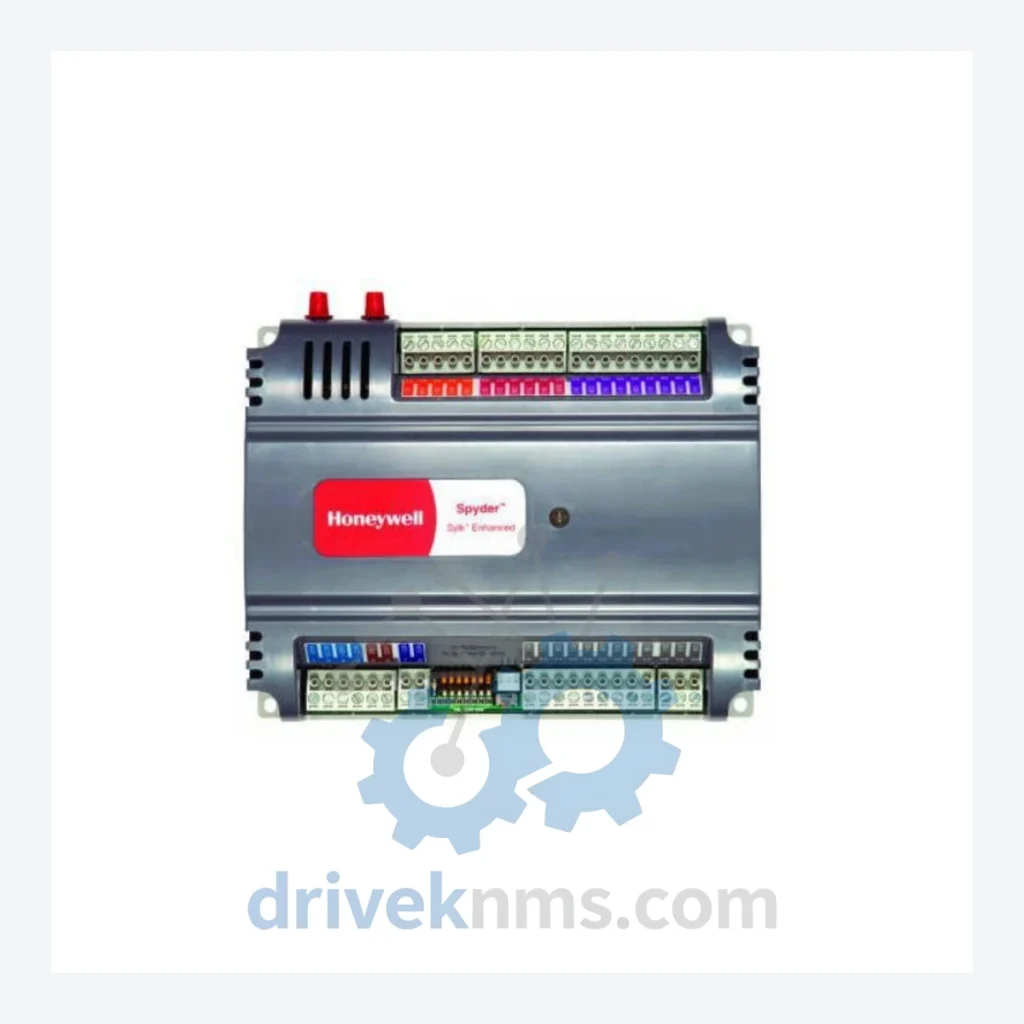
Model: PVL6438N
Product Overview
Commercial availability is handled through direct RFQ, model verification and export-oriented follow-up rather than public cart checkout.
Datasheet Preview
Use attached product manuals when available. If the manual is not public yet, request the full file directly through RFQ.
Commercial Path
Product pages on DRIVEKNMS are designed to verify model, brand and series first, then move the buyer into one clean quotation path.
Technical Dossier
The Honeywell PVL Series of Programmable Variable Air Volume (VAV) Controllers represents one of the most widely deployed HVAC control platforms in global heavy industry and commercial building automation. Installed across petrochemical complexes, pharmaceutical manufacturing facilities, nuclear power plant auxiliary buildings, and large-scale data centers, the PVL Series provides direct digital control (DDC) of VAV terminal units with integrated actuator drive, sensor inputs, and BACnet/LON communications. The series is engineered to operate within Honeywell's broader Excel 5000 and Spyder controller ecosystem, making it a critical node in building management systems (BMS) that require deterministic airflow regulation, energy compliance, and long-term serviceability.
The PVL Series emerged from Honeywell's transition from pneumatic and analog electronic VAV controls to fully digital, network-addressable terminal unit controllers in the mid-1990s. Early-generation units relied on proprietary Honeywell C-Bus communications and required dedicated panel wiring to Excel supervisory controllers. The introduction of BACnet MS/TP support in subsequent hardware revisions enabled integration with third-party BMS platforms, significantly expanding the installed base.
The PVL6000 sub-family — which includes the PVL6438N — introduced a unified hardware platform with onboard actuator electronics, eliminating the need for a separate actuator controller. This reduced panel footprint and simplified commissioning. Later variants added support for CO₂ demand-controlled ventilation (DCV) inputs and expanded analog output capacity for downstream damper trim control. As the series matured into the 2010s, Honeywell progressively migrated new projects toward the Spyder BACnet VAV controller line (e.g., PUL6438S), though the PVL hardware remains in active service across thousands of legacy installations. Replacement parts and refurbished units are the primary procurement path for facilities maintaining PVL-based systems beyond Honeywell's standard support window.
Programmable VAV Controllers (BACnet / LON / C-Bus)
Honeywell has formally discontinued active production of the PVL6000 hardware family. Standard distribution channels no longer carry new-build stock. For facilities operating PVL-based BMS infrastructure — particularly those under long-term service contracts or regulatory compliance frameworks that prohibit wholesale system replacement — DriveKNMS maintains a dedicated inventory of tested surplus, refurbished, and new-old-stock (NOS) PVL Series units.
DriveKNMS sources PVL controllers through verified industrial surplus channels, decommissioned facility buybacks, and authorized secondary market networks. Each unit is cataloged by firmware revision, hardware revision, and communication protocol variant (BACnet/LON/C-Bus) to ensure compatibility with the customer's existing network topology. For end-of-life models where no physical stock is available, DriveKNMS provides cross-reference analysis to identify compatible Honeywell Spyder or third-party BACnet VAV controller substitutes that can be programmed to replicate PVL application logic.
PVL Series controllers integrate actuator drive electronics, multi-protocol communication transceivers, and analog signal conditioning on a single PCB assembly. This architecture requires protocol-specific test procedures that differ from standard I/O module validation.
DriveKNMS applies the following test sequence to all PVL units prior to dispatch: (1) Visual inspection of terminal blocks, actuator drive connector, and PCB for corrosion, capacitor degradation, or mechanical damage. (2) Power-on self-test (POST) verification with firmware version confirmation. (3) BACnet MS/TP or LonWorks network enumeration test using a dedicated test master node to confirm device instance registration and object model integrity. (4) Analog output calibration check across all AO channels (0–10 VDC range) using a calibrated reference meter. (5) Universal input functional test for resistance (NTC/PTC thermistor), voltage (0–10 VDC), and dry contact modes. (6) Actuator drive output load test simulating damper actuator impedance. (7) 48-hour burn-in cycle at 40°C ambient to screen for latent component failures. Units that fail any stage are quarantined for component-level repair or parts recovery.
Related Paths
Honeywell XC Series: Comprehensive Module Range and Technical Overview The Honeywell XC Series represents a core control platform deployed across…
Honeywell MP-DNCF02-200 Single-Phase Power Controller – Obsolete Limitrol Series Spare Part When a single-phase power controller fails inside a legacy…
Honeywell XDL Series: Comprehensive Module Range and Technical Overview The Honeywell XDL series is a core component family within the…