
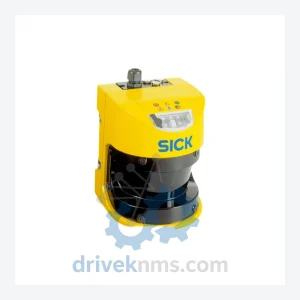
SICK S30A-6011BA Safety Laser Scanner – Obsolete S30A Series Spare Part
SICK S30A-6011BA Safety Laser Scanner – Obsolete S30A Series Spare Part When a SICK S30A-6011BA fails on an active production…
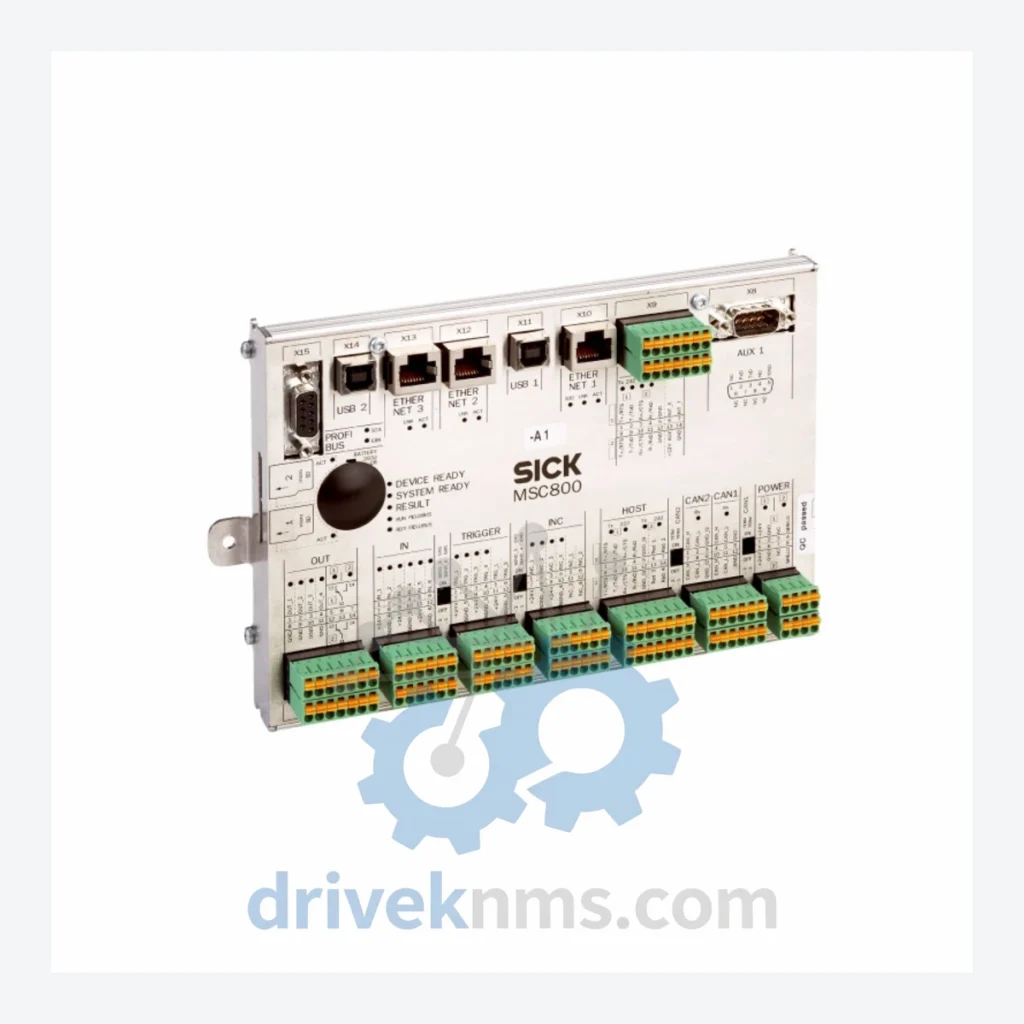
Model: MSC800 2042329
Product Overview
Commercial availability is handled through direct RFQ, model verification and export-oriented follow-up rather than public cart checkout.
Datasheet Preview
Use attached product manuals when available. If the manual is not public yet, request the full file directly through RFQ.
Commercial Path
Product pages on DRIVEKNMS are designed to verify model, brand and series first, then move the buyer into one clean quotation path.
Technical Dossier
When a SICK MSC800 2042329 safety controller fails on an active production line, the consequences are not limited to a single machine going offline. In most facilities where this module is deployed, it sits at the heart of a machine safety architecture that took years to validate, certify, and integrate. Replacing the entire safety system — new controller platform, new safety logic programming, new third-party validation, new CE/UL re-certification — routinely costs between $200,000 and $1,500,000 USD, and that figure does not include production downtime losses. DriveKNMS maintains verified physical stock of the MSC800 2042329. For plant managers and maintenance engineers facing an unplanned failure or planning a long-term spares strategy, this is a direct path to keeping the line running without triggering a capital project.
| Parameter | Detail |
|---|---|
| Manufacturer | SICK AG |
| Part Number | MSC800 2042329 |
| Product Family | MSC800 Modular Safety Controller |
| Product Category | Programmable Safety Controller / Safety PLC |
| Country of Origin | Germany |
| Discontinuation Status | Discontinued / Obsolete – No longer in active production by SICK AG |
| Typical System Compatibility | SICK MSC800 safety controller platform; compatible with SICK Safety Designer configuration software |
| Communication | EFI (Enhanced Function Interface) for SICK sensor integration |
| Safety Standard | IEC 62061 SIL 3 / EN ISO 13849-1 PLe Cat. 4 (platform-level rating) |
Note: Specific electrical parameters for this exact article number are not published in open documentation. DriveKNMS does not fabricate specifications. Contact us for datasheet support.
The SICK MSC800 platform was widely adopted in automotive body shops, press lines, palletizing cells, and collaborative robot perimeter guarding systems throughout the 2000s and 2010s. Its modular architecture — where the central controller coordinates inputs from safety laser scanners, light curtains, and emergency stop circuits — made it the backbone of complex, multi-zone safety systems. That same architectural depth is now the source of the discontinuation problem.
When SICK AG discontinued the MSC800 series, facilities that had built their safety architecture around it were left with three options: source remaining stock from the secondary market, migrate to a current platform (SICK's FlexiSoft or Flexi Compact), or accept the risk of operating without a validated spare. Migration is not a weekend project. It requires safety function re-mapping, new SISTEMA calculations, updated risk assessments, and in regulated industries, fresh third-party audits. For a mid-size automotive supplier running three shifts, the engineering and validation cost alone can exceed six figures before a single production hour is recovered.
Sourcing a verified MSC800 2042329 from DriveKNMS eliminates that path entirely. The existing safety program remains intact. The existing wiring remains intact. The existing validation documentation remains intact. The only change is the physical module.
This is the core logic behind long-term obsolete parts procurement: the cost of the spare part is not measured against its purchase price. It is measured against the cost of the system change it prevents. For assets with 8–15 years of remaining productive life, maintaining a two-to-three unit buffer of critical discontinued controllers is a straightforward capital protection decision. Facilities that implement structured obsolescence sparing programs routinely extend automation asset service life by 5 to 10 years beyond the OEM's support window — deferring multi-million dollar capital expenditure cycles without compromising safety compliance.
Obsolete parts sourced from the secondary market carry inherent risk. DriveKNMS applies a structured 5-step inspection protocol to every MSC800 2042329 unit before it is offered for sale:
Step 1 – Visual and Mechanical Inspection: Full external examination for housing cracks, connector damage, and label integrity. Units with physical damage that could affect sealing or connector engagement are rejected.
Step 2 – Electrolytic Capacitor Assessment: Aged safety controllers are susceptible to electrolytic capacitor degradation, which causes erratic behavior or failure under load. Each unit is inspected for capacitor bulging, leakage, and ESR deviation. Units with suspect capacitors are either reconditioned by qualified technicians or removed from inventory.
Step 3 – Firmware Version Verification: The MSC800 platform is firmware-dependent for safety function execution. We verify and document the firmware version present on each unit. Customers requiring a specific firmware revision are advised prior to purchase.
Step 4 – Pin and Connector Corrosion Check: All I/O connectors and EFI interface pins are inspected under magnification for oxidation, corrosion, and mechanical deformation. Affected contacts are cleaned or the unit is rejected.
Step 5 – Functional Power-On Test: Where test infrastructure permits, units are powered and checked for normal boot behavior and diagnostic LED response. Results are documented and available on request.
Units are shipped in anti-static packaging with desiccant. Condition grade (New Surplus, Refurbished, or Used-Tested) is disclosed on every invoice.
The MSC800 2042329 is a direct drop-in replacement for a failed unit within an existing MSC800 system installation. No hardware redesign is required. The replacement procedure follows SICK's standard module exchange process: power down, swap the controller module, restore the previously saved safety program via SICK Safety Designer, perform the mandatory safety validation outputs check, and return to production. There is no requirement to re-engineer the safety architecture, re-wire field devices, or engage an external safety integrator for the exchange itself.
This drop-in characteristic is the primary financial argument for sourcing the original part rather than migrating platforms. Engineering hours for a platform migration in a complex MSC800 installation — covering safety function re-mapping, new SISTEMA documentation, updated risk assessment, and recommissioning — typically range from 80 to 300 hours depending on system complexity. At standard industrial engineering rates, that represents a cost exposure of $12,000 to $60,000 USD in labor alone, before any hardware costs. A verified spare MSC800 2042329 eliminates that exposure entirely.
Q: What warranty applies to an obsolete part like the MSC800 2042329?
A: DriveKNMS provides a 90-day functional warranty on all tested and refurbished units, and a 30-day warranty on used-tested units. New surplus units carry a 12-month warranty. Warranty terms are confirmed in writing on the sales order.
Q: How do I know the unit is genuine SICK hardware and not a counterfeit?
A: All units are inspected for SICK AG manufacturer markings, PCB silk-screen identifiers, and label authenticity. We do not source from unverified brokers. Provenance documentation is available for units where chain-of-custody records exist.
Q: Should I buy more than one unit as a long-term spare?
A: For any facility where the MSC800 platform is still in active service, holding a minimum of one cold spare per production line is standard practice. Given that secondary market availability of discontinued SICK MSC800 modules is finite and declining, procurement teams managing 3–5 year maintenance horizons should consider securing two to three units now. Once existing secondary market stock is exhausted, no further supply will be available at any price.
Q: Can DriveKNMS source other MSC800 series modules?
A: Yes. Contact us with your full part number list. We maintain relationships with industrial surplus networks across Europe, North America, and Asia-Pacific and can conduct targeted sourcing for complete MSC800 system spares packages.
Related Paths
SICK S30A-6011BA Safety Laser Scanner – Obsolete S30A Series Spare Part When a SICK S30A-6011BA fails on an active production…
SICK VL180-2P42436 Photoelectric Sensor – Obsolete W180 Spare Part When a SICK VL180-2P42436 fails on an active production line, the…
SICK LMS511 Series: Comprehensive Module Range and Technical Overview The SICK LMS511 is a long-range 2D LiDAR (Light Detection and…