
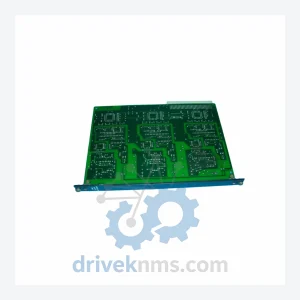
GE IS200 Modules | IS200BPIBG1AEB Driver Board
GE IS200 Series: Comprehensive Module Range and Technical Overview The GE IS200 series constitutes the core I/O, control, and communication…
Model: IS210AEAAH2BJE
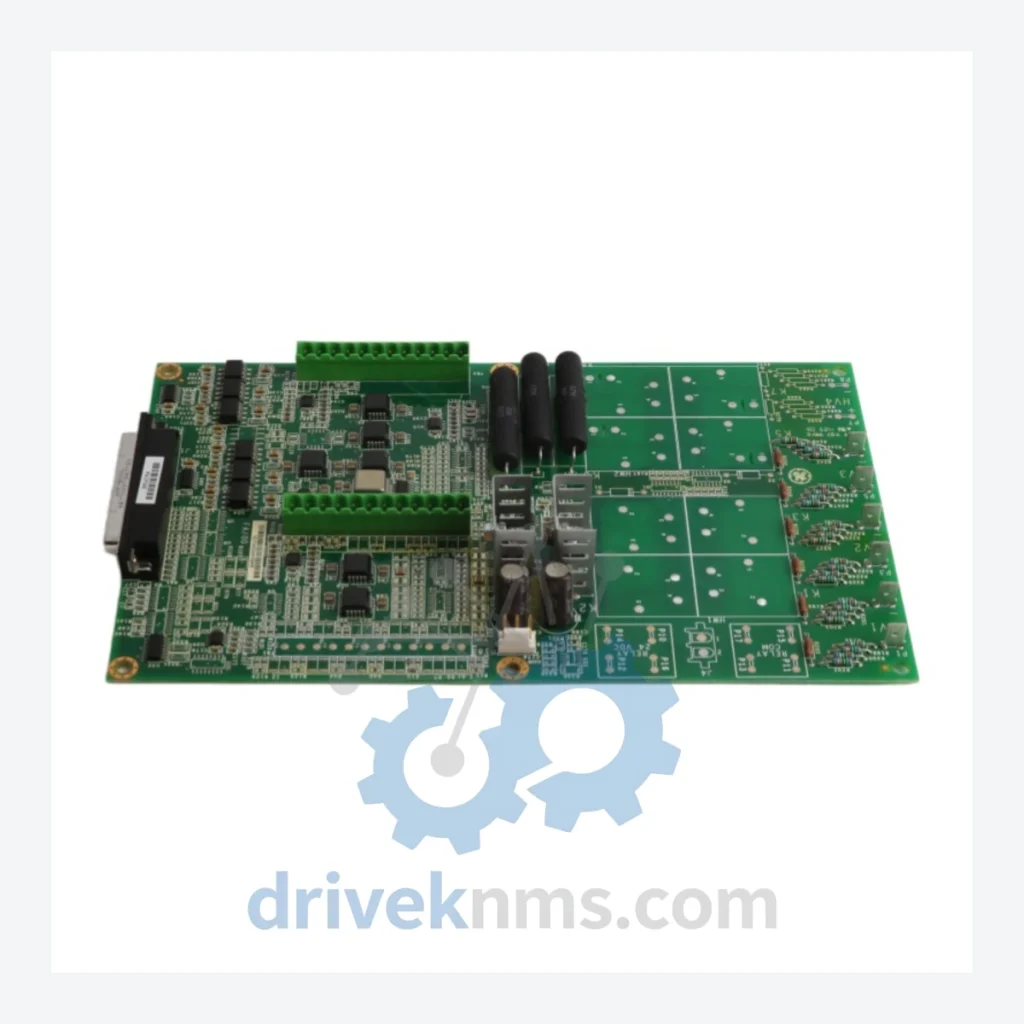
Product Overview
Commercial availability is handled through direct RFQ, model verification and export-oriented follow-up rather than public cart checkout.
Datasheet Preview
Use attached product manuals when available. If the manual is not public yet, request the full file directly through RFQ.
Commercial Path
Product pages on DRIVEKNMS are designed to verify model, brand and series first, then move the buyer into one clean quotation path.
Technical Dossier
The GE IS210 series represents the core I/O and control module family deployed within GE's Mark VI Turbine Control System and EX2100 Excitation Control platform. These systems are installed across the global heavy industrial base — including combined-cycle gas turbine plants, nuclear auxiliary systems, petroleum refinery compressor trains, and petrochemical reactor control loops. The IS210 designation covers a broad range of printed circuit board assemblies (PCBAs) that interface directly with the VME-based backplane architecture of the Mark VI cabinet. Installed base estimates place Mark VI and EX2100 systems in service at thousands of sites across North America, Europe, the Middle East, and Asia-Pacific, with many units commissioned between 1995 and 2015 now entering extended lifecycle or end-of-support phases.
The IS210 module family was introduced as part of GE's transition from the earlier Mark V platform (IS200 series) to the fully digital, triple-redundant Mark VI architecture in the mid-1990s. The Mark VI system uses a TMR (Triple Modular Redundancy) or simplex configuration, with IS210 boards occupying defined slots in the VCMI, VTUR, VPRO, and VAUX I/O packs. Early IS210 revisions (suffix A, B) used through-hole and mixed SMT construction; later revisions (suffix E, F, H) transitioned to full SMT with conformal coating options (suffix J in the part number indicates conformal coat). The IS210 architecture communicates over the Mark VI IONet (a proprietary Ethernet-based I/O network) and the ARCNET serial bus for legacy compatibility. As GE transitioned to the Mark VIe platform post-2010, IS210 boards were not forward-compatible, creating a permanent installed-base dependency on original or equivalent replacement modules. Many IS210 variants are now classified as obsolete by GE Vernova (formerly GE Gas Power), making third-party sourcing the primary procurement channel for maintenance and emergency replacement.
The following SKUs represent verified, commonly sourced IS210 series modules. Each entry reflects the module's primary functional role within the Mark VI or EX2100 system architecture.
Analog & Digital I/O Boards
Digital Input / Output Modules
CPU & Controller Boards
Communication & Network Adapters
Power Supply Modules
GE Vernova formally discontinued active manufacturing support for the majority of IS210 series boards as part of the Mark VIe migration program. Lead times from OEM channels — where parts remain available — routinely exceed 26 weeks. DriveKNMS maintains a dedicated inventory of IS210 modules sourced from decommissioned Mark VI cabinets, controlled plant shutdowns, and verified surplus channels. All units are catalogued by full part number including revision suffix and conformal coat designation. For operators running Mark VI systems beyond their original design life, DriveKNMS provides lifecycle extension support: identifying functional equivalents, cross-referencing revision compatibility, and supplying tested replacements to minimize unplanned downtime. Emergency same-day dispatch is available for critical turbine protection and excitation control modules.
IS210 boards present specific test challenges due to their VME backplane interface, proprietary ARCNET/IONet communication stacks, and mixed analog-digital signal paths. DriveKNMS applies a structured test protocol to all IS210 units prior to dispatch. Visual inspection covers solder joint integrity, conformal coat condition, and component-level damage assessment under 10× magnification. Functional testing uses a dedicated Mark VI rack simulator to verify backplane communication, I/O channel response, and firmware version compatibility. Analog I/O boards are tested against calibrated signal sources across the full 4–20 mA and thermocouple input ranges. Digital I/O boards are verified for contact wetting voltage thresholds and output drive current. Communication boards are tested for ARCNET node addressing and Ethernet link negotiation. All units are assigned a test record with pass/fail data retained for traceability.
Related Paths
GE IS200 Series: Comprehensive Module Range and Technical Overview The GE IS200 series constitutes the core I/O, control, and communication…
GE IS200 Series: Comprehensive Module Range and Technical Overview The GE IS200 series is the core I/O and control module…
GE IS215 Series: Comprehensive Module Range and Technical Overview The GE IS215 series represents a core hardware family within GE's…