
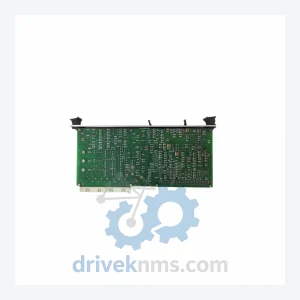
Yokogawa K9634DA-01 TCD Card Modules
Yokogawa K9634DA Series: Comprehensive Module Range and Technical Overview The Yokogawa K9634DA series TCD (Thermocouple/mV Input) cards are field-proven I/O…
Model: NCP00039-E
Product Overview
Commercial availability is handled through direct RFQ, model verification and export-oriented follow-up rather than public cart checkout.
Datasheet Preview
Use attached product manuals when available. If the manual is not public yet, request the full file directly through RFQ.
Commercial Path
Product pages on DRIVEKNMS are designed to verify model, brand and series first, then move the buyer into one clean quotation path.
Technical Dossier
When a contact output module fails inside a Yokogawa CENTUM-based distributed control system, the consequences extend far beyond a single I/O card. The CENTUM platform — deployed across refineries, chemical plants, and power generation facilities throughout the 1990s and 2000s — was engineered for decades of continuous operation. Replacing it today means re-engineering the entire control architecture: new controllers, new HMI software, new field wiring, new operator training, and a plant shutdown measured in weeks, not days. Conservative estimates place the total cost of a full DCS migration at USD $2,000,000 to $8,000,000 per unit, depending on process complexity. A single NCP00039-E sourced from verified stock eliminates that risk entirely. DriveKNMS maintains a carefully managed inventory of this module specifically for facilities that cannot afford to treat a hardware failure as a migration trigger.
| Parameter | Detail |
|---|---|
| Manufacturer | Yokogawa Electric Corporation |
| Part Number | NCP00039-E |
| Module Type | Contact Output Module |
| Compatible Platform | Yokogawa CENTUM Series DCS |
| Country of Origin | Japan |
| Discontinuation Status | Obsolete – No longer manufactured or supported by Yokogawa |
| Typical System Context | CENTUM-XL, CENTUM CS, CENTUM CS 1000/3000 legacy installations |
Note: Electrical parameters such as output contact rating, isolation voltage, and channel count are not published here to avoid inaccuracy. Please contact us directly for verified datasheet documentation.
The NCP00039-E is a contact output module designed for Yokogawa's CENTUM distributed control system family — a platform that remains operational in a significant number of process industry facilities worldwide despite having passed its official end-of-life date. Within the CENTUM architecture, contact output modules handle discrete on/off signaling to field devices: motor starters, solenoid valves, shutdown relays, and interlock circuits. These are not peripheral functions. They sit directly in the path of process safety and production continuity.
Yokogawa ceased manufacturing and providing factory support for legacy CENTUM hardware years ago. Authorized spare parts channels have dried up. When an NCP00039-E fails, the facility's options narrow quickly: source a replacement from the secondary market, or begin an unplanned DCS migration under operational pressure — the worst possible conditions for a capital project of that scale.
Facilities running CENTUM-XL or early CENTUM CS installations face a compounding problem: the longer the system has been in service, the more the surrounding infrastructure — field wiring, junction boxes, marshalling cabinets, operator interfaces — has been optimized around it. Ripping out the DCS does not just mean replacing the controllers. It means re-commissioning an entire layer of plant infrastructure that was never budgeted for replacement.
Maintaining a verified stock of modules like the NCP00039-E is not a short-term fix. It is a deliberate asset protection strategy. A facility that holds two to three spare contact output modules can absorb hardware failures without production impact for years. The cost of that inventory is a fraction of one day of unplanned downtime in a continuous process environment.
For plant engineering and maintenance managers facing pressure to justify continued operation of legacy DCS platforms, the arithmetic is straightforward: the annualized cost of a strategic spare parts program for a CENTUM installation is typically less than 0.5% of the capital cost of a full migration. That ratio makes the case without requiring further elaboration.
Every NCP00039-E unit processed by DriveKNMS passes through a structured five-step quality verification protocol before it is offered for sale. This process was developed specifically for obsolete industrial control hardware, where standard incoming inspection procedures are insufficient.
Step 1 – Visual and Mechanical Inspection: Full examination of the PCB, connector pins, and housing for physical damage, corrosion, or evidence of prior field failure. Units with pin corrosion, burn marks, or compromised connector integrity are rejected at this stage.
Step 2 – Electrolytic Capacitor Assessment: Legacy modules manufactured in the 1990s and early 2000s are subject to electrolytic capacitor degradation. Each unit is inspected for capacitor bulging, leakage, and ESR deviation. Capacitors showing measurable degradation are replaced with specification-matched components before the unit proceeds.
Step 3 – Firmware and Label Verification: Where applicable, firmware revision markings and hardware revision labels are cross-referenced against known CENTUM compatibility matrices to confirm the unit is appropriate for the target system version.
Step 4 – Functional Bench Test: Output contact switching function is verified under controlled conditions. Units that fail to meet switching performance criteria are removed from inventory.
Step 5 – Packaging and Documentation: Verified units are packaged in anti-static materials with full traceability documentation. Condition grade (New Old Stock, Refurbished, or Tested Used) is clearly stated on all shipping documents.
The NCP00039-E is a direct drop-in replacement for failed units within compatible CENTUM installations. No controller reconfiguration, no software modification, and no field wiring changes are required in standard replacement scenarios. This is the defining advantage of sourcing an original-specification module versus attempting to engineer a substitute using modern I/O hardware.
Engineering a non-original substitute into a legacy CENTUM system requires custom signal conditioning, potential modifications to the I/O bus interface, and — in safety-instrumented environments — a full re-validation of the affected safety function. The engineering hours alone typically exceed USD $50,000. The NCP00039-E eliminates that cost entirely. Slot it in, restore the configuration from backup, and return the loop to service.
For facilities operating under ISA-84 or IEC 61511 functional safety frameworks, maintaining original hardware specifications also avoids the management-of-change documentation burden that comes with any non-like-for-like substitution. That is a compliance consideration that procurement teams frequently overlook until they are in the middle of an unplanned repair.
What warranty applies to an obsolete module like the NCP00039-E?
DriveKNMS provides a 90-day functional warranty on all tested and refurbished units, and a 30-day warranty on tested-used units. New Old Stock units are sold with a 180-day warranty. Warranty terms are confirmed in writing prior to shipment.
How do I know the unit is genuine and not a counterfeit?
All units are sourced from decommissioned plant equipment, authorized liquidators, or verified industrial surplus channels. Physical markings, PCB revision codes, and component configurations are cross-checked against reference units. We do not source from unverified grey-market aggregators.
Should I buy more than one unit?
For any CENTUM installation that intends to remain in service for more than three years, holding a minimum of two spare contact output modules is a reasonable maintenance posture. The NCP00039-E is no longer manufactured. Each unit that leaves the secondary market reduces the available pool permanently. Facilities that have experienced one failure should treat it as a signal to build a small strategic reserve rather than returning to a zero-spare position.
Can you source additional quantity if I need more than one unit?
Contact us with your required quantity. We maintain relationships with industrial surplus networks globally and can often locate additional units beyond our current listed stock. Lead times for sourced units vary; contact us for a current assessment.
Related Paths
Yokogawa K9634DA Series: Comprehensive Module Range and Technical Overview The Yokogawa K9634DA series TCD (Thermocouple/mV Input) cards are field-proven I/O…
Yokogawa UT350-01 Digital Indicating Controller – Obsolete UT Series Spare Part When a Yokogawa UT350-01 fails on the plant floor,…
YOKOGAWA NFDR Series: Comprehensive Module Range and Technical Overview The YOKOGAWA NFDR series relay output modules are core field control…