
LTI 1345.811.1-02 1340.013.1-00 Module – Obsolete Legacy Spare Part
LTI 1345.811.1-02 1340.013.1-00 Module – Obsolete Legacy Spare Part When this module fails, the question is not whether to repair…
Model: LSC-192-2-20-560-P6B0R1PM0
Product Overview
Commercial availability is handled through direct RFQ, model verification and export-oriented follow-up rather than public cart checkout.
Datasheet Preview
Use attached product manuals when available. If the manual is not public yet, request the full file directly through RFQ.
Commercial Path
Product pages on DRIVEKNMS are designed to verify model, brand and series first, then move the buyer into one clean quotation path.
Technical Dossier
The LTI (Linear Technology Inc.) LSC-192 series represents a line of brushless AC servo motors engineered for precision motion control in heavy industrial environments. These units are deployed across chemical processing plants, oil refineries, nuclear facility auxiliary systems, and continuous-process manufacturing lines where positional accuracy, thermal stability, and long mean-time-between-failure (MTBF) ratings are non-negotiable. The LSC-192 frame designation indicates a 192 mm stack length motor body, a form factor that positions this series in the mid-to-high torque segment of LTI's servo catalog. Installations in distributed control system (DCS) architectures—particularly those paired with LTI servo drives such as the SV and MV series—rely on LSC-192 motors as the final actuator element in closed-loop velocity and torque control loops. The series is compatible with resolver and encoder feedback configurations, making it integrable into both legacy analog control systems and modern digital fieldbus architectures (PROFIBUS, DeviceNet, EtherCAT).
The LSC-192 series was introduced as part of LTI's second-generation servo motor platform, succeeding earlier LSC-140 and LSC-165 frame motors that served lighter-duty applications. The core architectural shift in the LSC-192 generation was the adoption of rare-earth permanent magnet (REPM) rotor construction, replacing earlier ferrite-magnet designs. This transition delivered a significant improvement in continuous torque density (Nm/kg) and reduced rotor inertia, enabling faster dynamic response in high-cycle applications such as packaging machinery and CNC axis drives.
Early LSC-192 variants used single-turn resolvers as the standard feedback device. As digital motion control became prevalent through the 1990s and 2000s, LTI introduced encoder-equipped variants (incremental and absolute multi-turn) to support digital drive interfaces. The suffix structure in the model number encodes these options: feedback type, winding voltage class, brake configuration, shaft and connector options are all embedded in the alphanumeric string following the base frame designation.
The LSC-192 series has entered the mature/end-of-life phase of its product lifecycle. LTI (subsequently absorbed into the broader Lenze group ecosystem) has transitioned new design-ins toward the MCS and GSS servo motor families. However, the installed base of LSC-192 units in legacy DCS and CNC systems remains substantial, and replacement units are not directly form-factor compatible with newer series without mechanical and electrical adaptation. This makes long-term spare parts availability a critical operational concern for maintenance engineers.
The following SKUs represent verified models within the LTI LSC-192 servo motor series, organized by winding and configuration class. Each entry reflects a distinct combination of continuous stall torque, rated speed, feedback device, brake option, and connector type as encoded in the model suffix.
LSC-192-2-20-560-P6B0R1PM0: 192-frame, 2-pole, 20 Nm cont. torque, 560V class, resolver feedback, no brake, standard shaft
LSC-192-2-20-560-P6B0R1PM1: Same base spec as PM0 with alternate connector pinout configuration
LSC-192-2-30-560-P6B0R1PM0: 30 Nm continuous stall torque variant, 560V class, resolver, no brake
LSC-192-2-30-560-P6B1R1PM0: 30 Nm, 560V, resolver feedback, with integrated spring-set holding brake
LSC-192-2-40-560-P6B0R1PM0: 40 Nm continuous torque, 560V winding, resolver, no brake, standard shaft
LSC-192-2-40-560-P6B1R1PM0: 40 Nm, 560V, resolver, with holding brake option
LSC-192-2-20-400-P6B0R1PM0: 20 Nm, 400V class winding, resolver feedback, no brake
LSC-192-2-30-400-P6B0R1PM0: 30 Nm, 400V class, resolver, no brake
LSC-192-2-30-400-P6B1R1PM0: 30 Nm, 400V, resolver, with integrated brake
LSC-192-2-40-400-P6B0R1PM0: 40 Nm, 400V winding class, resolver, no brake
LSC-192-2-20-560-P6B0E1PM0: 20 Nm, 560V, incremental encoder feedback variant (replaces resolver suffix R1 with E1)
LSC-192-2-30-560-P6B0E1PM0: 30 Nm, 560V, incremental encoder, no brake
LSC-192-2-40-560-P6B0E1PM0: 40 Nm, 560V, incremental encoder, no brake
LSC-192-2-30-560-P6B0A1PM0: 30 Nm, 560V, absolute multi-turn encoder, no brake
LSC-192-2-40-560-P6B1A1PM0: 40 Nm, 560V, absolute encoder, with holding brake
LSC-192-4-20-560-P6B0R1PM0: 4-pole winding variant, 20 Nm, 560V, resolver, no brake — lower rated speed range
LSC-192-4-30-560-P6B0R1PM0: 4-pole, 30 Nm, 560V, resolver, no brake
DriveKNMS maintains a dedicated inventory program for end-of-life LTI servo motor series, including the LSC-192 range. As LTI has discontinued active production of this series, procurement through standard distribution channels is no longer reliable. DriveKNMS sources LSC-192 units through a network of decommissioned plant equipment, controlled surplus inventory, and verified refurbishment pipelines.
All LSC-192 units offered by DriveKNMS are subject to full electrical and mechanical inspection prior to dispatch. For customers operating legacy DCS or CNC systems with LSC-192 motors installed, DriveKNMS recommends establishing a consignment stock arrangement to mitigate unplanned downtime risk. Cross-reference support is available for customers seeking to identify equivalent replacement units where direct LSC-192 substitution is not possible.
The LSC-192 series presents specific inspection requirements due to its resolver/encoder feedback integration and multi-pole permanent magnet rotor construction. DriveKNMS applies the following test protocol to all LSC-192 units processed through its facility:
Winding resistance and insulation resistance (IR) testing is performed on all three phases against chassis ground at 500V DC, with acceptance threshold of ≥100 MΩ. Resolver/encoder signal verification is conducted using a dedicated servo drive test bench to confirm feedback signal integrity across the full electrical cycle. Bearing condition assessment includes both auditory inspection under no-load rotation and vibration signature analysis to detect early-stage race or ball defects. Brake engagement and release force measurement is performed on all brake-equipped variants (B1 suffix) to confirm spring-set torque within OEM specification. Back-EMF waveform analysis confirms rotor magnet integrity and rules out partial demagnetization in units with unknown storage history. Units passing all stages are tagged with a DriveKNMS inspection certificate and dispatched with a 12-month operational warranty.
Related Paths
LTI 1345.811.1-02 1340.013.1-00 Module – Obsolete Legacy Spare Part When this module fails, the question is not whether to repair…
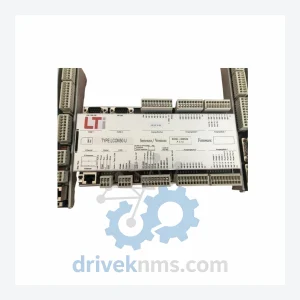
LTI LCON50-U EC50-000532 Servo Motor – Obsolete EC50 Series Spare Part When a servo motor fails on a production line…
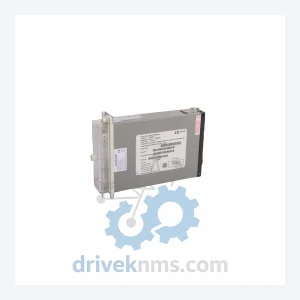
ALSTOM MVAJ105RA0802A Protection Relay: Supply Continuity Strategy for a Discontinued Critical Component The ALSTOM MVAJ105RA0802A is a numerical protection relay…