
Honeywell XC Series Modules | XC5010C CPU Module
Honeywell XC Series: Comprehensive Module Range and Technical Overview The Honeywell XC Series represents a core control platform deployed across…
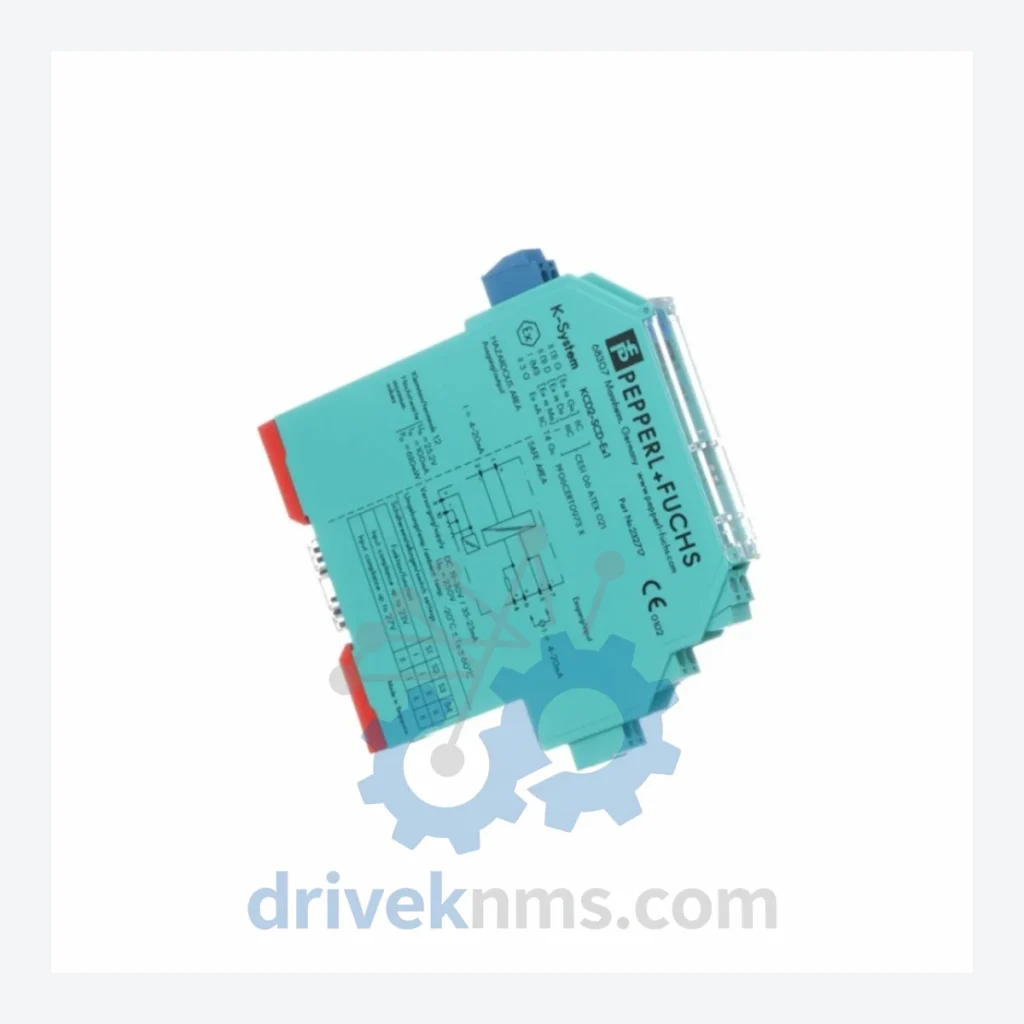
Model: KCD2-SCD-EX1 KCD2-STC-EX1
Product Overview
Commercial availability is handled through direct RFQ, model verification and export-oriented follow-up rather than public cart checkout.
Datasheet Preview
Use attached product manuals when available. If the manual is not public yet, request the full file directly through RFQ.
Commercial Path
Product pages on DRIVEKNMS are designed to verify model, brand and series first, then move the buyer into one clean quotation path.
Technical Dossier
The Honeywell KCD2 series is a family of DIN-rail-mounted signal conditioners and isolators engineered for hazardous-area process automation. Deployed extensively in chemical plants, oil refineries, nuclear facilities, and offshore platforms, KCD2 modules serve as the interface layer between field instruments in Zone 0/1/2 hazardous areas and safe-area control systems including DCS, PLC, and SCADA platforms. The series is manufactured to ATEX, IECEx, and FM certification standards, making it a globally accepted solution for intrinsic safety (Ex i) and non-incendive applications. Its compact 12.5 mm or 17.5 mm housing width enables high-density marshalling cabinet installations, a critical requirement in brownfield plant expansions where rack space is constrained.
The KCD2 platform succeeded Honeywell's earlier KFD and KFA series isolator families, introducing a standardized 24 VDC bus-powered architecture that eliminated the need for individual module power wiring. Early KCD2 variants (circa late 1990s–2000s) focused on passive isolation for 4–20 mA HART loops. Subsequent generations added active signal conditioning, short-circuit protection, and HART transparency — allowing HART-capable field devices to communicate through the isolator to the host system without signal degradation. The SCD (Signal Conditioner with HART) and STC (Smart Transmitter Conditioner) sub-families represent the mature phase of this architecture, optimized for two-wire transmitter loops in Ex ia IIC environments. As the KCD2 series has entered its mature/end-of-active-production lifecycle for several variants, long-term maintenance support — including tested surplus and refurbished stock — has become the primary sourcing channel for installed-base operators.
The following SKUs represent the verified KCD2 series module range, classified by function:
Smart Transmitter Power Supply / Signal Conditioners (Ex i, HART-Transparent)
Switch Amplifiers / Discrete Input Modules (Ex i)
Temperature / Thermocouple / RTD Input Modules
Frequency / Pulse Input Modules
Power Supply / Bus Modules
Several KCD2 variants — including the KCD2-SCD-EX1 and KCD2-STC-EX1 — are no longer in active production by Honeywell. Plants operating legacy DCS architectures (Honeywell TDC 3000, Experion PKS early generations, or third-party DCS with KCD2 marshalling) face a sourcing gap when modules fail or require expansion. DriveKNMS maintains a dedicated inventory of tested surplus KCD2 modules sourced from decommissioned plant assets, authorized distributors, and controlled warehouse stock. Each unit undergoes functional verification before dispatch. For operators requiring long-term maintenance agreements or bulk procurement for planned turnarounds, DriveKNMS provides multi-year supply contracts with guaranteed lead times. Obsolete part numbers are cross-referenced against current Honeywell equivalents (e.g., KFD2 series replacements) where applicable, and migration guidance is available on request.
KCD2 modules incorporate a passive backplane bus and precision analog signal paths that require specialized test procedures beyond standard continuity checks. DriveKNMS applies the following protocol to all KCD2 units: (1) Visual inspection of terminal blocks, conformal coating integrity, and housing for mechanical damage. (2) Bus power injection at 24 VDC nominal with current draw verification against datasheet specifications. (3) Loop simulation using a calibrated 4–20 mA source/sink to verify signal accuracy across the full range (0%, 25%, 50%, 75%, 100% of span). (4) HART communication test using a HART modem to confirm transparent pass-through on SCD and STC variants. (5) Isolation resistance test between field-side and supply-side circuits (minimum 500 VDC, ≥10 MΩ). (6) Burn-in at rated load for 24 hours prior to shipment for refurbished units. All test records are retained and available to customers upon request.
Related Paths
Honeywell XC Series: Comprehensive Module Range and Technical Overview The Honeywell XC Series represents a core control platform deployed across…
Honeywell MP-DNCF02-200 Single-Phase Power Controller – Obsolete Limitrol Series Spare Part When a single-phase power controller fails inside a legacy…
Honeywell XDL Series: Comprehensive Module Range and Technical Overview The Honeywell XDL series is a core component family within the…