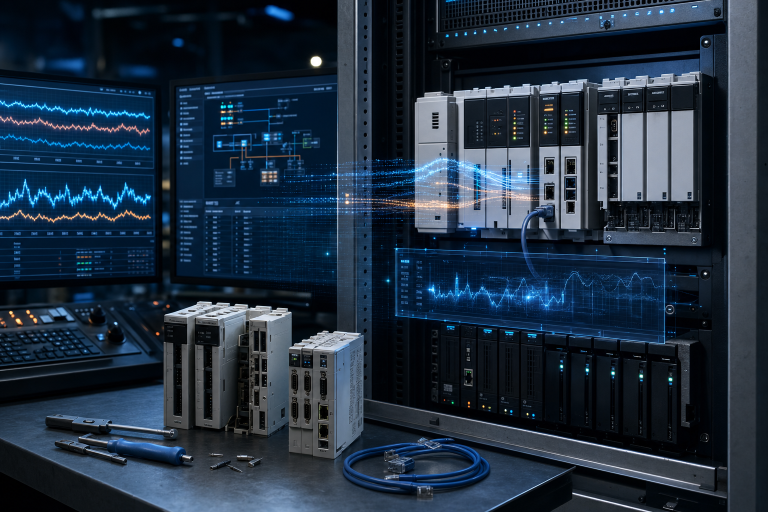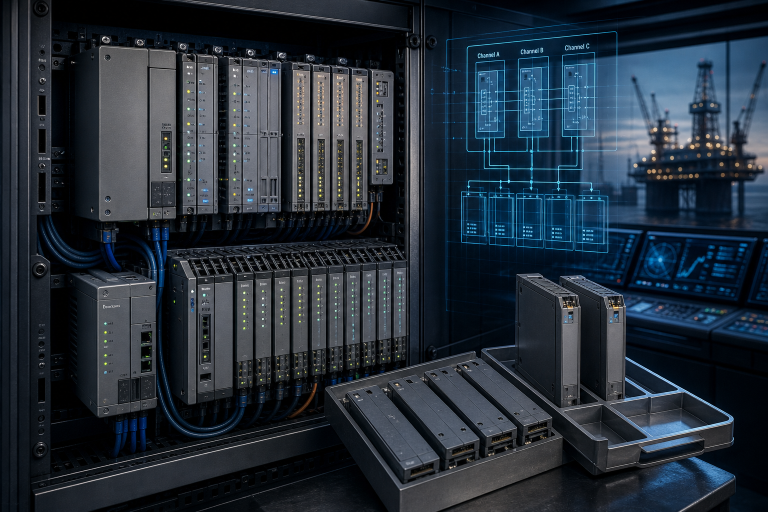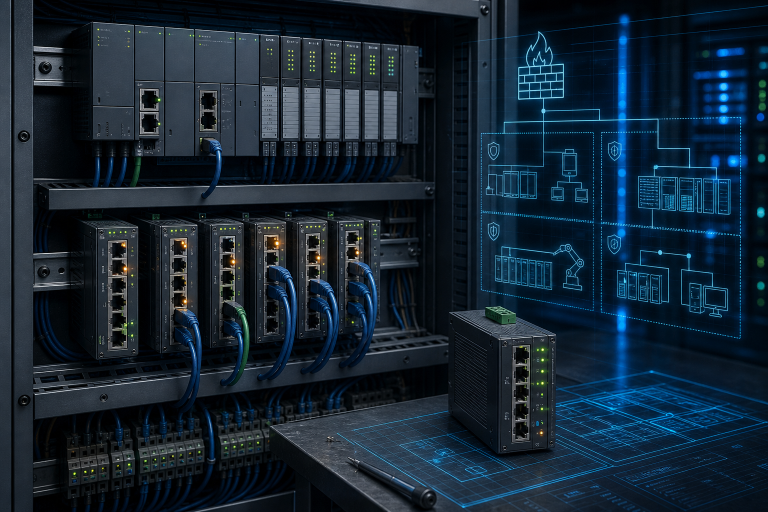
In the specialized landscape of power generation and water/wastewater management, the ABB Symphony Plus platform—and its deep lineage stretching back through Harmony and the venerable INFI 90—remains the backbone of critical infrastructure. As we reach the midpoint of 2026, the industrial automation world is buzzing with talk of “Software-Defined Control” and “Cloud-Native Orchestration.” However, for the reliability engineer standing in the control room of a mid-life thermal plant or a municipal water facility, these buzzwords often clash with a much harsher reality: the physical scarcity of the SD Series and Harmony/INFI 90 heritage hardware.
As an expert with over 20 years in the DCS trenches, I’ve seen the “Symphony” evolve through many movements. In 2026, we have reached a paradoxical phase. ABB is aggressively promoting its “Automation Extended” roadmap, which focuses on integrating Symphony Plus into the broader 800xA ecosystem. While this modernization is inevitable for the next generation of plants, it has created a “Support Shadow” for the existing fleet. The OEM’s manufacturing focus has pivoted toward high-density, smart I/O, leaving the “Classic” SD Series components—specifically the SPC70 processors and the CI850 communication cards—in a state of “Phantom Scarcity.” Today, we audit the state of Symphony Plus hardware sovereignty in 2026 and how to bridge the gap between legacy reliability and future modernization.
The SD Series Squeeze: The 2026 Scarcity Audit
The Symphony Plus SD Series (SPlus SD) was designed to be the bridge from Harmony/INFI 90 to the modern age. But in 2026, that bridge is under immense traffic. As global power demand continues to surge—driven by the very AI data centers that are consuming the semiconductor capacity needed for industrial chips—the lead times for verified, audited SD Series modules have hit a critical threshold.
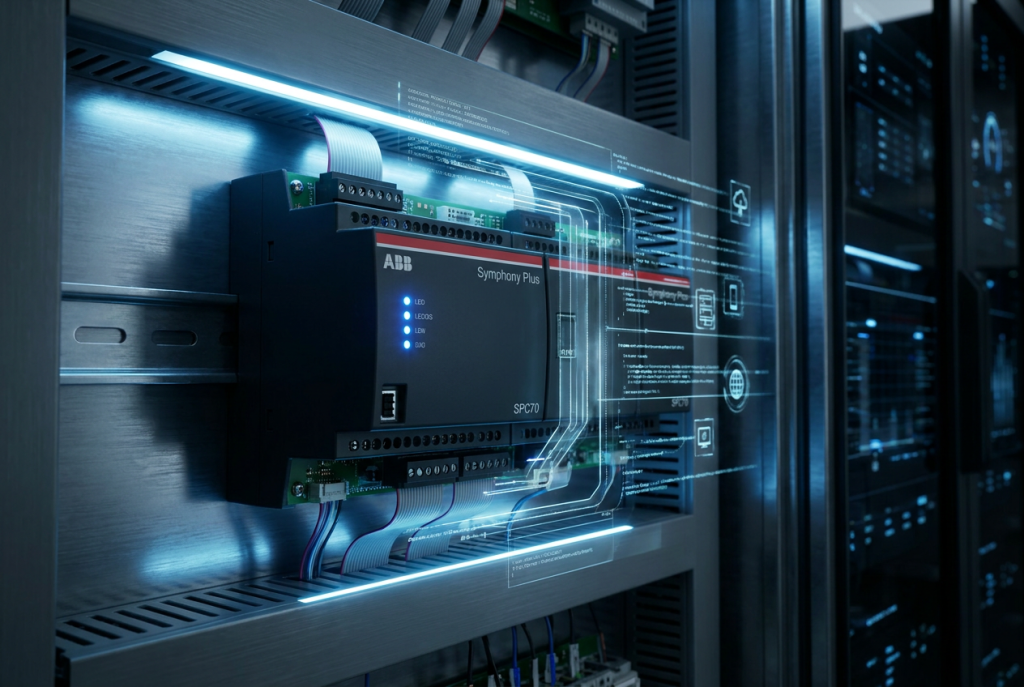
The SPC70 Symphony Plus Controller is currently the epicenter of the scarcity spike. As plants reach the end of their 10-15 year hardware cycles, the demand for verified, technically audited processor cards has far outstripped the available new-build supply. This isn’t just about finding a part; it’s about finding a part that has undergone a rigorous health audit. In 2026, “Used” hardware from unverified sources is a ticking time bomb. Maintaining hardware sovereignty means securing an inventory of PLC and DCS control modules that have been functionally verified for backplane integrity and firmware parity.
Harmony/INFI 90 Integration: The ‘Vortex’ of Obsolescence
For the “Heritage” Harmony and INFI 90 users who integrated their racks into Symphony Plus over the last decade, 2026 presents a unique challenge. Many of these systems are running on BRC300 or BRC400 Bridge Controllers connected via IET800 or HNET interfaces. These components are now decades into their lifecycle, and the specialized silicon they rely on is no longer in mass production. We are seeing a “Vortex” of obsolescence where the failure of a single $2,000 communication card can threaten the uptime of a $100M power block.
The risk of “Forced Migration” is higher in 2026 than ever before. The OEM’s solution is often a total system rip-and-replace, which can take 12-18 months of engineering and procurement time. But for most operators, the most pragmatic move is “Lifecycle Extension through Audited Spares.” By securing brand and model specific spares for your Harmony/INFI 90 heritage layers, you reclaim the power to dictate your own modernization schedule. You are no longer at the mercy of a “Limited Support” letter; you are the master of your own hardware sovereignty.
The Firmware Friction of 2026
One of the most overlooked risks in 2026 is “Firmware Friction.” As ABB releases security-hardened firmware updates for Symphony Plus (as noted in the April and June 2026 advisories), users are finding that older revisions of SD Series cards cannot support the new encryption overhead. This creates a “Security Gap” where you are forced to choose between a vulnerable system and a sluggish, potentially unstable controller. This is why a proactive audit of your monitoring and control system hardware is essential. You need to know not just what parts you have, but what *revision* and *firmware capacity* they possess.
At DriveKNMS, we specialize in the technical audit of heritage ABB hardware. We understand that a Symphony Plus rack is a living system. We don’t just “stock” parts; we verify the electrolytic capacitor health, the communication buffer integrity, and the firmware parity of every SPC70 and CI850 card. In a year where the global supply chain is still reeling from the foundry realignments of 2024-2025, having an audited reserve is the only real insurance policy for your critical infrastructure.
The 2026 Symphony Plus Resilience Checklist:
- SPC70 Health Audit: Have your Symphony Plus controllers been audited for “Boot-Loop” symptoms or memory parity errors? These are the primary indicators of hardware fatigue in 2026.
- CI850 Communication Check: Are your CI850 communication cards struggling to maintain sync with the newer secure-gateway nodes? Firmware overhead is a growing issue.
- I/O Termination Audit: Check your S800 and SD Series termination units for signs of heat-induced oxidation. In the high-demand environments of 2026, thermal stress is the silent killer.
- Strategic Sourcing: Have you identified a partner for emergency Symphony Plus spares that provides verified technical audit reports?
Conclusion: The Expert’s Edge
The 2026 “Heritage Hardware” challenge is not a reason for panic; it is a call for expertise. The ABB Symphony Plus and its Harmony/INFI 90 ancestors are some of the most robust control architectures ever built. With the right hardware strategy, they can continue to protect your process for another decade. By securing your audited spares today, you ensure that your plant’s uptime is protected by your foresight, not limited by a global supply shortage. Expertise is the only constant in an era of shifting lifecycles.
Frequently Asked Questions (FAQ)
1. Can I use older INFI 90 BRC100 modules in a Symphony Plus SD Series rack?
Technically, the BRC100 and SPC70 are from different branches of the heritage tree. While Symphony Plus can “talk” to INFI 90 racks via Bridge Controllers like the BRC300/400, you cannot physically mix the modules in the same rack. Always verify the bus architecture before attempting a “Frankenstein” repair.
2. Why is the CI850 communication card so difficult to source in 2026?
The CI850 relies on specialized Ethernet controllers that were mass-produced in the 2010s. As those foundries have migrated to 5nm and 3nm AI chips, the production of these “Industrial Legacy” chips has dropped to near zero, creating a global scarcity spike for communication cards.
3. Does the newest Symphony Plus security firmware work on all SD Series hardware?
No. We’ve observed that hardware revisions of the SPC70 produced before 2016 often lack the internal buffer capacity to handle the newest security-hardened firmware (AV26-074). It is essential to perform a hardware revision audit before attempting any major security rollout.
4. What is the difference between “Used” and “Audited” Symphony Plus spares?
“Used” parts are simply pulled from a rack and resold. “Audited” parts—like those from DriveKNMS—undergo a 48-hour burn-in, a full capacitor health check, and a firmware synchronization to ensure they are ready for immediate, high-availability service in a SIL-rated or critical control environment.
Running low on ABB Symphony Plus or Harmony spares?
Don’t wait for a rack failure to reveal a gap in your supply chain. Contact DriveKNMS for a technical consultation and an immediate quote on audited ABB Symphony Plus, SPC series, and Harmony/INFI 90 hardware.
Email: sale@driveknms.com | WhatsApp: +86 18359293191
Direct Inquiry: Request a Quote Directly
© 2026 DriveKNMS. All rights reserved. Official Website: https://driveknms.com Inquiry: sale@driveknms.com | WhatsApp/Tel: +86 18359293191