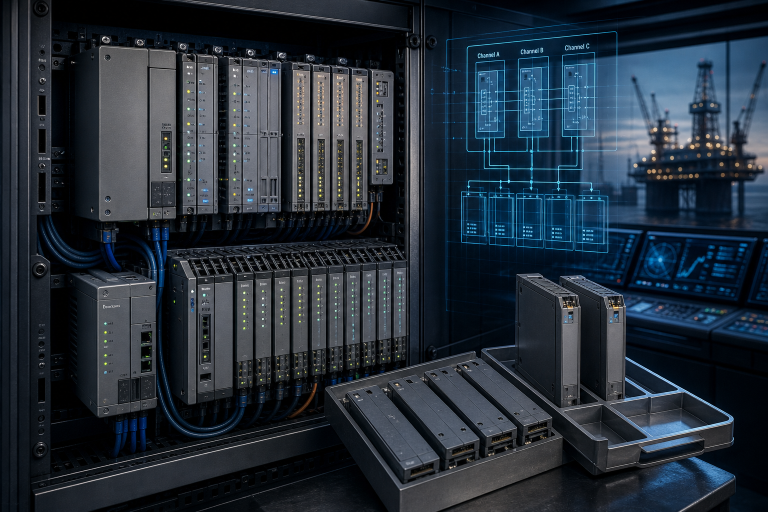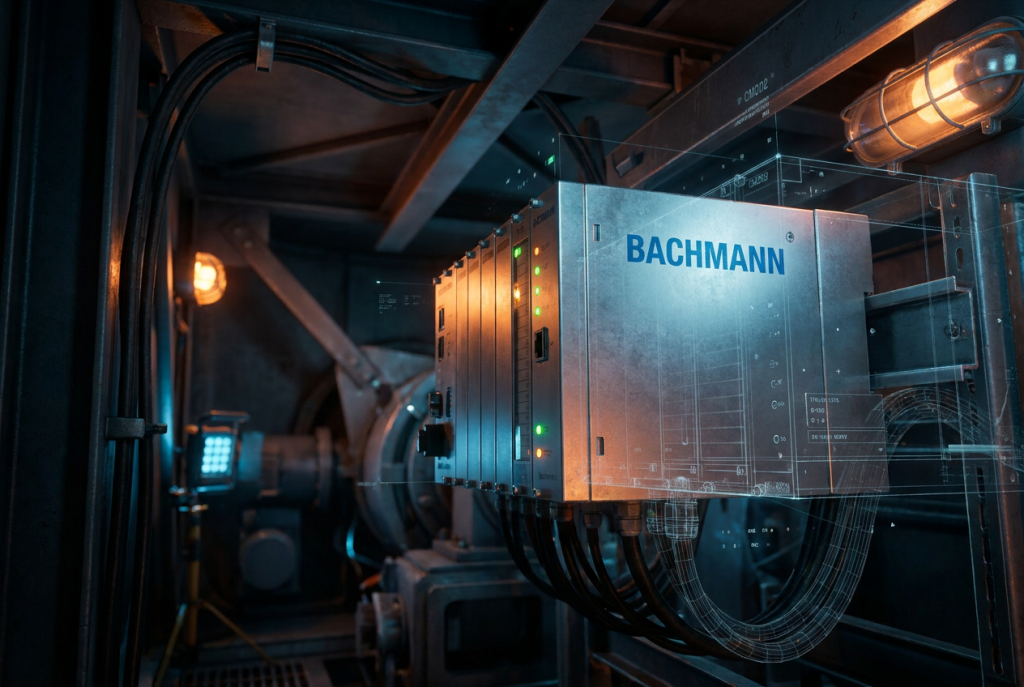
As we navigate the middle of 2026, the global wind energy sector is hitting a transition point that many industry analysts have called the “Silver Tsunami.” Thousands of 1.5MW and 2.0MW turbines, commissioned in the early 2000s, are simultaneously reaching their 20-year design life. In this high-stakes environment, the **Bachmann M1** controller has emerged as more than just a piece of automation hardware—it has become the critical pivot point for “Life Time Extension” (LTE) strategies across the globe. At DriveKNMS, we have seen a 40% surge in inquiries for M1 modules in the first half of 2026, and for good reason: the scarcity of these rugged controllers is starting to redefine the economics of wind farm maintenance.
The Bachmann M1 is legendary among wind turbine engineers for its “indestructibility” in extreme environments—from the salt-heavy air of North Sea offshore platforms to the sub-zero plateaus of the Gobi Desert. However, as of May 2026, the supply chain for these legacy systems is facing a unique “squeeze.” While Bachmann has introduced newer iterations, the sheer volume of turbines still running on the “Classic” M1 architecture means that the demand for specific processor cards, like the **CM202** and **CM211**, has far outstripped current production cycles. This isn’t just about finding a part; it’s about maintaining “Hardware Sovereignty” in a world that is pushing for software-defined everything.
The 2026 Retrofit Reality: Why ‘Audited’ Beats ‘New’
One of the most common misconceptions we encounter from procurement managers in 2026 is that a “New” component is always superior to a technically audited legacy spare. In the world of PLC and DCS control modules, the reality is more nuanced. Many “New Old Stock” (NOS) items sitting in unmanaged warehouses since 2018 have suffered from electrolytic capacitor dry-out or oxidation on the backplane connectors. When you are swapping a controller in a nacelle 100 meters in the air, you don’t need a “New” card; you need a card that has been stress-tested for the vibration and thermal cycles specific to turbine operations.
In mid-2026, the “Strategic Choice” for many reliability engineers is to source audited, refurbished spares that have undergone full-load functional testing. For instance, the **Bachmann GM260** grid measurement module is a highly sensitive unit that must maintain calibration integrity to ensure the turbine syncs correctly with the grid. A generic replacement might physically fit the rack, but without a verified technical audit, the risk of a “Sync Failure” leading to a grid-side penalty is simply too high. This is why brand and model specific spares are increasingly being treated as Tier-1 assets in 2026 corporate budgets.
Scarcity Spotlight: The CM Series and the I/O Void
The “Brain” of the Bachmann M1 system—the CM series CPU modules—is currently the epicenter of the 2026 scarcity spike. As turbine OEMs like Clipper, Senvion, and older Vestas platforms continue their retrofit programs, the available stock of CM202, CM211, and the higher-end MPC240 units is dwindling. We are seeing lead times for these specific modules stretch into the “unpredictable” category at the OEM level, primarily due to the 2025-2026 chip foundry realignments that have deprioritized legacy silicon in favor of EV and AI components.
But it’s not just the CPUs. The I/O modules, such as the **DI232** and **AIO288**, are the workhorses of the nacelle’s sensor network. In the harsh vibration environment of a wind turbine, these modules are the first to show “Intermittent Communication Faults”—the nightmare of any maintenance engineer. In 2026, a single failed DI232 can keep a turbine in “Down” status for weeks if a spare isn’t already on-site. This is driving a shift toward “Aggressive Inventorying,” where operators are securing 3-5 years’ worth of critical monitoring and control system cards to insulate themselves from the volatility of the global supply chain.
The Cost of ‘Migration Fatigue’
As an expert with over 20 years in the field, I’ve observed a growing phenomenon in 2026 that I call “Migration Fatigue.” The OEMs are pushing hard for a full migration to the newest controller generations, often citing “Cybersecurity” as the primary driver. While the new systems are impressive, the cost of a full controller retrofit—including engineering hours, software porting, and the inevitable “Commissioning Bugs”—can often exceed the residual value of the turbine itself.
Resilience in 2026 means knowing when to upgrade and when to extend. If your Bachmann M1 system is performing reliably, there is a strong argument for “Audited Extension.” By securing a stable supply of high-quality spares, you can push the “Migration Event” out by another 5-10 years, allowing the technology to mature and the costs to stabilize. This pragmatic approach is why DriveKNMS focuses on providing the technical bridge between legacy reliability and future modernization.
The 2026 Bachmann M1 Maintenance Audit Checklist:
- Backplane Integrity: Check for signs of fretting or contact wear on the M1 backplane. Vibration is the silent killer of turbine controllers.
- Capacitor Lifecycle: Are your CM modules over 15 years old? Consider a proactive “Audit and Refresh” before a catastrophic failure occurs.
- Firmware Synchronization: Ensure your spares have the matching firmware revisions to your “Main” and “Standby” units.
- Strategic Sourcing: Have you identified a partner for emergency Bachmann spares that understands the technical nuances of the M1 platform?
Conclusion: The Future of Wind Resilience
The “Post-Discontinuation” era of the Bachmann M1 is not a crisis; it is an opportunity for smarter asset management. As we look toward the second half of 2026, the winners in the wind energy market will be the operators who treated their hardware inventory with the same respect as their blade maintenance. At DriveKNMS, we don’t just sell parts—we provide the hardware sovereignty that allows you to run your turbines on your own terms.
Frequently Asked Questions (FAQ)
1. Can I swap a CM202 with a CM211 without software changes?
In many cases, the CM211 is a direct functional upgrade, but you must verify the task execution times and memory mapping for your specific PLC program. A technical audit of your existing project file is highly recommended before performing a hot-swap in the field.
2. Why are 2026 lead times for Bachmann M1 parts so volatile?
The volatility is a combination of the “Retrofit Wave” (massive demand for life-extension projects) and the 2025-2026 silicon shortage that has affected the specialized processors used in ruggedized controllers. Strategic inventory is the only real buffer against this volatility.
3. Is it possible to repair a Bachmann GM260 grid module?
Repair is possible, but calibration is the challenge. Because the GM260 handles critical grid-synchronization data, we recommend sourcing an “Audited and Certified” unit rather than a basic repair, to ensure the module meets original factory specs for measurement accuracy.
4. What is the expected lifespan of a Bachmann M1 controller in an offshore environment?
With proper enclosure cooling and dehumidification, a Bachmann M1 can easily exceed 20 years. However, the external connectors and power supply units are the primary failure points. Regular “Visual Audits” and proactive spares inventory are key to offshore resilience in 2026.
Is your turbine fleet ready for the 2026 Retrofit Wave?
Don’t let a “Discontinued” status dictate your downtime. Contact DriveKNMS for a technical consultation and an immediate quote on audited Bachmann M1, CM series, and I/O hardware. We speak the language of reliability because we’ve lived it for 20 years.
Email: sale@driveknms.com | WhatsApp: +86 18359293191
Direct Inquiry: Request a Quote Directly
© 2026 DriveKNMS. All rights reserved. Official Website: https://driveknms.com Inquiry: sale@driveknms.com | WhatsApp/Tel: +86 18359293191