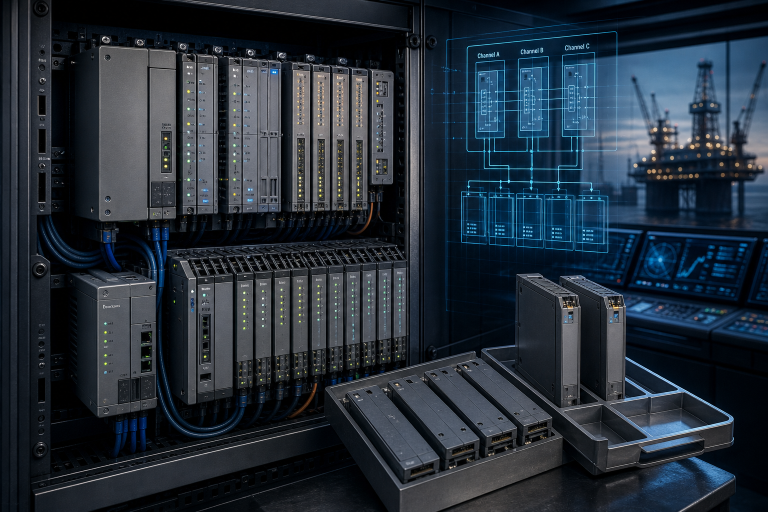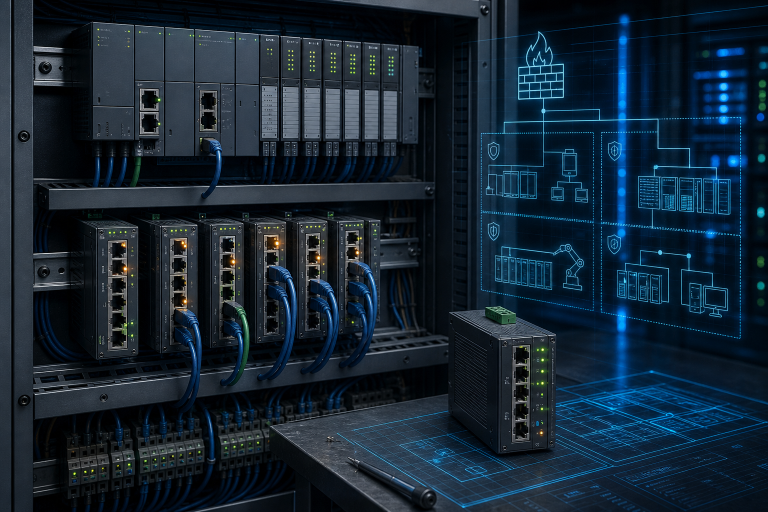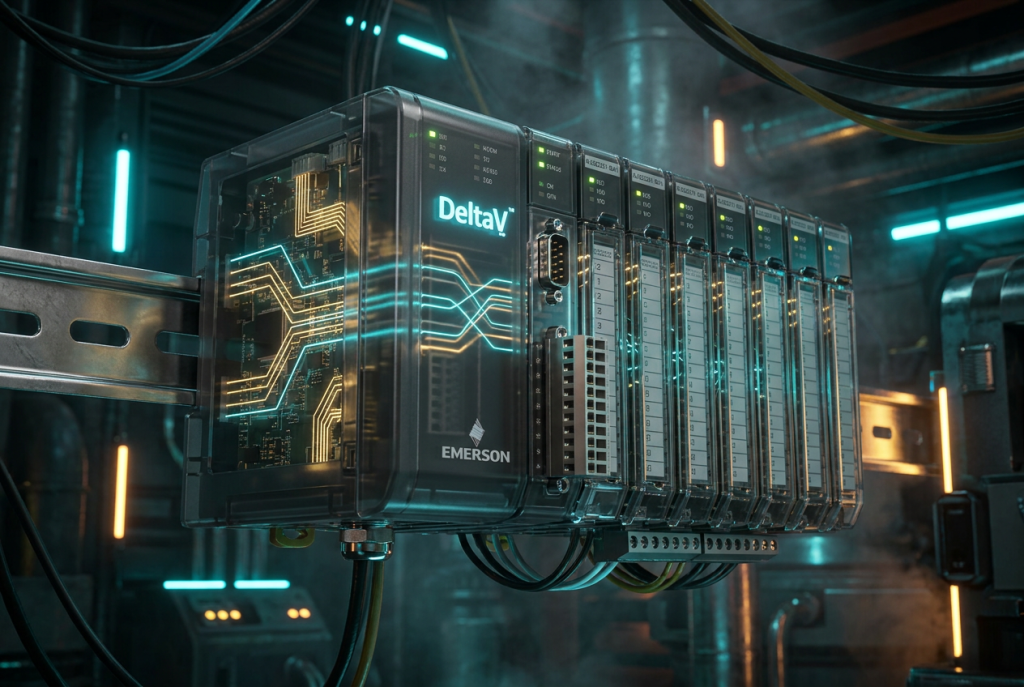
In the high-speed evolution of process automation, the year 2026 has brought a defining challenge for the global Emerson DeltaV user community. With the industry-wide rollout of DeltaV v16.LTS and the pivot toward “Software-Defined Automation,” many plants find themselves in a complex hardware transition. While the newer S-Series and PK controllers offer impressive flexibility, the vast majority of installed capacity—especially in large-scale chemical and pharmaceutical facilities—remains anchored to the classic DeltaV M-Series traditional I/O. In mid-2026, we are witnessing the emergence of the “Mix-and-Match Crisis,” where the technical friction between legacy M-Series carriers and modern S-Series controllers is creating significant operational risk.
As an expert who has guided facilities through every DeltaV iteration since version 7, I’ve observed that 2026 is the year where “Patchwork Maintenance” is no longer a viable strategy. The recent industry bulletins and field experience with v16.LTS have highlighted a critical gap: while the software is designed to bridge the generations, the physical reality of aging M-Series hardware—some of which has been in continuous service for over 15 years—is reaching a failure threshold. Today, we audit the state of DeltaV hardware sovereignty in 2026 and why the strategic sourcing of audited M-Series spares is the only way to navigate this transition without a forced, multi-million dollar rip-and-replace.
The Compatibility Friction: M-Series Carriers in a v16.LTS World
The “Mix-and-Match” strategy—retaining legacy M-Series I/O while upgrading to S-Series or PK controllers—is a cornerstone of the modern brownfield upgrade. However, in 2026, this strategy is hitting a technical wall. We are seeing an increase in reported communication jitter and synchronization delays when legacy 8-wide M-Series carriers (KJ4001X1-CA1) are paired with the high-speed backplane demands of modern controllers. This friction is often invisible to the DCS diagnostic software until it manifests as a sudden I/O card “Not Communicating” status during a high-load process event.
This isn’t a software bug; it’s a hardware limitation. The internal bus termination and power distribution on 15-year-old carriers were never designed for the sub-millisecond data bursts of the 2026 software environment. This is why a proactive audit of your PLC and DCS control modules must include the passive backplane components. In 2026, the scarcity of verified, technically audited M-Series carriers is becoming a primary bottleneck for plants that thought they were “upgraded.” Hardware sovereignty requires owning the entire loop, from the controller down to the termination block.
The Scarcity Spike: The ‘Must-Have’ M-Series Spares of 2026
While the market is flooded with newer S-Series parts, the 2026 supply of critical M-Series traditional I/O cards has reached a state of “Scarcity Spike.” Specifically, the demand for verified KJ3001X1-BA1 (System Power Supply) and KJ3222X1-BA1 (Discrete Output, 24VDC, High-Side) cards has surged. As these modules reach their EOL (End of Life) and support moves toward “Limited,” the lead times for new units from the OEM have stretched into the “Unpredictable” category.
For the procurement manager, this means that a single failed card can now represent a significant downtime risk. The temptation is to turn to unverified grey-market resellers, but in the DCS world, a “Tested for Power” label is not a guarantee of process integrity. In 2026, resilience means securing brand and model specific spares that have undergone a rigorous technical audit, including functional performance under process load and firmware parity checks. At DriveKNMS, we have seen a 35% increase in emergency inquiries for these specific M-Series components as plants scramble to support their legacy footprints during the v16.LTS transition.
Why ‘Software-Defined’ Doesn’t Fix a Hardware Failure
The marketing narrative of 2026 is heavily focused on “Software-Defined Automation” and the ability of DeltaV v16 to decouple control logic from hardware. It is a powerful vision, but as an engineer on the ground, I must offer a reality check: you cannot “software-define” a failed relay on an M-Series DO card or a dried-out capacitor on an I/O carrier. The physical layer remains the most common point of failure in any industrial control system.
Resilience in 2026 is about maintaining a “Dual-Track” strategy. While you invest in the software-defined future, you must simultaneously fortify your hardware present. This involves a comprehensive audit of your monitoring and control system hardware, identifying the most failure-prone M-Series cards, and securing a 3-5 year reserve of audited spares. This strategy provides the hardware sovereignty needed to perform migrations on your own timeline, ensuring that your plant’s uptime is dictated by your expertise, not by a global supply shortage.
The 2026 DeltaV M-Series Resilience Checklist:
- Carrier Bus Audit: Have you checked your M-Series 8-wide and 4-wide carriers for signs of oxidation or fretting on the bus connectors? Vibration in 2026 is still a hardware killer.
- Power Supply Health: Are your KJ3001X1-BA1 units over 10 years old? These are the “heart” of your rack; a failure here can take down an entire controller node.
- Firmware Parity: Do your M-Series spares have the necessary firmware revisions to communicate with S-Series or PK controllers running v16.LTS?
- Strategic Inventory: Have you identified a partner for emergency DeltaV M-Series spares that provides verified technical audit reports?
Conclusion: The Expert’s Edge in a Hybrid World
The 2026 “Mix-and-Match” era is a test of engineering foresight. The DeltaV M-Series was built to be a multi-decade platform, and with the right hardware strategy, it will continue to protect your process for years to come. By securing your inventory of audited spares today, you ensure that your plant’s transition to the software-defined future is stable, predictable, and—most importantly—profitable. In the world of DCS, expertise is the only constant that guarantees uptime.
Frequently Asked Questions (FAQ)
1. Can I use M-Series Traditional I/O cards in S-Series carriers?
No. M-Series and S-Series hardware use different physical form factors and backplane architectures. To bridge the two, you must use a DeltaV Controller that supports both networks or use specific interface modules. This physical distinction is why maintaining a dedicated M-Series spare inventory is critical for legacy sites.
2. Why is the KJ3222X1-BA1 so difficult to source in 2026?
The KJ3222X1-BA1 is one of the most widely used discrete output cards in the DeltaV universe. Its scarcity is driven by its massive install base reaching the 15-year mark simultaneously, combined with the OEM’s manufacturing shift toward newer Electronic Marshalling (CHARMs) solutions.
3. Does DeltaV v16.LTS support M-Series hardware?
Yes, Emerson has maintained support for M-Series traditional I/O in v16.LTS, but the “Support” is primarily at the software level. The physical availability of new-build hardware from the OEM is increasingly limited, making the independent market for audited spares the primary source of continuity.
4. What is the difference between an M-Series carrier and a CHARM baseplate?
M-Series carriers are designed for traditional multi-channel I/O cards (8 or 32 channels), whereas CHARM baseplates are for single-channel characterization modules. While CHARMs offer more flexibility, the “Mix-and-Match” strategy often involves keeping the M-Series carriers for the bulk of the traditional I/O to avoid the high cost of re-wiring.
Running low on Emerson DeltaV M-Series or S-Series spares?
Don’t wait for a process trip to reveal a gap in your resilience strategy. Contact DriveKNMS for a technical consultation and an immediate quote on audited DeltaV M-Series, KJ series, and S-Series hardware.
Email: sale@driveknms.com | WhatsApp: +86 18359293191
Direct Inquiry: Request a Quote Directly
© 2026 DriveKNMS. All rights reserved. Official Website: https://driveknms.com Inquiry: sale@driveknms.com | WhatsApp/Tel: +86 18359293191