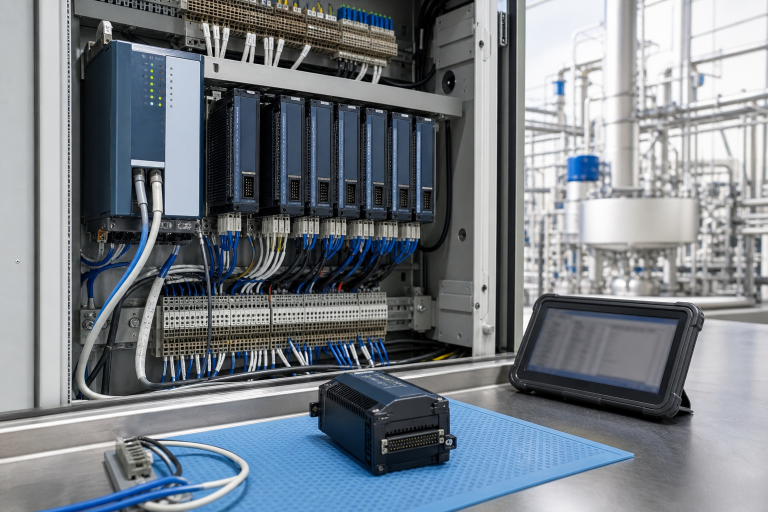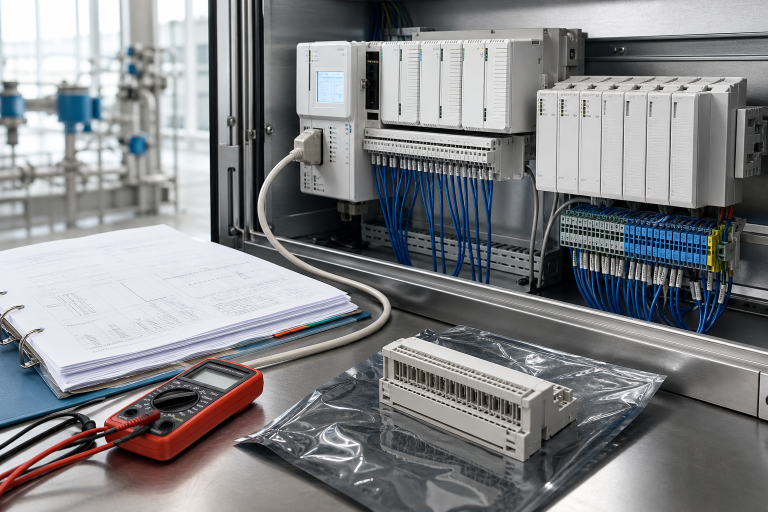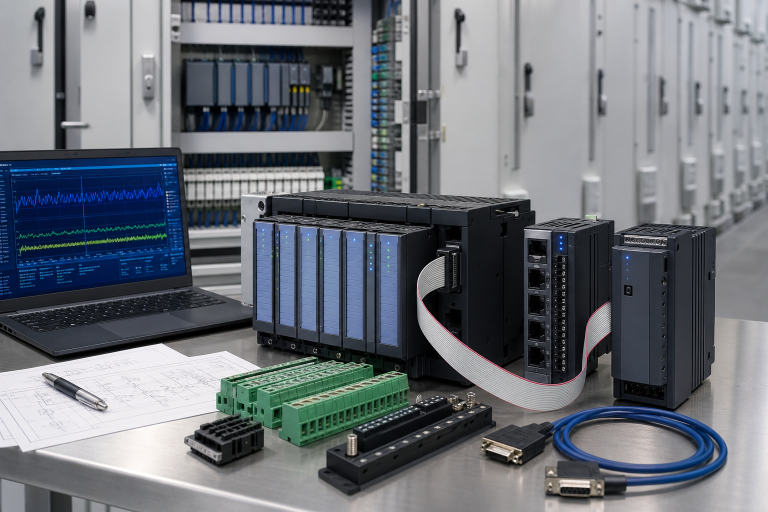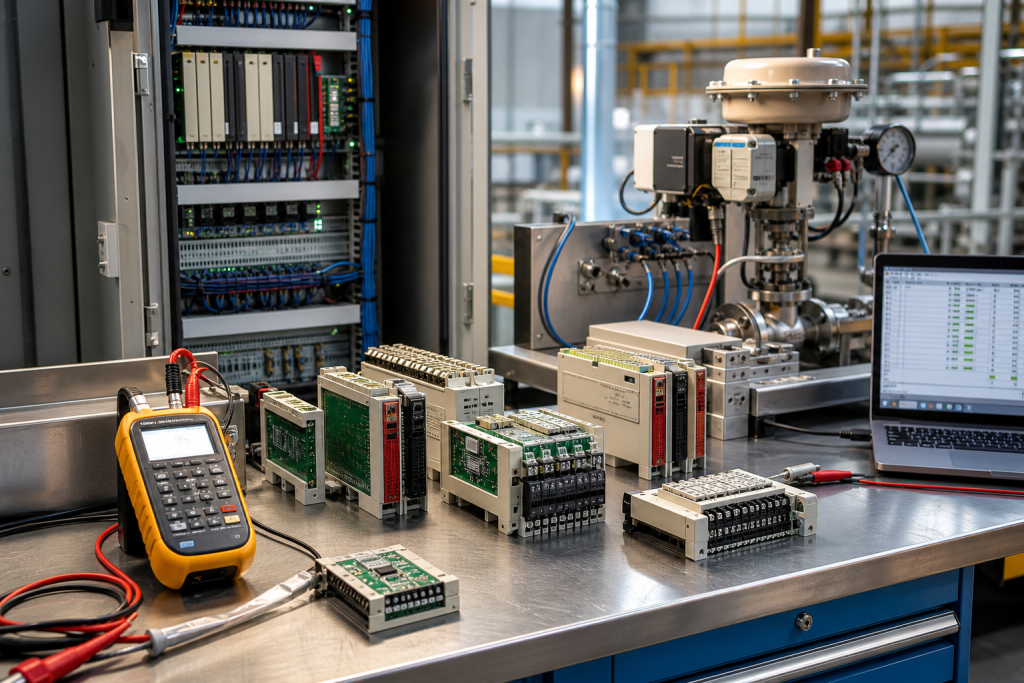
A process loop outage is rarely solved by naming one card. In Metso DNA and Neles-related cabinets, the failed function may involve a personality module, analog output, relay output, terminal block, valve positioner path, or old configuration assumption that has not been reviewed for years.
DriveKNMS readers often support pulp and paper, chemical, power, and general process lines where legacy DNA hardware remains productive. The practical goal is to keep the loop recoverable while documenting which parts are still serviceable and which should trigger a migration discussion.
Follow The Loop From DCS To Valve
Record module model, channel role, terminal wiring, valve or actuator tag, positioner interface, power, cabinet location, diagnostics, alarm history, configuration reference, and the production consequence of losing the loop.
The live Metso AP31 D200175 personality module is a product match when a Neles-related function depends on a specific legacy module identity.
Photograph module labels, terminal strips, loop wires, actuator tubing or cable, positioner tags, diagnostic LEDs, cabinet drawings, and the operator trend that shows the loop behavior.
Analog Output Evidence Defines The Acceptance Test
A process loop can remain frozen even after the suspected module is replaced if the output range, terminal wiring, actuator load, or positioner path is wrong.
The related Metso IOP320 181545 analog output module shows why channel-level analog output evidence should be included in the RFQ.
Ask for actual photos, condition, tested status, terminal scope, accessory inclusion, dispatch timing, and whether the item is exact replacement or substitute.
Acceptance Means The Loop Moves Correctly
After replacement, verify module recognition, channel diagnostics, output range, loop power, actuator or positioner response, alarm behavior, manual/auto mode, and a controlled loop test.
If the loop still fails, review field wiring, air supply, actuator mechanics, positioner health, power, terminal seating, and configuration before rejecting the spare.
Keep loop drawings, photos, diagnostics, calibration notes, acceptance results, and process-control approval with the spare record.
What The RFQ Should Make Visible
Send labels, cabinet and terminal photos, loop tag, valve or positioner details, output range, symptom history, condition requirement, test scope, and outage deadline.
A DNA spare RFQ should separate module identity from loop behavior. Procurement needs both if the response must be useful during an outage.
For substitutes, require a review of terminals, configuration, loop range, actuator response, and rollback path.
The strongest spare plan starts before the failure is fully understood. Capture the symptoms, installed hardware identity, wiring evidence, configuration dependency, and acceptance method while the cabinet is still open and the operators remember what changed.
A mature plant usually has several versions of the same platform installed across units, packages, or production lines. That is why a family name is rarely enough. The RFQ should say what must match exactly, what may be substituted after review, and what cannot be accepted during the current outage window.
Actual-item photographs still matter. Front labels, side labels, connector faces, terminal assemblies, handles, latches, power markings, and accessory scope often reveal the difference between a useful spare and a part that will sit on the bench during a restart.
Condition language should be written in plain terms. New surplus, factory sealed, refurbished, repaired exchange, tested used, and untested used items should not be compared as if they carried the same engineering risk.
For critical loops, racks, axes, networks, and safety functions, define the field acceptance test before the purchase order is approved. A loop check, communication test, axis jog, relay injection, proof test, or restart procedure tells everyone what ready means.
Finally, keep the evidence with the spare after it arrives. The next shift should not have to rediscover why a substitute was accepted, which accessory was required, or which test proved the item was fit for the installed function.
This habit also improves supplier conversations. Instead of asking whether a part is available in broad terms, the buyer can ask for the exact condition, revision clues, included accessories, photos from specific angles, and the test evidence that matters for the installed asset.
Where a part is already scarce, do not hide the risk. State whether the plant can accept a repaired exchange, whether a tested used item is enough for a temporary recovery, or whether only a like-for-like item is acceptable until engineering approves a migration path.
For cross-border sourcing, packaging and handling should be part of the discussion. Heavy modules, fragile connectors, display panels, probes, and boards with exposed components need protective packing, anti-static handling where appropriate, and clear labeling so the receiving team can inspect them quickly.
The receiving inspection should repeat the key RFQ evidence: model, suffix, serial label, connector condition, accessories, visible damage, and photo match. If the received item does not match the approved evidence, pause before it enters stores as a critical spare.
A spare that passes receiving but lacks a documented acceptance path is still incomplete. The maintenance team should know whether the item will be bench checked, held for the next outage, installed immediately, or kept as an emergency fallback with known limits.
This is the difference between buying inventory and buying recovery capability. The hardware matters, but the evidence around it is what lets the plant use the hardware under pressure.
FAQ
What must match on a Metso DNA I/O spare?
Match module identity, channel role, terminal scope, power, loop range, configuration, diagnostics, and acceptance test.
Why include valve or positioner evidence?
Because a correct module can still fail the process if the actuator, positioner, wiring, or range does not recover.
What should the RFQ include?
Send labels, terminal photos, loop tag, positioner details, condition requirement, test scope, and outage deadline.
What proves recovery?
Recognized module, healthy diagnostics, correct output or input behavior, moving loop, stable alarms, and approved loop test.
Send DriveKNMS the Metso DNA labels, loop photos, positioner details, condition requirement, and outage deadline. We can help prepare a controlled process I/O RFQ.
© 2026 DriveKNMS. All rights reserved. Official Website: https://driveknms.com Inquiry: sale@driveknms.com | WhatsApp/Tel: +86 18359293191