
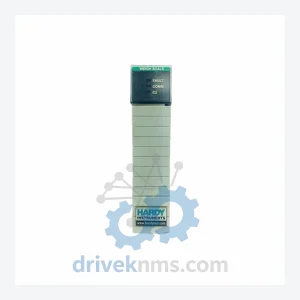
HARDY 1756-2WS Weigh Scale Module ControlLogix-Compatible Weighing I/O for Industrial Process Control
Hardy 1756-2WS is listed for ControlLogix RFQ review. Confirm quantity, condition and destination before quotation.
RFQ-ready industrial model
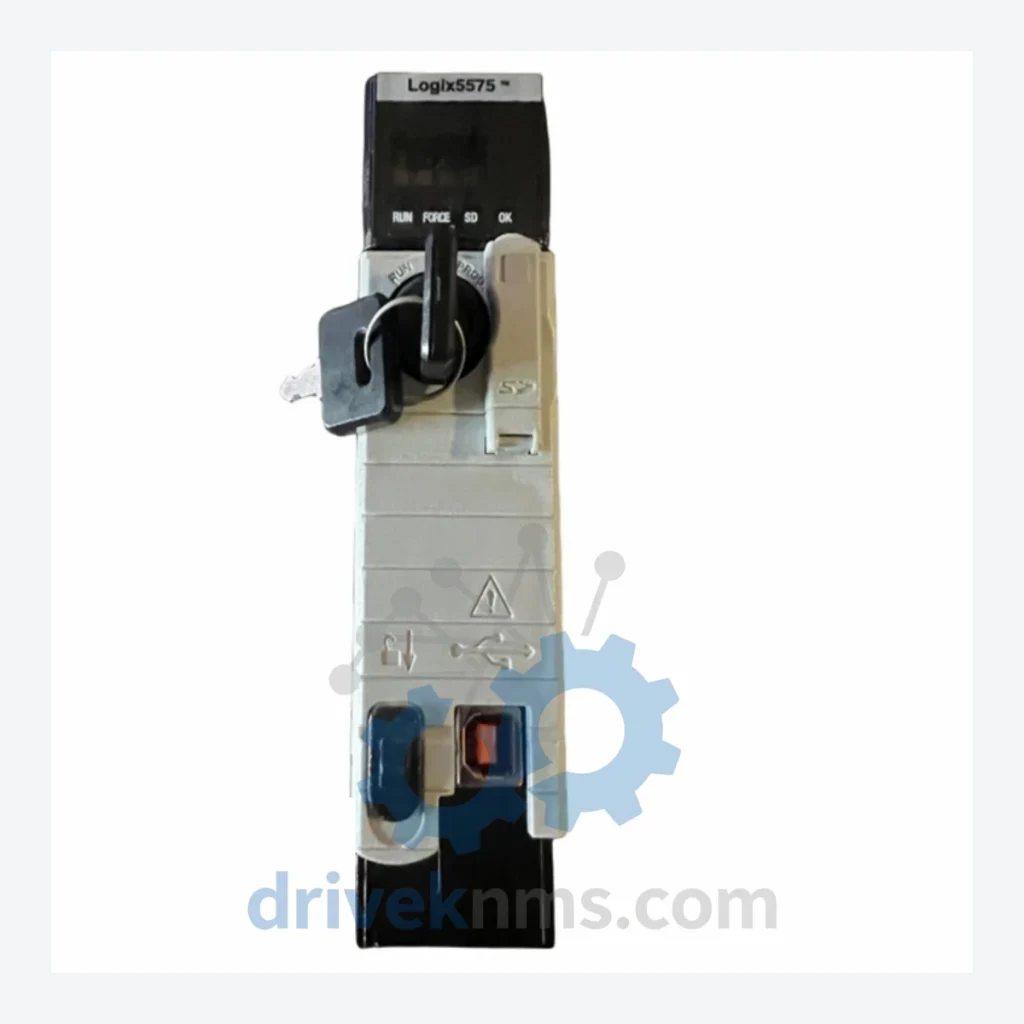
Model: 1756-L75
Product Overview
Commercial availability is handled through direct RFQ, model verification and export-oriented follow-up rather than public cart checkout.
Datasheet Preview
Use attached product manuals when available. If the manual is not public yet, request the full file directly through RFQ.
Commercial Path
Product pages on DRIVEKNMS are designed to verify model, brand and series first, then move the buyer into one clean quotation path.
Technical Dossier
The platform's modular backplane architecture supports mixed-mode operation: discrete, process, motion, and safety control can coexist within a single chassis, reducing panel footprint and inter-controller communication latency. ControlLogix installations are documented across more than 100 countries, with installed base estimates exceeding several hundred thousand chassis globally. Its longevity in the field — many installations commissioned in 2000–2005 remain in active production — creates sustained demand for both current-production and end-of-life spare modules.
The 1756 platform has undergone four distinct architectural generations since its launch, each introducing expanded memory, faster scan rates, and enhanced network integration while maintaining backward compatibility at the chassis and I/O module level.
Generation 1 (1997–2004): Initial release established the 1756 backplane standard. Controllers such as the 1756-L1 and 1756-L55 operated on ControlNet and DeviceNet as primary field buses. Memory was limited to 750 KB–1.5 MB user program space. These units are fully obsolete and no longer manufactured.
Generation 2 (2004–2010): Introduction of EtherNet/IP as a primary control-tier network. The 1756-L61 through 1756-L64 controllers expanded user memory to 2–8 MB. The 1756-EN2T Ethernet bridge module became the standard for plant-floor Ethernet integration. Rockwell announced end-of-life for most Gen 2 controllers between 2015 and 2019.
Generation 3 (2010–2018): The L7x series (1756-L71 through 1756-L85) introduced non-volatile energy storage (NVS) replacing battery-backed SRAM, extended user memory to 40 MB, and added integrated USB programming ports. The 1756-L75 — the subject of this listing — belongs to this generation, offering 8 MB user memory and 1 GB non-volatile storage. This generation remains in active production as of 2026 but is approaching mature lifecycle status.
Generation 4 (2018–present): The V31 and V32 firmware revisions introduced enhanced cybersecurity features (role-based access control, audit logging) and compatibility with Studio 5000 Logix Designer v32+. The 1756-L85E and 1756-L84E represent the current production apex, with Ethernet ports integrated directly on the controller faceplate, eliminating the need for a separate 1756-EN2T bridge in single-network topologies.
Compatibility note: All 1756-series I/O modules (analog, digital, specialty) are chassis-slot agnostic and interoperate across all controller generations within the same chassis. Controller firmware must be matched to the Studio 5000 / RSLogix 5000 software version in use at the site.
Controllers (CPU Modules)
1756-L75: ControlLogix 5575 controller, 8 MB user memory, 1 GB non-volatile storage, USB & serial port, supports up to 250 axes of motion.
1756-L71: ControlLogix 5571 controller, 2 MB user memory, entry-level L7x series, standard process and discrete control.
1756-L72: ControlLogix 5572 controller, 4 MB user memory, mid-range L7x, suitable for medium-complexity applications.
1756-L73: ControlLogix 5573 controller, 4 MB user memory with extended I/O capacity, motion control up to 100 axes.
1756-L74: ControlLogix 5574 controller, 4 MB user memory, enhanced motion and process control, 128-axis support.
1756-L85: ControlLogix 5585 controller, 32 MB user memory, highest-capacity L7x series, large-scale process applications.
1756-L85E: ControlLogix 5585E controller, 32 MB user memory, integrated dual EtherNet/IP ports, current production flagship.
1756-L84E: ControlLogix 5584E controller, 20 MB user memory, integrated dual EtherNet/IP ports, mid-high range current production.
Digital I/O Modules (DI/DO)
1756-IB16: 16-point 24VDC sinking digital input module, standard discrete field device interface.
1756-OB16E: 16-point 24VDC sourcing digital output module with electronic fusing, individually protected outputs.
1756-IA16: 16-point 120VAC digital input module, legacy AC field wiring compatibility.
1756-OA16: 16-point 120/240VAC digital output module, triac-based solid-state switching.
Analog I/O Modules (AI/AO)
1756-IF16: 16-channel analog input module, 4–20 mA / 0–10V, 16-bit resolution, single-ended or differential.
1756-OF8: 8-channel analog output module, 4–20 mA / ±10V, 16-bit resolution, process loop control.
1756-IF8: 8-channel analog input module, high-density process measurement, differential inputs.
Communication & Network Adapter Modules
1756-EN2T: EtherNet/IP communication module, 10/100 Mbps, standard plant-floor Ethernet bridge for L7x controllers without integrated Ethernet.
1756-EN2TR: EtherNet/IP module with Device Level Ring (DLR) support, dual RJ45 ports, media redundancy for ring topologies.
1756-CN2R: ControlNet redundant media communication module, coax-based, used in legacy ControlNet architectures.
1756-DNB: DeviceNet scanner module, master node for DeviceNet field device networks.
Power Supply Modules
1756-PA75R: 120/240VAC redundant power supply, 13A at 5VDC backplane output, hot-swap capable for redundant chassis configurations.
1756-PB75R: 18–32VDC redundant power supply, 13A at 5VDC, for DC-powered panel installations.
Chassis
1756-A7: 7-slot ControlLogix chassis, standard rack for small-to-mid controller configurations.
1756-A17: 17-slot ControlLogix chassis, maximum-density rack for large I/O count installations.
All obsolete modules are subject to full functional verification prior to dispatch. Traceability documentation — including prior installation records where obtainable — is provided upon request for regulated industries (nuclear, pharmaceutical, rail). DriveKNMS also supports customers in identifying direct replacement migration paths: for example, transitioning from a 1756-L63 to a 1756-L73 with firmware and program conversion advisory, minimizing engineering rework.
The 1756 platform's backplane communication protocol (ControlBus) and the proprietary module keying system require specialized test procedures that differ from standard PLC module verification. DriveKNMS applies the following test protocol to all 1756 modules processed through its facility:
Backplane Communication Verification: Each module is installed in a live 1756 chassis and interrogated via RSLogix 5000 / Studio 5000 to confirm correct module identity, firmware revision reporting, and error-free backplane data exchange. Modules that fail to enumerate correctly are quarantined for further diagnosis.
Controller-Specific Testing (CPU Modules): All 1756 processor modules (including the 1756-L75) undergo a full program load/execute cycle using a standardized test ladder logic program. Non-volatile storage integrity is verified by power-cycle retention testing. Battery condition (where applicable, Gen 1/2 units) is assessed and replaced as standard.
Analog Module Calibration: All 1756-IF and 1756-OF series analog modules are calibrated against NIST-traceable reference standards. Channel-by-channel linearity, offset, and gain error are measured and documented. Modules exceeding ±0.1% full-scale error are recalibrated or rejected.
Communication Module Port Testing: EtherNet/IP modules (1756-EN2T, 1756-EN2TR) are tested for full-duplex 100 Mbps throughput, DLR ring participation (where applicable), and CIP connection establishment under load. ControlNet modules are tested for scheduled and unscheduled connection integrity.
Environmental Stress Screening: Modules destined for critical applications undergo 24-hour burn-in at elevated ambient temperature (50°C) to screen for infant mortality failures prior to shipment.
Continue The Model Path
Move from this exact model into the matching system hub, brand archive, model-family archive or lifecycle sourcing route before sending a final RFQ list.
Related Paths
Hardy 1756-2WS is listed for ControlLogix RFQ review. Confirm quantity, condition and destination before quotation.
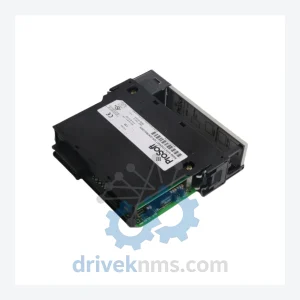
ProSoft Technology MVI56-GEC is listed for ControlLogix RFQ review. Confirm quantity, condition and destination before quotation.
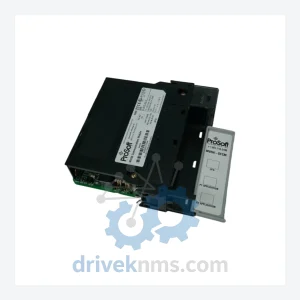
ProSoft Technology MVI56-DFCM is listed for ControlLogix RFQ review. Confirm quantity, condition and destination before quotation.