
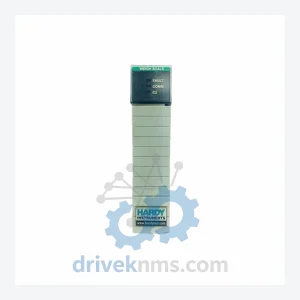
HARDY 1756-2WS Weigh Scale Module ControlLogix-Compatible Weighing I/O for Industrial Process Control
Hardy 1756-2WS is listed for ControlLogix RFQ review. Confirm quantity, condition and destination before quotation.
RFQ-ready industrial model
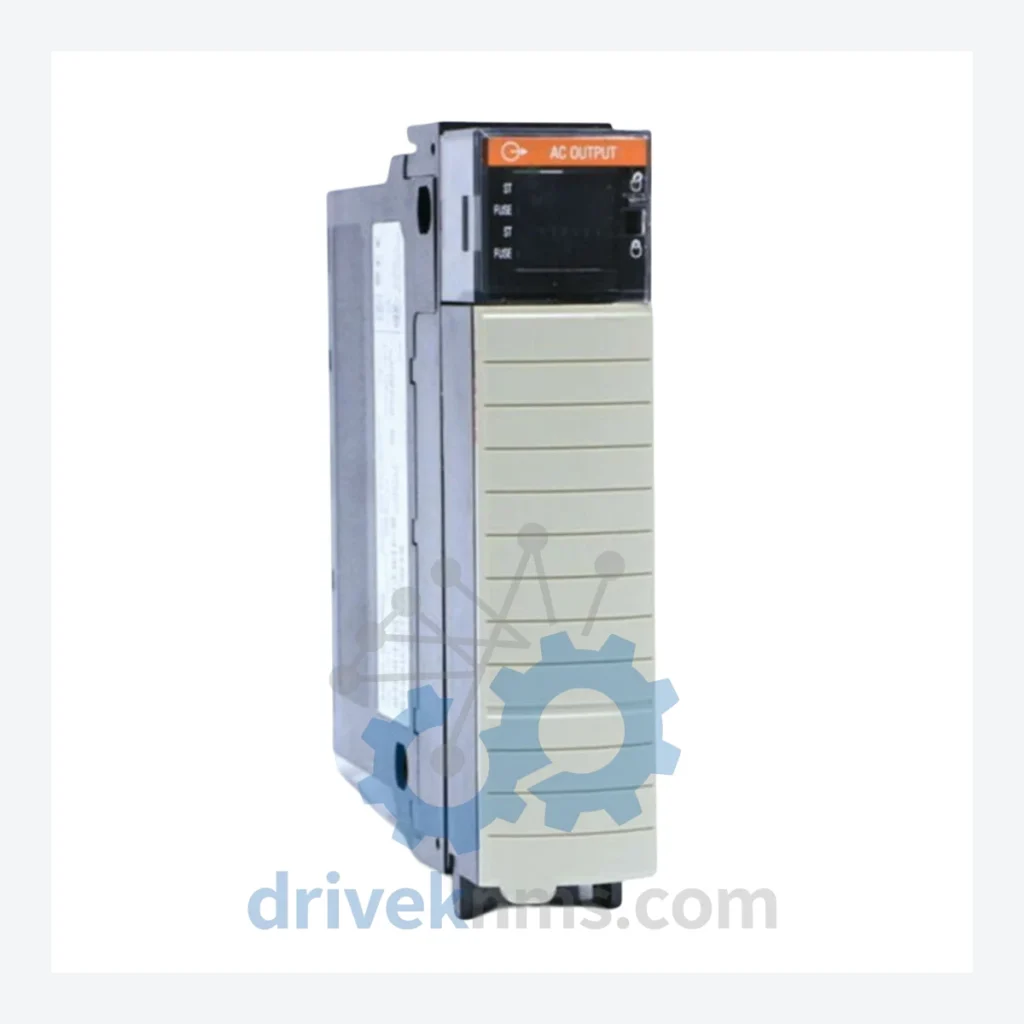
Model: 1756-OA16
Product Overview
Commercial availability is handled through direct RFQ, model verification and export-oriented follow-up rather than public cart checkout.
Datasheet Preview
Use attached product manuals when available. If the manual is not public yet, request the full file directly through RFQ.
Commercial Path
Product pages on DRIVEKNMS are designed to verify model, brand and series first, then move the buyer into one clean quotation path.
Technical Dossier
The Allen-Bradley 1756 ControlLogix platform is Rockwell Automation's flagship programmable automation controller (PAC) architecture, deployed across the full spectrum of heavy industrial operations — including petrochemical refineries, nuclear power generation facilities, offshore oil & gas platforms, pulp and paper mills, and large-scale water treatment infrastructure. The 1756 backplane-based modular design allows engineers to configure controller, I/O, communication, and power supply modules within a single chassis, supporting both simplex and redundant topologies. Its deterministic real-time execution, high-availability redundancy options (via the 1756-RM2 module), and native integration with Rockwell's Integrated Architecture make it the reference standard for safety-critical and continuous-process environments globally. Installed base estimates place ControlLogix deployments in the hundreds of thousands of nodes worldwide, with active installations spanning systems commissioned in the late 1990s through current greenfield projects.
The ControlLogix platform was introduced in 1997 as a successor to the PLC-5 and SLC 500 families, establishing a common backplane standard (1756 chassis) that has remained backward-compatible across hardware generations. The original L1–L55 controller series used a 32-bit RISC processor and supported up to 128K words of user memory. The L6x generation (introduced circa 2004) expanded memory to 8MB and added USB programming ports. The L7x generation (circa 2012) introduced 1GB user memory, SD card-based firmware storage, and enhanced EtherNet/IP throughput. The current L8x/L9x generation supports up to 40MB user memory, dual-port EtherNet/IP with Device Level Ring (DLR) topology, and CIP Security for network-layer authentication.
I/O modules have followed a parallel evolution: early discrete modules (Series A) used fixed-function ASICs; current Series C/D modules incorporate diagnostics, electronic fusing, and field-side status reporting. Communication adapters have migrated from DH+/Remote I/O (1756-DHRIO) through ControlNet (1756-CNB) to the now-dominant EtherNet/IP (1756-EN2T, 1756-EN3TR). Legacy modules remain in production or available as new-surplus to support the large installed base, but several early-generation SKUs have reached end-of-life (EOL) status, requiring lifecycle management planning for facilities with 15–25 year operational horizons.
Discrete Output Modules
1756-OA16: 16-point 74–132V AC discrete output, isolated, Series C/D
1756-OA8: 8-point 74–132V AC discrete output, individually isolated outputs
1756-OA8E: 8-point 74–132V AC discrete output with electronic fusing and diagnostics
1756-OB16E: 16-point 10–31.2V DC discrete output with electronic fusing, MOSFET
1756-OB32: 32-point 10–31.2V DC discrete output, high-density, sinking
1756-OB8EI: 8-point 10–31.2V DC isolated discrete output with diagnostics
Discrete Input Modules
1756-IA16: 16-point 74–132V AC discrete input, standard density
1756-IA32: 32-point 74–132V AC discrete input, high-density
1756-IB16: 16-point 10–31.2V DC discrete input, sinking/sourcing
1756-IB32: 32-point 10–31.2V DC discrete input, high-density
1756-IC16: 16-point 48V DC discrete input module
Analog I/O Modules
1756-IF8: 8-channel analog input, 4–20mA / 0–10V, 16-bit resolution
1756-OF8: 8-channel analog output, 4–20mA / 0–10V, 16-bit resolution
1756-IF16: 16-channel analog input, high-density, differential inputs
Controller Modules
1756-L73: ControlLogix L7x CPU, 8MB user memory, USB + serial port
1756-L83E: ControlLogix L8x CPU, 20MB user memory, dual-port EtherNet/IP
Communication Adapter Modules
1756-EN2T: Single-port EtherNet/IP communication module, 100Mbps
1756-EN3TR: Dual-port EtherNet/IP with DLR ring topology support
1756-DNB: DeviceNet scanner module for field device integration
1756-CNB: ControlNet bridge/scanner module (legacy installations)
Power Supply Modules
1756-PA72: 120/240V AC power supply, 10A backplane current
1756-PB72: 18–32V DC power supply, 10A backplane current
1756-PSCA2: Power supply chassis adapter for redundant power configurations
A significant portion of the 1756 installed base operates on modules that Rockwell Automation has designated as discontinued or end-of-life, including early Series A discrete I/O modules, 1756-DHRIO (DH+/Remote I/O adapter), 1756-CNB (ControlNet bridge), and first-generation L1x–L5x controller modules. For facilities operating under 20–30 year asset lifecycles — standard in nuclear, refining, and municipal water infrastructure — replacement procurement through the open market is the primary maintenance strategy.
The 1756 platform's backplane communication architecture — based on the proprietary ControlBus protocol operating at 200Mbps — requires module-level testing that goes beyond basic power-on verification. DriveKNMS applies a structured test protocol for all 1756 modules prior to shipment:
Discrete I/O modules (including the 1756-OA16) are bench-tested under load conditions replicating field wiring configurations, with output state verification across all 16 points using calibrated load banks. AC output modules are tested at rated voltage (120V AC) with inductive and resistive loads to confirm triac integrity and isolation barrier performance. Analog modules undergo 16-bit linearity verification across the full 4–20mA and 0–10V ranges using traceable reference instruments. Communication modules are tested for EtherNet/IP Class 1 (I/O) and Class 3 (explicit messaging) connectivity using a live ControlLogix chassis. Controller modules are loaded with a standardized ladder logic test program and cycled through normal, fault, and recovery states. All modules are inspected for capacitor condition, connector pin integrity, and conformal coating status before packaging.
Continue The Model Path
Move from this exact model into the matching system hub, brand archive, model-family archive or lifecycle sourcing route before sending a final RFQ list.
Related Paths
Hardy 1756-2WS is listed for ControlLogix RFQ review. Confirm quantity, condition and destination before quotation.
ProSoft Technology MVI56-GEC is listed for ControlLogix RFQ review. Confirm quantity, condition and destination before quotation.
ProSoft Technology MVI56-DFCM is listed for ControlLogix RFQ review. Confirm quantity, condition and destination before quotation.