
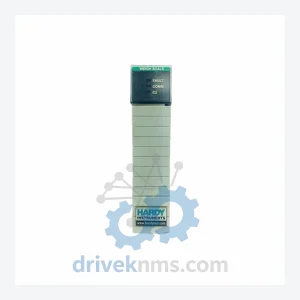
HARDY 1756-2WS Weigh Scale Module ControlLogix-Compatible Weighing I/O for Industrial Process Control
Hardy 1756-2WS is listed for ControlLogix RFQ review. Confirm quantity, condition and destination before quotation.
RFQ-ready industrial model
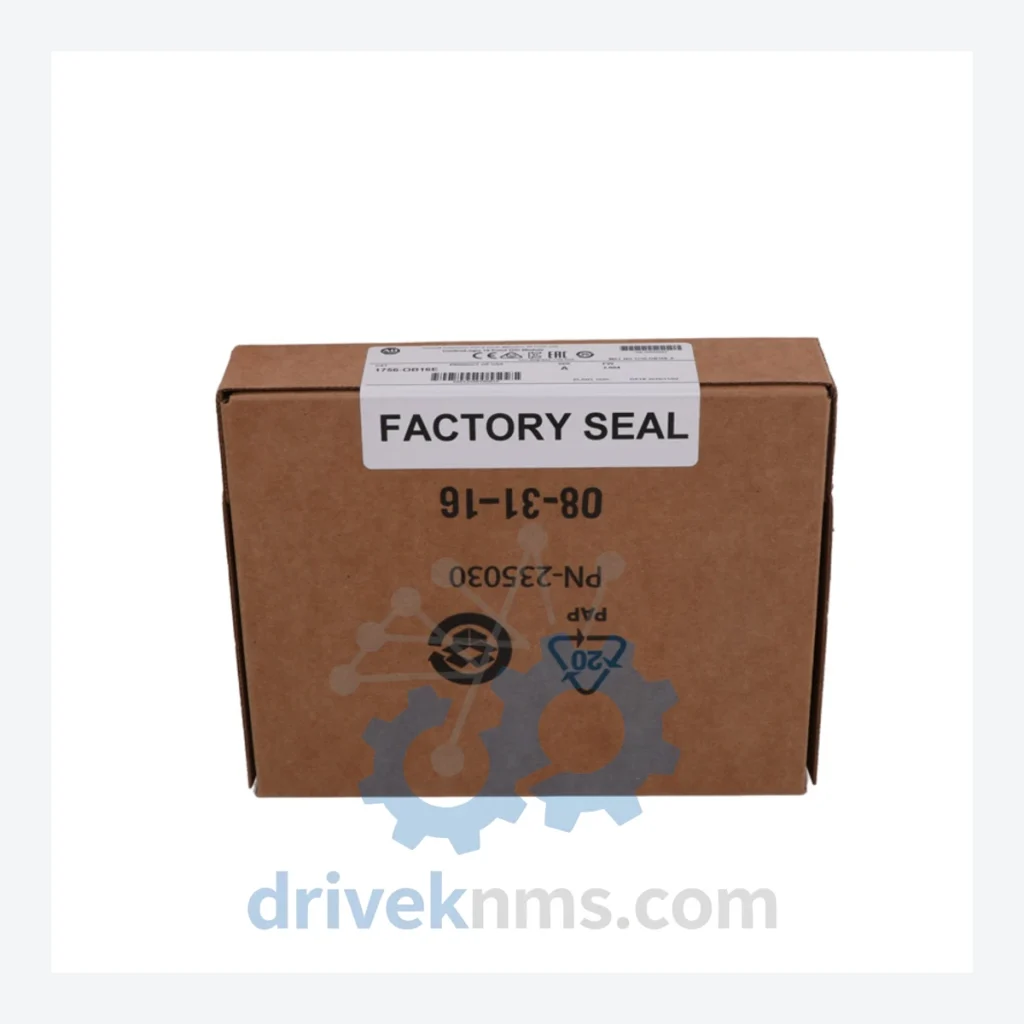
Model: 1756-OB16E
Product Overview
Commercial availability is handled through direct RFQ, model verification and export-oriented follow-up rather than public cart checkout.
Datasheet Preview
Use attached product manuals when available. If the manual is not public yet, request the full file directly through RFQ.
Commercial Path
Product pages on DRIVEKNMS are designed to verify model, brand and series first, then move the buyer into one clean quotation path.
Technical Dossier
RFQ support for obsolete parts: Send the model number, required quantity and destination so DriveKNMS can confirm sourcing options before quotation.
| Parameter | Detail |
|---|---|
| Part Number | 1756-OB16E |
| Brand | Allen-Bradley (Rockwell Automation) |
| Series | ControlLogix 1756 |
| Module Type | Digital Output (D/O) |
| Number of Output Points | 16 |
| Output Voltage | 24V DC sourcing |
| Backplane Compatibility | ControlLogix 1756 chassis (any slot) |
| Series Revision | Series A / Series B (consult factory documentation for exact revision compatibility) |
| Country of Origin | United States |
| Discontinuation Status | Active product; specific firmware revisions and Series A hardware are increasingly difficult to source through standard distribution channels. Treat as a critical long-lead spare. |
The ControlLogix platform has been a backbone of discrete and process manufacturing since the late 1990s. Facilities that standardized on 1756-series I/O in the early 2000s now operate systems with 15 to 25 years of embedded process logic, calibrated loops, and custom ladder programs. That intellectual capital does not transfer cleanly to a new platform. Migrating a single production cell to a newer architecture typically requires a controls engineer, a project manager, a validation period, and a production freeze—costs that compound quickly.
Q: How are RFQ terms confirmed?
A: Quantity, required condition, documentation needs, destination and sourcing route are confirmed during RFQ review before quotation.
The strategic answer is not to wait for failure. Procurement of one to three spare 1756-OB16E modules—held in a climate-controlled spare parts cabinet—provides a direct insurance policy against that scenario. The cost of the spare is a fraction of a single day of lost production on most lines where this module is deployed.
Every 1756-OB16E unit that leaves DriveKNMS goes through a structured five-step inspection protocol before it is offered for sale. This process is designed around the failure modes that are statistically most common in aging automation hardware:
Step 1 – Visual and Mechanical Inspection: Connectors, backplane edge contacts, and housing are examined for physical damage, pin corrosion, and oxidation. Units with compromised contacts are rejected at this stage.
Step 2 – Electrolytic Capacitor Assessment: Aging electrolytic capacitors are a primary failure vector in modules that have been in service or in storage for extended periods. Capacitors are inspected for bulging, leakage, and ESR deviation.
Step 3 – Firmware Version Verification: The module's firmware revision is documented and cross-referenced against known compatibility matrices for common ControlLogix processor revisions. Any discrepancy is disclosed to the buyer before dispatch review.
Step 4 – Output Channel Functional Test: Each of the 16 output channels is exercised under controlled conditions to verify switching integrity and confirm no latent channel failures exist.
Step 5 – Final Documentation and Packaging: The unit is packaged in anti-static materials with a condition report. New-in-box units are documented as such; refurbished units are clearly identified with their inspection record.
The 1756-OB16E is a drop-in replacement for any existing 1756-OB16E slot in a ControlLogix chassis. No re-engineering is required. The module communicates over the ControlLogix backplane using the same I/O configuration structure as the original unit. Your existing RSLogix 5000 or Studio 5000 program does not need modification. Output wiring connects to the same terminal block layout. Commissioning time is measured in minutes, not days.
This matters because the alternative—substituting a different output module with a different point count or wiring scheme—forces a program edit, a re-download, and a validation cycle. In regulated industries, that validation cycle carries its own documentation burden. The 1756-OB16E eliminates that cost entirely. You restore the line, you close the work order, and you move on.
For facilities managing aging ControlLogix infrastructure, the practical maintenance strategy is straightforward: identify every 1756-OB16E position in your chassis inventory, calculate the criticality of each position based on the process it controls, and pre-position spares accordingly. A module controlling a safety interlock or a primary drive output warrants a higher spare ratio than one controlling a status indicator. This tiered approach to spare parts management extends the productive life of your ControlLogix investment by five to ten years without a capital project.
How do I confirm the unit is genuine Allen-Bradley and not a counterfeit?
All units are sourced through traceable supply channels. Catalog labels, date codes, and backplane connector markings are verified against known-good reference units during inspection. We provide documentation of the inspection findings with each shipment. If you require additional authentication, we can arrange third-party verification prior to shipment.
Should I buy more than one unit?
For any production-critical application, holding a minimum of one spare per chassis that contains a 1756-OB16E is a defensible maintenance position. For high-criticality lines or facilities with limited access to emergency sourcing, two to three units per chassis is a more conservative and cost-effective posture than sourcing under emergency conditions.
Can you supply other 1756-series I/O modules?
Yes. DriveKNMS maintains inventory across the ControlLogix 1756 I/O family. Contact us with your full bill of materials and we will confirm availability.
Continue The Model Path
Move from this exact model into the matching system hub, brand archive, model-family archive or lifecycle sourcing route before sending a final RFQ list.
Related Paths
Hardy 1756-2WS is listed for ControlLogix RFQ review. Confirm quantity, condition and destination before quotation.
ProSoft Technology MVI56-GEC is listed for ControlLogix RFQ review. Confirm quantity, condition and destination before quotation.
ProSoft Technology MVI56-DFCM is listed for ControlLogix RFQ review. Confirm quantity, condition and destination before quotation.