
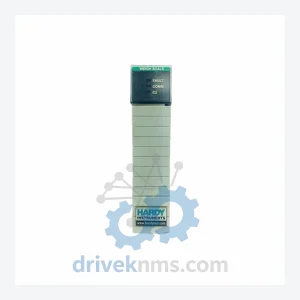
HARDY 1756-2WS Weigh Scale Module ControlLogix-Compatible Weighing I/O for Industrial Process Control
Hardy 1756-2WS is listed for ControlLogix RFQ review. Confirm quantity, condition and destination before quotation.
RFQ-ready industrial model
Model: 1756-RMC1
Product Overview
Commercial availability is handled through direct RFQ, model verification and export-oriented follow-up rather than public cart checkout.
Datasheet Preview
Use attached product manuals when available. If the manual is not public yet, request the full file directly through RFQ.
Commercial Path
Product pages on DRIVEKNMS are designed to verify model, brand and series first, then move the buyer into one clean quotation path.
Technical Dossier
The Allen-Bradley 1756 ControlLogix platform is one of the most widely deployed programmable automation controller (PAC) architectures in global heavy industry. Installed across petrochemical refineries, nuclear power generation facilities, offshore oil & gas platforms, pulp and paper mills, and large-scale water treatment infrastructure, the 1756 chassis-based system has served as the backbone of process and discrete control since its commercial introduction in the late 1990s. Its modular backplane architecture, deterministic communication via ControlNet and EtherNet/IP, and redundancy-capable CPU design have made it the reference standard for safety-critical and high-availability applications. The 1756 series supports chassis sizes from 4-slot to 17-slot configurations, accommodating mixed I/O, motion, communication, and controller modules within a single rack. Its producer/consumer network model enables efficient data exchange across distributed control nodes without polling overhead.
The 1756 ControlLogix platform was introduced by Rockwell Automation in 1997 as a successor to the PLC-5 and SLC 500 families. The initial release established the chassis-and-module paradigm with the 1756-L1 processor, operating on a proprietary backplane at 200 Mbps. The architecture underwent its first major revision with the introduction of the Logix5550 and Logix5555 processors, which expanded memory capacity and added ControlNet scheduling capabilities.
The second architectural generation arrived with the L6x processor family (Logix5561, Logix5562, Logix5563), introducing expanded I/O tree capacity, enhanced motion coordination, and support for Integrated Motion on EtherNet/IP. The L7x generation (Logix5570, Logix5571, Logix5572, Logix5573, Logix5574, Logix5575) represented a significant leap: 64-bit processing, up to 40 MB user memory, embedded EtherNet/IP ports, and support for CIP Safety and CIP Motion simultaneously. The current L8x generation (Logix5580 series) introduced a multi-core architecture, Studio 5000 Logix Designer integration, and Nano Edge computing capabilities.
Compatibility across generations is a persistent engineering concern. Older 1756-A4, 1756-A7, and 1756-A10 chassis remain electrically compatible with modern modules, but firmware dependencies, EDS file versions, and RSLogix 5000 project compatibility must be validated before cross-generation substitution. Modules from the L1/L2 era are now fully discontinued and require lifecycle extension sourcing.
Controllers
Digital I/O Modules
Analog I/O Modules
Communication & Network Adapter Modules
Power Supply Modules
Redundancy Modules
The 1756 backplane operates at 200 Mbps with a proprietary protocol governing slot addressing, module keying, and real-time data exchange. Quality verification for 1756 modules requires test equipment and procedures specific to this architecture. Generic PLC testers are insufficient for validating backplane communication integrity or I/O channel accuracy.
DriveKNMS applies the following verification procedures to all 1756 series units:
Continue The Model Path
Move from this exact model into the matching system hub, brand archive, model-family archive or lifecycle sourcing route before sending a final RFQ list.
Related Paths
Hardy 1756-2WS is listed for ControlLogix RFQ review. Confirm quantity, condition and destination before quotation.
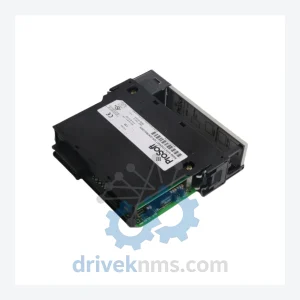
ProSoft Technology MVI56-GEC is listed for ControlLogix RFQ review. Confirm quantity, condition and destination before quotation.
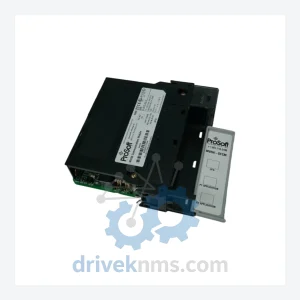
ProSoft Technology MVI56-DFCM is listed for ControlLogix RFQ review. Confirm quantity, condition and destination before quotation.