Technical Dossier
Product Details And Specifications
Allen-Bradley CompactLogix 1769 Series Technical Notes
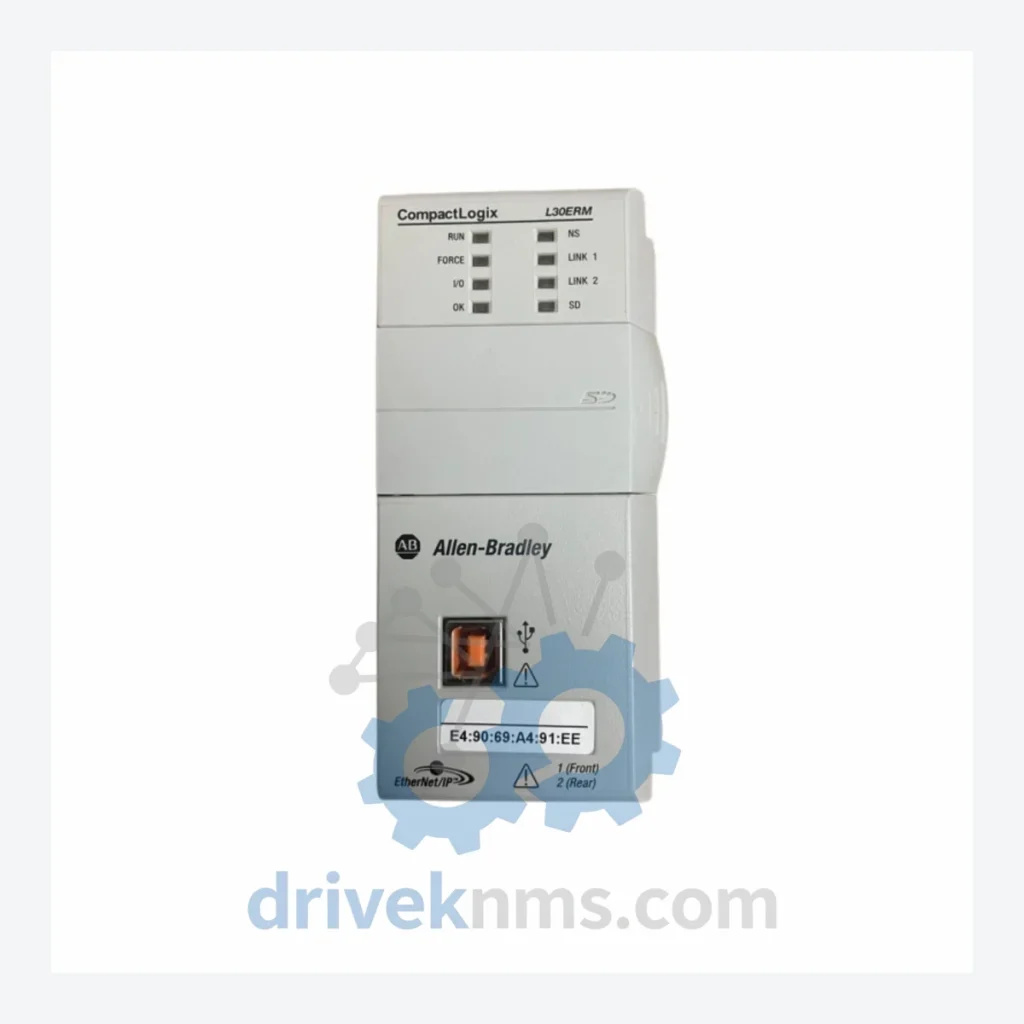
The Allen-Bradley CompactLogix 1769 series is one of Rockwell Automation's most widely deployed programmable automation controller (PAC) platforms in global heavy industry. Installed across petrochemical refineries, nuclear auxiliary systems, offshore platforms, pulp and paper mills, and continuous process manufacturing facilities, the 1769 architecture occupies a critical tier between the entry-level MicroLogix and the full-scale ControlLogix 1756 platform. Its modular, distributed I/O design and native EtherNet/IP support have made it the default choice for mid-range machine control and process skid automation since its commercial introduction in the early 2000s. The 1769-L30ERM specifically is a motion-capable CompactLogix controller supporting up to 16 axes of coordinated motion via the EtherNet/IP network, making it a standard specification in packaging lines, material handling systems, and precision assembly equipment.
The Evolution of CompactLogix 1769 Architecture
The CompactLogix 1769 platform has undergone three distinct architectural generations since its introduction. The first generation (circa 2002–2008) centered on serial-based controllers such as the 1769-L20 and 1769-L30, which relied on RS-232 and DeviceNet for network connectivity. These units used the 1769 local I/O bus exclusively and were programmed via RSLogix 5000 v13–v16.
The second generation (2008–2015) introduced EtherNet/IP-native controllers — the 1769-L23E, 1769-L32E, and 1769-L35E — enabling direct integration with Stratix managed switches and Rockwell's Integrated Architecture. This generation also introduced the 1769-ADN DeviceNet adapter for distributed I/O expansion beyond the local chassis.
The third and current generation (2015–present) is defined by the ERM (EtherNet/IP with integrated motion) controllers: 1769-L16ERM, 1769-L18ERM, 1769-L24ERM, 1769-L27ERM, 1769-L30ERM, 1769-L33ERM, and 1769-L36ERM. These units run Studio 5000 Logix Designer v21+, support CIP Motion over EtherNet/IP, and are compatible with Rockwell's FactoryTalk suite. Backward compatibility with 1769 I/O modules is maintained across all generations, though first-generation controllers cannot be programmed by Studio 5000 v32+ without firmware migration.
CompactLogix 1769 Full Catalog & Functionalities (SKU List)
Controllers (CPU / Motion)
- 1769-L16ERM: CompactLogix 5370 L1 controller, 384KB memory, 8-axis EtherNet/IP motion
- 1769-L18ERM: CompactLogix 5370 L1 controller, 512KB memory, 8-axis motion, onboard I/O
- 1769-L24ERM-BBB1: CompactLogix 5370 L2, 750KB memory, 16-axis motion, dual EtherNet/IP ports
- 1769-L27ERM-QBFC1: CompactLogix 5370 L2, 1MB memory, 16-axis motion, onboard I/O, SD card slot
- 1769-L30ERM: CompactLogix 5370 L3, 1MB memory, 16-axis EtherNet/IP coordinated motion
- 1769-L33ERM: CompactLogix 5370 L3, 2MB memory, 16-axis motion, extended task capacity
- 1769-L36ERM: CompactLogix 5370 L3, 3MB memory, 16-axis motion, maximum local I/O density
Digital Input (DI) Modules
- 1769-IQ16: 16-point 24VDC digital input module, sink/source compatible
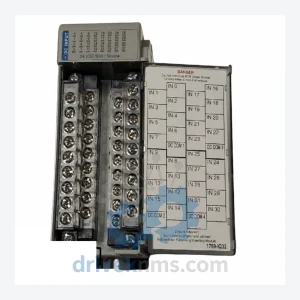
- 1769-IQ32: 32-point 24VDC digital input, high-density, dual-slot form factor
- 1769-IA8I: 8-point 120VAC isolated digital input module
- 1769-IQ6XOW4: 6-point DI / 4-point relay output combination module
Digital Output (DO) Modules
- 1769-OB16: 16-point 24VDC sourcing digital output module
- 1769-OB32: 32-point 24VDC sourcing output, high-density
- 1769-OW8I: 8-point isolated relay output, 240VAC/30VDC rated
Analog Input (AI) Modules
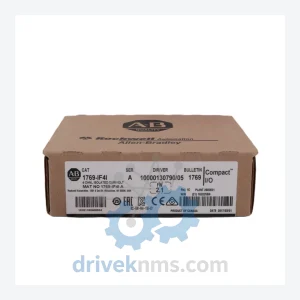
- 1769-IF4: 4-channel analog input, ±10V / 0–20mA, 14-bit resolution
- 1769-IF8: 8-channel analog input, voltage/current selectable per channel
- 1769-IR6: 6-channel RTD/resistance input module, Pt100/Pt1000 compatible
- 1769-IT6I: 6-channel isolated thermocouple input, J/K/T/E/R/S/B types
Analog Output (AO) Modules
- 1769-OF4: 4-channel analog output, ±10V / 4–20mA, 13-bit resolution
- 1769-OF8C: 8-channel current analog output module, 4–20mA
Communication & Adapter Modules
- 1769-ADN: DeviceNet adapter for distributed 1769 I/O expansion
- 1769-ARM: Address reservation module, maintains slot addressing during module removal
Power Supply Modules
- 1769-PA2: 120/240VAC input power supply, 2A at 5VDC bus
- 1769-PB2: 24VDC input power supply, 2A at 5VDC bus
- 1769-ECR: Right-end cap/terminator for 1769 local I/O bank
Sourcing Hard-to-Find & Obsolete CompactLogix 1769 Parts
Q: How is condition confirmed before quotation?
A: Available condition, photos, test records and documentation are checked according to the requested model and sourcing channel before a formal RFQ response.
Quality Control for the CompactLogix 1769 Range
The 1769 platform's distributed backplane architecture requires a multi-stage validation protocol that differs from single-chassis systems. Each module received by DriveKNMS undergoes the following process:
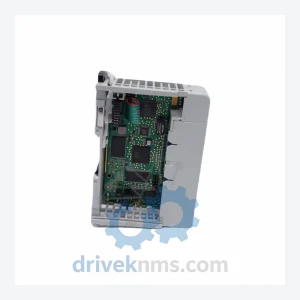
- Visual & Physical Inspection: Connector pin integrity, housing cracks, capacitor bulge, and label authenticity verification against Rockwell Automation serialization records.
- Backplane Communication Test: Each module is seated in a live 1769 test chassis and polled via Studio 5000 to confirm correct module identity, firmware revision, and fault-free status.
- Functional Load Test: I/O modules are tested under rated load conditions — digital outputs are cycled at rated current; analog modules are verified for linearity and offset error within published specifications.
- EtherNet/IP Connectivity Test (ERM Controllers): Controllers are connected to a test network, a sample motion task is executed, and CIP Motion axis configuration is verified for all supported axis counts.
- Firmware Verification: Controller firmware is confirmed against the Rockwell Automation firmware compatibility matrix. Downgrade or upgrade is performed on request prior to shipment.