
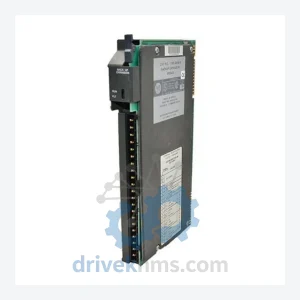
Allen-Bradley 1785-BEM Backup Communications Expansion Module – PLC-5 Series
Allen-Bradley 1785-BEM is listed for PLC-5 RFQ review. Confirm quantity, condition and destination before quotation.
RFQ-ready industrial model
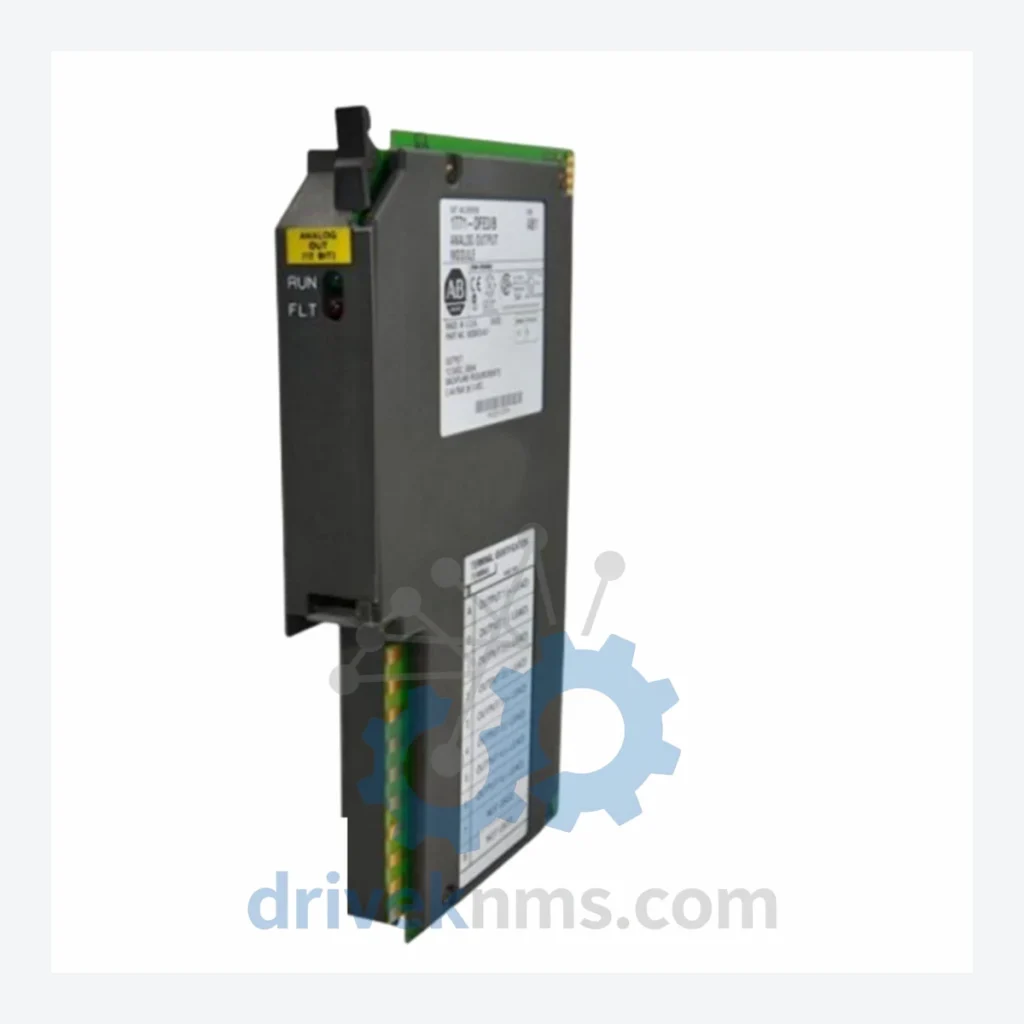
Model: 1771-OFE3
Product Overview
Commercial availability is handled through direct RFQ, model verification and export-oriented follow-up rather than public cart checkout.
Datasheet Preview
Use attached product manuals when available. If the manual is not public yet, request the full file directly through RFQ.
Commercial Path
Product pages on DRIVEKNMS are designed to verify model, brand and series first, then move the buyer into one clean quotation path.
Technical Dossier
The Allen-Bradley 1771 I/O system is the foundational hardware platform of the Rockwell Automation PLC-5 programmable controller family. Deployed across heavy industrial sectors — including petrochemical refineries, nuclear power generation facilities, offshore oil platforms, pulp and paper mills, and continuous-process chemical plants — the 1771 backplane architecture represents one of the most widely installed legacy DCS/PLC infrastructures in global industrial history. Installed base estimates place active 1771-series hardware in tens of thousands of facilities across North America, Europe, and Asia-Pacific, many of which operate on 20–40 year maintenance cycles with no near-term migration path. The 1771-OFE3 is a 4-channel analog output module within this platform, providing 4–20 mA or 0–10 VDC isolated outputs for process control loops.
The 1771 I/O platform was introduced by Allen-Bradley in the late 1970s as a modular, rack-based I/O subsystem for the PLC-2 and later PLC-5 controller families. The architecture uses a parallel backplane bus operating at TTL logic levels, with each I/O chassis accommodating up to 16 single-slot or 8 double-slot modules. Early revisions (Series A, B) established the physical form factor and backplane pinout that remained backward-compatible through subsequent decades. Series C and D modules introduced enhanced diagnostics, improved noise immunity, and extended temperature ratings for harsh environments. The 1771 platform reached end-of-life announcement from Rockwell Automation in the early 2000s, with active production of most modules ceasing by 2012–2015. However, the installed base remains substantial, and Rockwell continues to offer limited repair services. Third-party MRO suppliers such as DriveKNMS provide new-surplus, refurbished, and tested-exchange units to extend operational life. Migration paths include the ControlLogix 1756 platform with 1771-to-1756 adapter bridges (1771-AENTR), though full migration requires significant engineering effort and is deferred by most end-users.
The following SKUs represent verified, commonly stocked modules within the Allen-Bradley 1771 PLC-5 I/O platform. Modules are classified by functional category.
Analog Output Modules
Analog Input Modules
Digital Output Modules
Digital Input Modules
Specialty / Communication Modules
The 1771 backplane uses a parallel TTL bus with module-specific I/O image table mapping. Quality verification for 1771 modules requires chassis-level functional testing rather than standalone bench testing. DriveKNMS employs the following test protocol for 1771 modules: (1) Visual inspection for capacitor ESR degradation, relay contact wear, and conformal coating integrity. (2) Backplane continuity verification across all 60-pin connector positions. (3) Functional load test in a live 1771 chassis with a PLC-5 processor executing a dedicated diagnostic ladder program. (4) For analog modules (including 1771-OFE3): calibration verification against NIST-traceable reference instruments, with output accuracy confirmed at 0%, 25%, 50%, 75%, and 100% of full scale. (5) 48-hour burn-in cycle at elevated ambient temperature (45°C) to screen early-life failures. All tested units are issued a DriveKNMS inspection report with test date, technician ID, and measured parameters.
Continue The Model Path
Move from this exact model into the matching system hub, brand archive, model-family archive or lifecycle sourcing route before sending a final RFQ list.
Related Paths
Allen-Bradley 1785-BEM is listed for PLC-5 RFQ review. Confirm quantity, condition and destination before quotation.
Allen-Bradley 1771-DMC is listed for PLC-5 RFQ review. Confirm quantity, condition and destination before quotation.
Allen-Bradley 1771-OM is listed for PLC-5 RFQ review. Confirm quantity, condition and destination before quotation.