
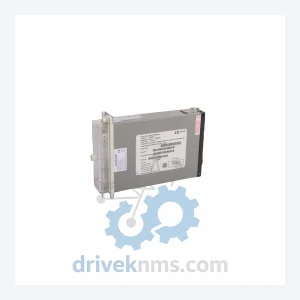
ALSTOM MVAJ105RA0802A Protection Relay – MiCOM Series
Alstom MVAJ105RA0802A is listed for MiCOM Series RFQ review. Confirm quantity, condition and destination before quotation.
RFQ-ready industrial model
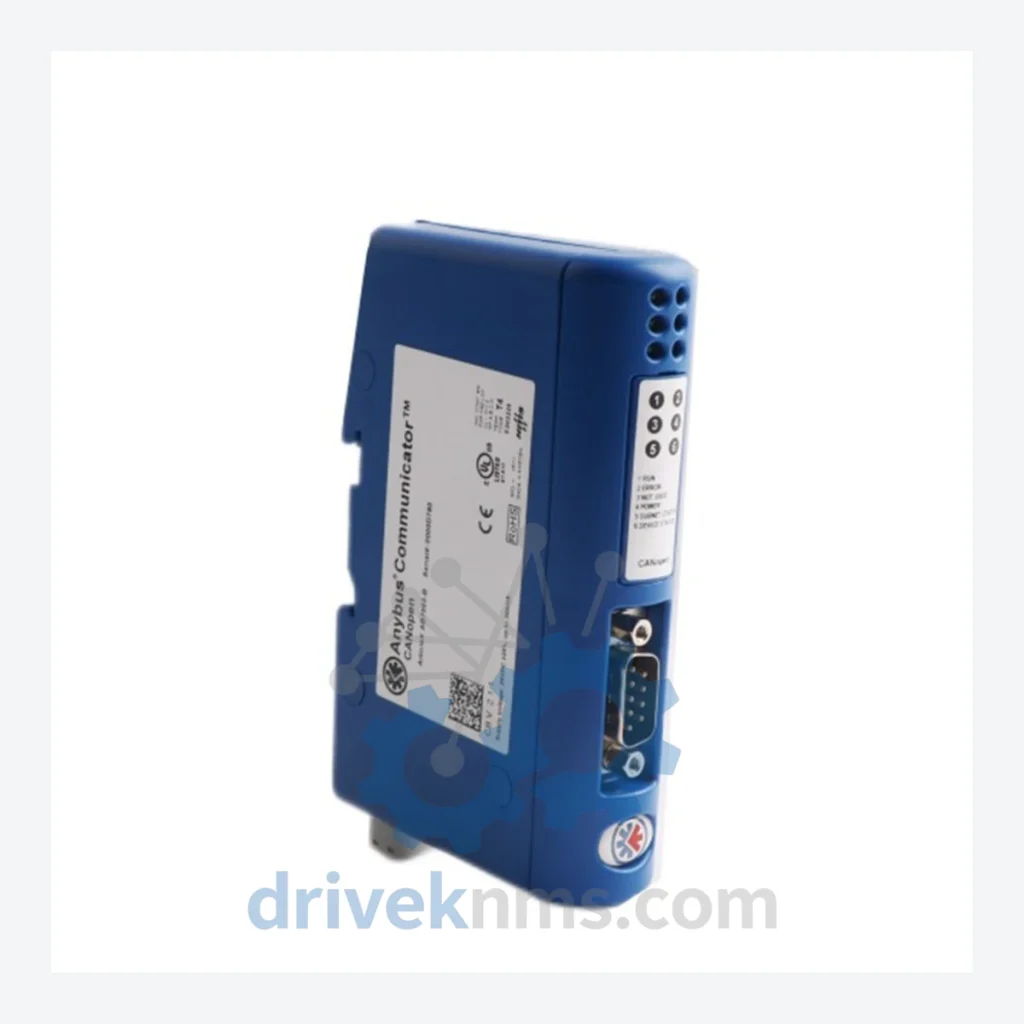
Model: AB7003-B
Product Overview
Commercial availability is handled through direct RFQ, model verification and export-oriented follow-up rather than public cart checkout.
Datasheet Preview
Use attached product manuals when available. If the manual is not public yet, request the full file directly through RFQ.
Commercial Path
Product pages on DRIVEKNMS are designed to verify model, brand and series first, then move the buyer into one clean quotation path.
Technical Dossier
The Anybus CompactCom series, developed by HMS Networks (Sweden), is a standardized embedded network interface platform deployed across heavy industrial sectors including petrochemical plants, nuclear power facilities, offshore oil and gas installations, and large-scale manufacturing automation. The CompactCom architecture allows device manufacturers to integrate a single hardware slot into their equipment and swap network protocol modules without redesigning the host device. This modularity has made CompactCom a reference standard for multi-protocol industrial connectivity across IEC 61158-compliant fieldbus and Industrial Ethernet environments.
The AB7003-B specifically implements the CC-Link IE Field protocol — a Gigabit Ethernet-based open network standard governed by the CC-Link Partner Association (CLPA) — enabling seamless integration of third-party devices into Mitsubishi Electric-centric automation architectures. It is widely specified in Japanese and Asian automotive, semiconductor, and process automation facilities.
The CompactCom platform was introduced by HMS Networks in the early 2000s as a response to the fragmentation of industrial fieldbus standards. The original CompactCom 30 series (30-pin form factor) addressed legacy fieldbuses including PROFIBUS DP, DeviceNet, and CANopen. As Industrial Ethernet protocols gained adoption through the 2010s, HMS introduced the CompactCom 40 series with a 40-pin connector, supporting higher-bandwidth protocols such as EtherNet/IP, PROFINET IRT, EtherCAT, and CC-Link IE Field.
The AB7003-B belongs to the CompactCom 40 series. Key architectural milestones include: the introduction of dual-port Ethernet switching (enabling line topology without external switches), support for functional safety profiles (PROFIsafe, CIP Safety), and the transition from parallel host interface to high-speed SPI/UART serial interfaces for embedded microcontroller integration. The CompactCom platform is now in a mature lifecycle phase; HMS Networks continues to provide long-term supply and firmware support for installed base modules, making third-party sourcing of legacy SKUs a critical operational requirement for end users.
The following SKUs represent verified, commercially available Anybus CompactCom 40-series modules. Each module provides a standardized host interface and implements a specific industrial network protocol on the network side.
AB7000: CompactCom 40 module for PROFIBUS DP-V0/V1 slave communication, up to 12 Mbit/s.
AB7001: CompactCom 40 module for DeviceNet adapter (slave) with CAN-based messaging, Group 2 only server.
AB7002: CompactCom 40 module for CANopen device (DS301/DS401), supports SDO/PDO and NMT services.
AB7003-B: CompactCom 40 module for CC-Link IE Field slave; Gigabit Ethernet, cyclic/transient data transfer.
AB7004: CompactCom 40 module for EtherNet/IP adapter; supports implicit (I/O) and explicit messaging, CIP conformance tested.
AB7005: CompactCom 40 module for PROFINET IO device (RT/IRT); MRP ring redundancy, GSDML-based configuration.
AB7007: CompactCom 40 module for Modbus-TCP server; supports standard Modbus function codes over TCP/IP.
AB7009: CompactCom 40 module for EtherCAT slave; CoE (CANopen over EtherCAT), distributed clocks support.
AB7010: CompactCom 40 module for CC-Link V2 slave; optical/electrical media, cyclic data up to 150 bytes.
AB7011: CompactCom 40 module for ControlNet adapter; scheduled and unscheduled messaging, UCMM support.
AB7013: CompactCom 40 module for Modbus-RTU/ASCII serial slave; RS-485 interface, configurable baud rate.
AB7028: CompactCom 40 module for POWERLINK controlled node (CN); MN/CN topology, isochronous data exchange.
AB7030: CompactCom 40 module for SERCOS III slave; real-time ring topology, motion control profile support.
AB7072: CompactCom 40 module for BACnet/IP server; ASHRAE 135 compliant, used in building automation integration.
AB7632: CompactCom 40 module for PROFINET IO with PROFIsafe; functional safety up to SIL 2 / PLd.
AB7634: CompactCom 40 module for EtherNet/IP with CIP Safety; SIL 2 / PLd rated, TÜV certified.
For plant operators running Mitsubishi CC-Link IE Field networks who require AB7003-B as a replacement or expansion module, DriveKNMS provides: verified OEM-equivalent units with full traceability documentation, lead-time bypass for emergency maintenance scenarios, and batch procurement support for multi-site rollouts. All units are shipped with original HMS Networks labeling and firmware version documentation.
CompactCom 40-series modules use a 40-pin board-to-board connector interface between the host device and the network module. Quality verification for these units requires protocol-specific test environments. DriveKNMS applies the following test procedures to all CompactCom inventory:
For the AB7003-B (CC-Link IE Field): the module is installed into a certified CompactCom 40 host reference board and connected to a Mitsubishi MELSEC iQ-R series master station. Cyclic data exchange (RWw/RWr, RX/RY) is verified at full Gigabit Ethernet line rate. Transient data (message communication) and station-to-station communication are validated. Firmware version is read and logged against HMS Networks' official release history. Physical inspection covers the 40-pin connector for pin deformation, PCB for corrosion or thermal stress marks, and the RJ45 port for contact integrity.
Continue The Model Path
Move from this exact model into the matching system hub, brand archive, model-family archive or lifecycle sourcing route before sending a final RFQ list.
Related Paths
Alstom MVAJ105RA0802A is listed for MiCOM Series RFQ review. Confirm quantity, condition and destination before quotation.
Moore 16137-174 is listed for Servo Drives RFQ review. Confirm quantity, condition and destination before quotation.
Fuji Electric EP-3364B-CA-Z2 is listed for FRENIC Series RFQ review. Confirm quantity, condition and destination before quotation.