Products / Allen-Bradley / 1785 Series
Allen-Bradley 1785 Series

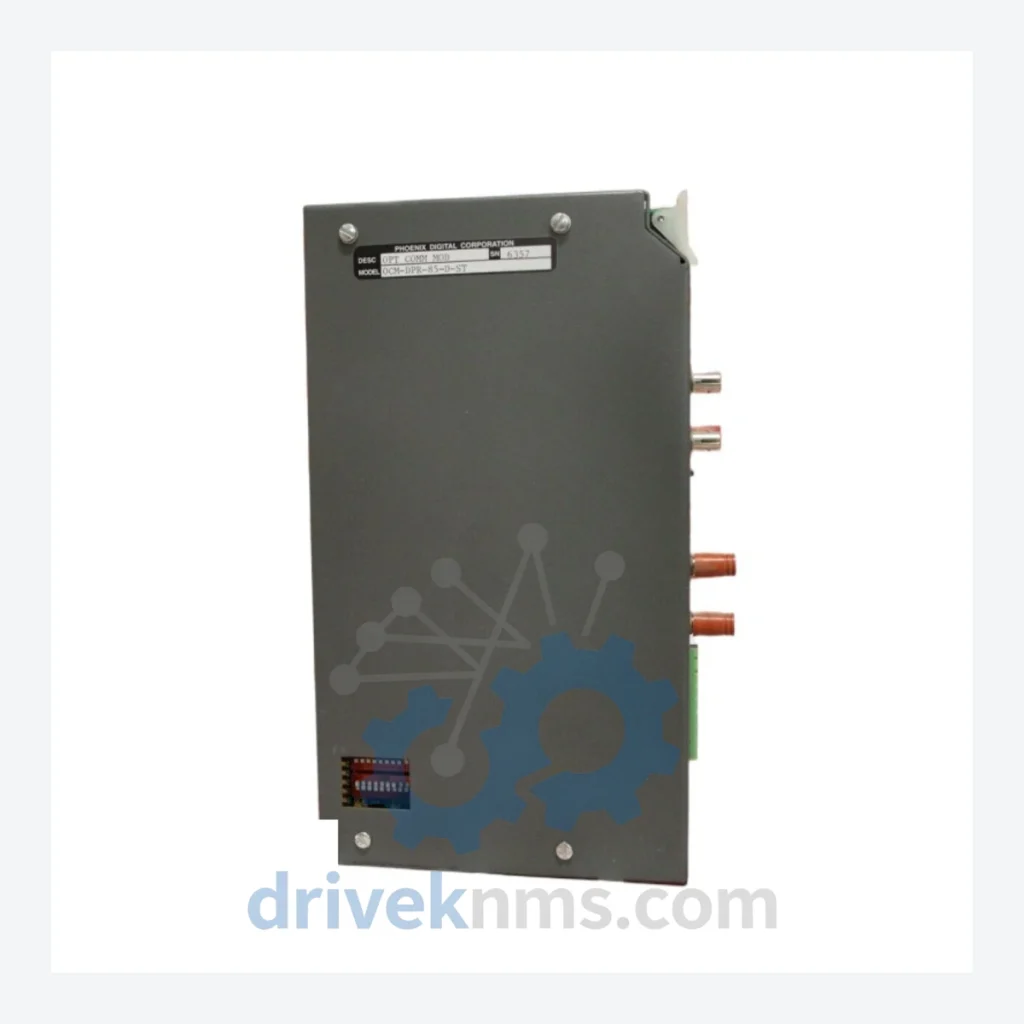
Allen-Bradley OCM-DPR-85-D-ST Fiber Optic Communication Module – Obsolete 1785 Series Spare Part

Model: OCM-DPR-85-D-ST

Brand Allen-Bradley
Series 1785 Series
Model OCM-DPR-85-D-ST
RFQ-ready model route Obsolete and surplus sourcing Export follow-up by model list

Product Overview

Commercial availability is handled through direct RFQ, model verification and export-oriented follow-up rather than public cart checkout.

Datasheet Preview

Datasheet Preview

Use attached product manuals when available. If the manual is not public yet, request the full file directly through RFQ.

Request Full Manual

Commercial Path

Use This Page To Confirm The Model, Then Move To RFQ

Product pages on DRIVEKNMS are designed to verify model, brand and series first, then move the buyer into one clean quotation path.

Technical Dossier

Product Details And Specifications

Allen-Bradley OCM-DPR-85-D-ST Fiber Optic Communication Module – Obsolete 1785 Series Spare Part

When the OCM-DPR-85-D-ST fails in a running production line, the consequences are not limited to a module replacement cost. For facilities still operating Allen-Bradley PLC-5 or 1785-series control architectures, a single failed fiber optic communication module can trigger a forced migration decision — one that carries engineering redesign costs, new hardware procurement, software re-validation, and production downtime that routinely runs into the hundreds of thousands, or millions, of dollars. DriveKNMS maintains verified stock of the OCM-DPR-85-D-ST specifically to give plant managers and maintenance engineers a credible alternative to that scenario.

Technical Specifications

Parameter Detail
Part Number OCM-DPR-85-D-ST
Manufacturer Allen-Bradley (Rockwell Automation)
Series 1785 / PLC-5 Legacy Series
Module Type Fiber Optic Communication Module
Connector Type ST (Straight Tip) Fiber Optic
Communication Protocol Data Highway Plus (DH+) over fiber optic medium
Discontinuation Status Discontinued / Obsolete – No longer manufactured by Rockwell Automation
Compatible Systems Allen-Bradley PLC-5 family, 1785-series racks, legacy DH+ fiber optic networks
Country of Origin United States

Note: Electrical parameters not listed above are not independently verified by DriveKNMS. We do not publish unconfirmed specifications. Consult the original Allen-Bradley documentation for full electrical ratings.

Solving the Discontinued Hardware Crisis

The Allen-Bradley PLC-5 platform, including the 1785-series rack infrastructure and its associated fiber optic communication modules, was formally discontinued by Rockwell Automation. However, decommissioning a PLC-5-based control system is not a decision made lightly. These systems are embedded in process control architectures — chemical plants, automotive stamping lines, water treatment facilities, paper mills — where the cost of re-engineering the control layer is measured against years of capital budget cycles.

The OCM-DPR-85-D-ST serves a specific and non-trivial function: it extends the Data Highway Plus network over fiber optic cable, providing electrical isolation and extended communication distances that copper-based DH+ cannot achieve. In multi-drop fiber ring topologies, a single failed OCM-DPR-85-D-ST can isolate entire segments of the control network. There is no software patch for this failure mode. The only resolution is a physical replacement with an identical or functionally equivalent module.

Sourcing this module through standard distribution channels is no longer possible. The secondary market — and specifically suppliers with verified, tested inventory — is the only viable path for facilities that need to maintain these systems without committing to a full migration project.

How to Extend Automation Asset Life by 5–10 Years Without Full System Replacement

For plant managers facing pressure to retire aging PLC-5 infrastructure, the financial case for a targeted spare parts strategy is straightforward. A full control system migration — new PLCs, new I/O, new HMI, re-commissioning, operator retraining, and production downtime — typically costs between $500,000 and several million dollars per line, depending on complexity. A disciplined spare parts program, by contrast, can defer that expenditure by five to ten years at a fraction of the cost.

The practical framework for this strategy involves three steps. First, conduct a criticality audit: identify every module in the control architecture that is discontinued and has no modern drop-in equivalent. The OCM-DPR-85-D-ST is a prime candidate — it is application-specific, no longer manufactured, and its failure directly impacts network communication. Second, establish a minimum stock level for each critical module based on mean time between failures and lead time for sourcing. For obsolete parts, lead time from secondary market suppliers can range from days to months depending on availability cycles. Third, document the firmware and hardware revision levels of installed modules so that replacement units can be matched precisely — revision mismatches in legacy PLC-5 systems can cause compatibility issues that are time-consuming to diagnose.

This approach does not require capital approval for a system upgrade. It is a maintenance budget decision that protects an existing capital asset and keeps production running on a known, validated control platform.

Condition & Reliability Assurance

DriveKNMS applies a 5-step quality process to all obsolete modules before shipment:

  • Step 1 – Visual and Physical Inspection: Full examination of the module housing, connector pins, and PCB for physical damage, corrosion, or evidence of prior repair.
  • Step 2 – Electrolytic Capacitor Assessment: Aged electrolytic capacitors are a primary failure mode in legacy modules. Each unit is inspected for capacitor bulging, leakage, or ESR degradation. Units with suspect capacitors are flagged and not shipped.
  • Step 3 – Firmware and Label Verification: Hardware revision labels and any accessible firmware identifiers are documented and cross-referenced against known revision histories to ensure compatibility with target system configurations.
  • Step 4 – Connector and Pin Integrity Check: ST fiber optic connectors and backplane edge connectors are inspected for oxidation, pin damage, and mechanical integrity. Corroded or bent pins are disqualifying defects.
  • Step 5 – Functional Verification: Where test infrastructure permits, modules are powered and communication functionality is verified prior to packaging.

Units that do not pass all five steps are not offered for sale. Condition grade (New, Refurbished, or Tested Used) is disclosed on the order confirmation.

Key Features for System Maintenance

  • Drop-in replacement: The OCM-DPR-85-D-ST installs directly into the existing 1785-series rack slot. No rack modification, no wiring changes.
  • No reprogramming required: The module operates transparently within the existing DH+ fiber optic network. The PLC-5 processor does not require any program modification upon module replacement.
  • Avoids engineering redesign costs: Replacing a failed OCM-DPR-85-D-ST with an identical unit eliminates the need for control system re-architecture, re-validation, or third-party engineering engagement.
  • Preserves validated control logic: Facilities operating under process validation requirements (pharmaceutical, food and beverage, regulated industries) avoid the re-validation burden that a system migration would trigger.
  • Maintains fiber optic network topology: Keeps existing fiber cable infrastructure in service, avoiding the cost of recabling or converting to copper-based communication.

FAQ

What warranty applies to an obsolete module like the OCM-DPR-85-D-ST?
DriveKNMS provides a 90-day warranty against defects in materials and workmanship on all shipped units. Warranty terms are confirmed in writing on the order documentation. Extended warranty arrangements can be discussed for volume orders.

How do I know the unit is genuine and not counterfeit?
All units sourced by DriveKNMS are inspected for authenticity markers including label consistency, PCB markings, and component profiles consistent with genuine Allen-Bradley manufacturing. We do not source from unverified brokers. Provenance documentation is available upon request for critical applications.

Should I buy more than one unit as a long-term reserve?
For any discontinued module that is critical to production continuity, holding a minimum of two units is a defensible maintenance strategy. The OCM-DPR-85-D-ST is no longer manufactured, and secondary market availability is finite. Prices and availability will not improve over time. Facilities that have experienced a single failure event and sourced a replacement should treat that event as a signal to establish a reserve stock before the next failure occurs.

Can you source additional units if I need more than one?
Contact us with your quantity requirement. DriveKNMS maintains active sourcing channels for legacy Allen-Bradley components and can advise on current availability and lead times.

WhatsApp Prefilled Inquiry Email [email protected] Phone +86 18359293191 Top Back To Top