
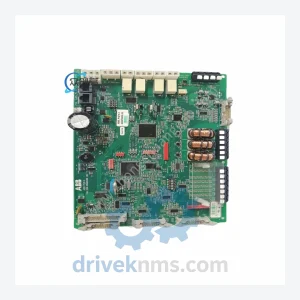
ABB ZPOW Series Power Modules ZPOW-7B1C
ABB ZPOW-7B1C is listed for ZPOW Series Power RFQ review. Confirm quantity, condition and destination before quotation.
RFQ-ready industrial model
Model: 3BHB004027R0101 C700 AE01 5SXE05-015
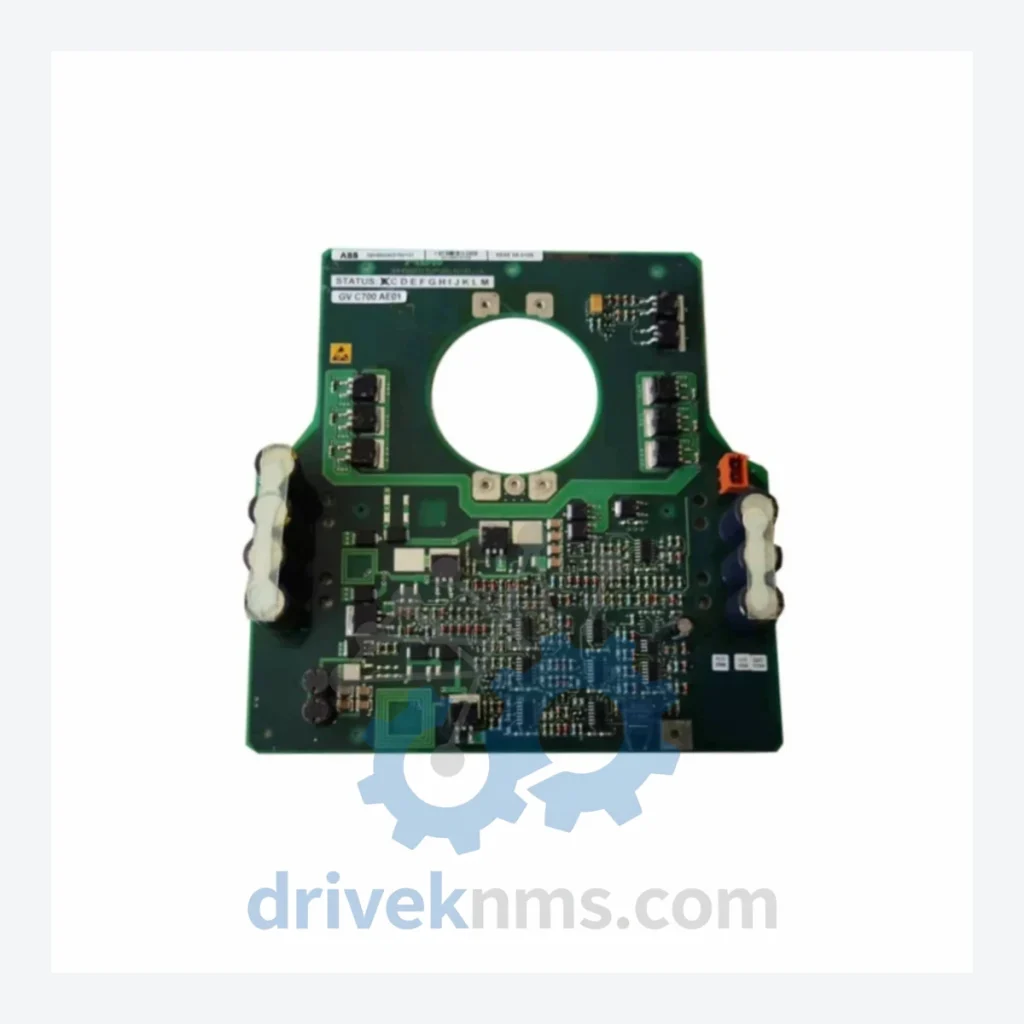
Product Overview
Commercial availability is handled through direct RFQ, model verification and export-oriented follow-up rather than public cart checkout.
Datasheet Preview
Use attached product manuals when available. If the manual is not public yet, request the full file directly through RFQ.
Commercial Path
Product pages on DRIVEKNMS are designed to verify model, brand and series first, then move the buyer into one clean quotation path.
Technical Dossier
This is not a commodity component. It is a production continuity asset.
RFQ support for obsolete parts: Send the model number, required quantity and destination so DriveKNMS can confirm sourcing options before quotation.
Q: How are RFQ terms confirmed?
A: Quantity, required condition, documentation needs, destination and sourcing route are confirmed during RFQ review before quotation.
The ABB ACS800 platform was deployed extensively across pulp and paper, mining, oil and gas, and heavy process industries throughout the 1990s and 2000s. Many of these installations remain in active production today — not because operators are unaware of the age, but because the cost and risk of replacing a functioning, tuned drive system cannot be justified against current capital budgets.
The 3BHB004027R0101 control board governs the core logic of the ACS800 drive: speed reference processing, fault diagnostics, I/O coordination, and communication with upstream control systems such as ABB's own AC800M DCS or third-party SCADA platforms. When this board fails, the drive is inoperable. There is no field repair path. The only options are board replacement or full drive replacement.
Facilities that have pre-positioned a verified spare of the 3BHB004027R0101 reduce their mean time to recovery (MTTR) from weeks to hours. That is the operational calculus that drives demand for this part.
For plant managers and reliability engineers operating legacy ABB ACS800 drive systems, the pressure to retire and replace aging infrastructure is constant — from OEM end-of-support notices, from corporate asset management cycles, and from the simple reality that replacement parts are harder to source each year. The following strategy has been applied successfully across multiple heavy-industry facilities to defer system retirement by 5–10 years without compromising operational reliability.
1. Conduct a Critical Spare Audit. Identify every board and module in your ACS800 installation that has no active-production replacement available. The 3BHB004027R0101 is a primary candidate. Map each part to its failure consequence: does failure stop one drive, one line, or the entire facility? Prioritize accordingly.
4. Document Firmware Versions Before Any Board Swap. ACS800 control boards carry firmware that is calibrated to specific motor and application parameters. Before any board replacement, record the firmware version from the existing board. DriveKNMS verifies firmware versions on all refurbished units prior to shipment and can advise on compatibility.
5. Negotiate a Multi-Year Supply Agreement. If your facility operates multiple ACS800 drives, a standing supply agreement with a specialist distributor locks in access to RFQ-reviewed sourcing status before it is exhausted from the global secondary market. Contact DriveKNMS to discuss volume arrangements.
This approach consistently delivers a 5–10 year extension of useful asset life at a total cost that is 3–8% of the capital expenditure required for full system replacement. For a facility with 10–20 ACS800 drives, that differential is measured in millions.
Every 3BHB004027R0101 unit shipped by DriveKNMS passes a 5-stage quality process before it leaves our facility:
Stage 1 – Electrolytic Capacitor Inspection: All electrolytic capacitors are inspected for bulging, leakage, and ESR deviation. Aged capacitors are replaced with specification-matched components before the board is offered for sale.
Stage 2 – Firmware Version Verification: The firmware version is read and recorded. Units with corrupted or mismatched firmware are quarantined and not offered as functional replacements.
Stage 3 – Pin and Connector Corrosion Audit: All edge connectors, terminal pins, and board-to-board interfaces are inspected under magnification for oxidation, corrosion, and mechanical damage. Affected contacts are treated or the unit is rejected.
Stage 4 – Functional Bench Test: Where test infrastructure permits, boards are powered and tested for basic logic function and communication response.
Stage 5 – Anti-Static Packaging and Documentation: Units are packaged in ESD-safe materials with a condition report and part number verification label. Shipment documentation includes the unit's assessed condition grade.
The 3BHB004027R0101 is a direct drop-in replacement for the original board position in ACS800 drive cabinets. No mechanical modification is required. In standard replacement scenarios, no drive reprogramming is required — the drive's parameter set is stored in the DDCS communication module or the control panel memory, not on the control board itself. This means a board swap can be completed by a qualified drive technician without an ABB service engineer on-site, and without the engineering cost of a full drive recommissioning.
The financial implication is direct: a board replacement using a verified spare costs a fraction of what ABB or a systems integrator would charge for a full drive replacement project, and it can be executed in hours rather than weeks.
Q: How is condition confirmed before quotation?
A: Available condition, photos, test records and documentation are checked according to the requested model and sourcing channel before a formal RFQ response.
Q: How do I know the unit is genuine ABB and not a counterfeit?
A: All units are inspected for ABB part markings, PCB revision codes, and component date codes consistent with the original manufacturing period. We do not source from unverified channels. Provenance documentation is available on request.
Continue The Model Path
Move from this exact model into the matching system hub, brand archive, model-family archive or lifecycle sourcing route before sending a final RFQ list.
Related Paths
ABB ZPOW-7B1C is listed for ZPOW Series Power RFQ review. Confirm quantity, condition and destination before quotation.
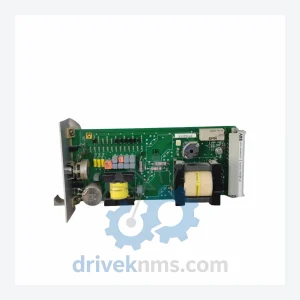
ABB P3LB HENF209568R0001 is listed for Monitoring Systems RFQ review. Confirm quantity, condition and destination before quotation.
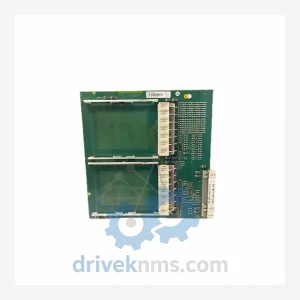
ABB PM154-3BSE003645R1 is listed for Monitoring Systems RFQ review. Confirm quantity, condition and destination before quotation.