
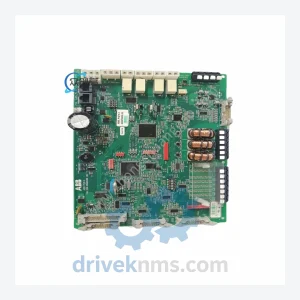
ABB ZPOW Series Power Modules ZPOW-7B1C
ABB ZPOW-7B1C is listed for ZPOW Series Power RFQ review. Confirm quantity, condition and destination before quotation.
RFQ-ready industrial model
Model: 3BHE028122R0001 XFD213A SSI
Product Overview
Commercial availability is handled through direct RFQ, model verification and export-oriented follow-up rather than public cart checkout.
Datasheet Preview
Use attached product manuals when available. If the manual is not public yet, request the full file directly through RFQ.
Commercial Path
Product pages on DRIVEKNMS are designed to verify model, brand and series first, then move the buyer into one clean quotation path.
Technical Dossier
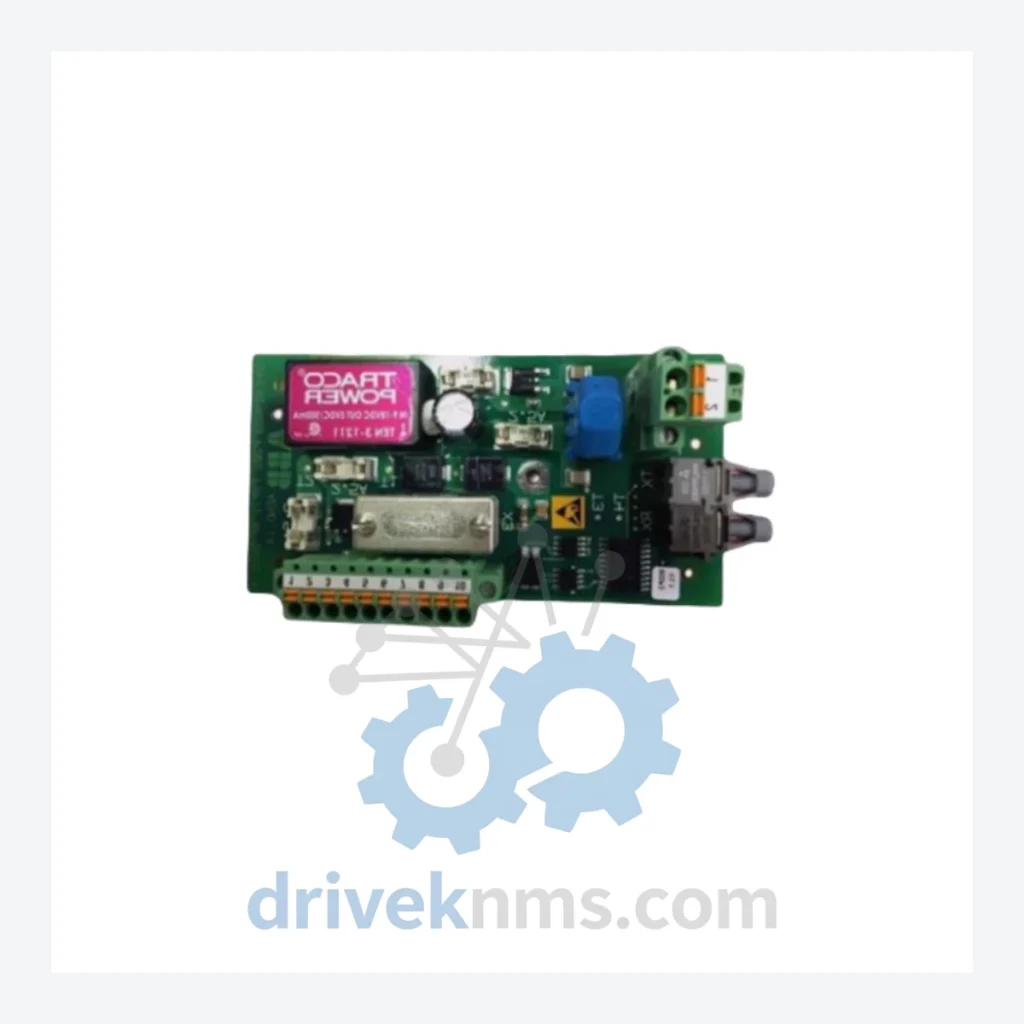
The ABB XFD213A SSI (Speed Sensor Interface) module, part number 3BHE028122R0001, is a dedicated signal conditioning and interface board deployed within ABB's excitation and drive control platforms — including the UNITROL 6000, UNITROL 5000, and Symphony Plus DCS environments. This module occupies a critical position in heavy industrial installations worldwide, including hydroelectric power stations, nuclear auxiliary systems, large-scale petrochemical refineries, and rotating machinery control in steel mills. Its primary function is to acquire, condition, and transmit speed feedback signals from magnetic pickup units (MPUs) and encoder-type sensors to the main control processor, enabling closed-loop speed regulation with high determinism.
The XFD213A SSI series has been installed across thousands of generating units globally, particularly in plants where ABB UNITROL excitation systems govern synchronous generator field control. Its long service record — spanning installations from the early 2000s through the present — means that a significant installed base remains in active operation, creating sustained demand for both replacement units and long-term maintenance spares.
The SSI (Speed Sensor Interface) function within ABB excitation platforms has evolved through several hardware generations, each tied to the broader UNITROL and AC800M control architecture revisions:
Generation 1 (UNITROL 5000 era, ~2000–2008): Early SSI boards were discrete analog signal conditioners with limited diagnostic capability. Compatibility was tightly coupled to the UNITROL 5000 backplane and required manual calibration of pulse-per-revolution (PPR) parameters via DIP switches.
Generation 2 (UNITROL 6000 / XFD213A, ~2008–2018): The XFD213A represented a significant architectural shift — integrating digital signal processing for frequency-to-speed conversion, onboard EEPROM for parameter storage, and a standardized VME-compatible board format. The 3BHE028122R0001 variant introduced improved EMC shielding and extended the input frequency range to support both MPU and HTL encoder inputs on a single hardware platform.
Generation 3 / Modern Alternatives (~2018–present): ABB's current excitation platforms (UNITROL 6800, Symphony Plus S+ Control) integrate speed measurement functions into consolidated I/O modules, reducing the need for dedicated SSI boards. However, the XFD213A remains the only direct hardware replacement for installed UNITROL 6000 systems and is not software-substitutable without a full control system upgrade.
Compatibility note: The XFD213A SSI is not interchangeable with ABB's SDCS-CON series (used in DCS 400/600 DC drives) or the RTAC-01 resolver interface. Cross-referencing must be performed against the specific UNITROL system revision and backplane slot assignment.
The following SKUs represent the verified module range associated with the ABB XFD213A SSI platform and its directly interfacing components within the UNITROL 6000 / Symphony Plus ecosystem. Each entry reflects a distinct hardware function:
3BHE028122R0001 (XFD213A): Speed Sensor Interface board, MPU/HTL dual-input, UNITROL 6000 primary slot.
3BHE022294R0101 (XFD211A): Speed Sensor Interface, single MPU input, earlier UNITROL 6000 variant.
3BHE024577R0101 (XFD212A): Speed Sensor Interface with extended frequency range (0–20 kHz), encoder-optimized.
3BHE028122R0002 (XFD213B): Revised XFD213A with updated firmware EEPROM, drop-in hardware replacement.
3BHE010751R0001 (XPOW): Internal power supply board for UNITROL 6000 chassis, required for XFD213A operation.
3BHE009681R0001 (XINB): Analog input board, interfaces with XFD213A speed output for AVR loop closure.
3BHE009682R0001 (XOUT): Analog output board, provides field current reference derived from speed-corrected AVR output.
3BHE014078R0001 (XCOT): Communication board, Profibus DP, used alongside XFD213A in networked UNITROL 6000 systems.
3BHE014078R0002 (XCOT-02): Communication board, Modbus RTU variant, alternate fieldbus configuration.
3BHE009683R0001 (XPRO): Main processor board, UNITROL 6000; receives speed data from XFD213A via internal bus.
3BHE022293R0101 (XFDI): Digital input board, 24 VDC, used for speed relay interlocks in conjunction with XFD213A.
3BHE022295R0101 (XFDO): Digital output board, relay type, trip and alarm outputs driven by speed threshold logic.
3BHE009684R0001 (XMEM): Memory expansion module, stores extended event logs including speed transient records.
3BHE028123R0001 (XFD214A): Dual-channel Speed Sensor Interface, redundant MPU inputs, for critical generator applications.
3BHE035041R0001 (XFDI2): Enhanced digital input board, 48 VDC compatible, later UNITROL 6000 revision.
3BHE041314R0001 (XCOT-03): Communication board, IEC 61850 GOOSE messaging, for substation automation integration.
3BHE009685R0001 (XREG): Voltage regulator board, primary AVR function, operates in closed loop with XFD213A speed signal.
All sourced units are accompanied by full traceability documentation including origin records, visual inspection reports, and functional test certificates. Units identified as counterfeit or non-OEM are quarantined and destroyed — not returned to the supply chain.
The XFD213A presents specific test challenges due to its mixed analog/digital signal path and its dependence on EEPROM-stored calibration data. DriveKNMS applies the following test protocol to all XFD213A units processed through our facility:
Visual and mechanical inspection: Board-level examination for capacitor bulge, trace corrosion, connector pin deformation, and conformal coating integrity. UNITROL 6000 boards are particularly susceptible to electrolytic capacitor degradation in high-ambient-temperature installations (>45°C continuous).
EEPROM integrity verification: Readout and checksum validation of onboard parameter storage. Boards with corrupted or blank EEPROM are reflashed using reference firmware images matched to the specific hardware revision (R0001 vs R0002).
Functional speed signal simulation: Input signal injection using a calibrated MPU signal generator across the full operational frequency range (10 Hz – 15 kHz). Output frequency-to-speed conversion accuracy is verified against ABB factory tolerance specifications (±0.1% of full scale).
Backplane bus communication test: Each board is seated in a UNITROL 6000 test chassis and polled via the internal VME-compatible bus to confirm correct register mapping and interrupt response.
Burn-in and thermal cycling: Units are operated at elevated temperature (55°C, 4 hours) followed by ambient cool-down to screen for latent component failures before dispatch.
Continue The Model Path
Move from this exact model into the matching system hub, brand archive, model-family archive or lifecycle sourcing route before sending a final RFQ list.
Related Paths
ABB ZPOW-7B1C is listed for ZPOW Series Power RFQ review. Confirm quantity, condition and destination before quotation.
ABB P3LB HENF209568R0001 is listed for Monitoring Systems RFQ review. Confirm quantity, condition and destination before quotation.
ABB PM154-3BSE003645R1 is listed for Monitoring Systems RFQ review. Confirm quantity, condition and destination before quotation.