
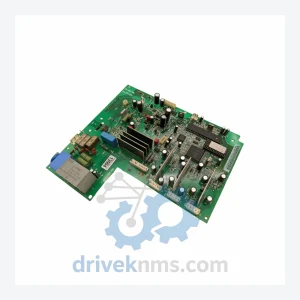
ABB SNAT-7120 Circuit Board – SNAZ7120J Series
ABB SNAT-7120 SNAZ 7120 J SNAZ7120J is listed for SNAZ7120J Series RFQ review. Confirm quantity, condition and destination before quotation.
RFQ-ready industrial model
Model: 3HAC044517-001 3HAC026114-010 3HAC026114-009
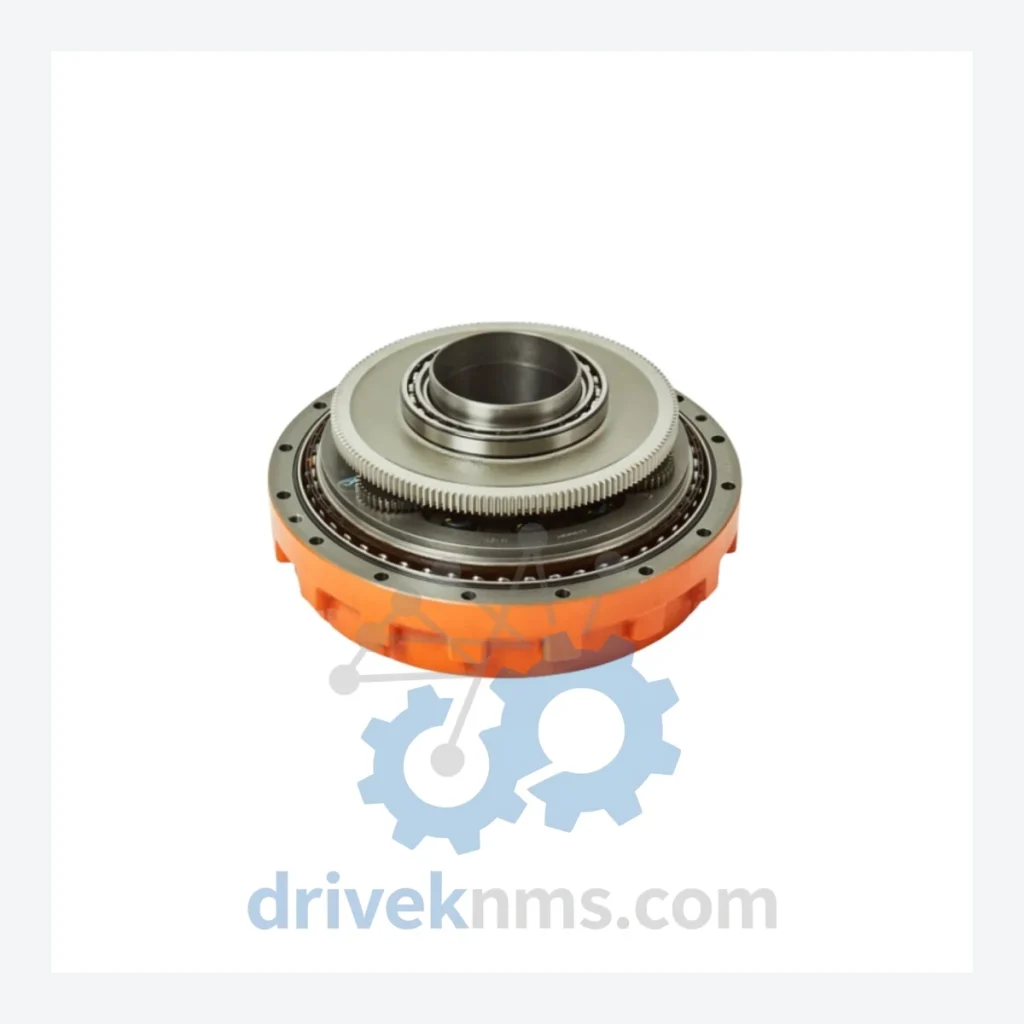
Product Overview
Commercial availability is handled through direct RFQ, model verification and export-oriented follow-up rather than public cart checkout.
Datasheet Preview
Use attached product manuals when available. If the manual is not public yet, request the full file directly through RFQ.
Commercial Path
Product pages on DRIVEKNMS are designed to verify model, brand and series first, then move the buyer into one clean quotation path.
Technical Dossier
The ABB IRC5 drive unit series represents the core motion control infrastructure deployed across heavy industrial robotics installations worldwide. These units are integral to ABB's sixth-generation robot controller platform, the IRC5, which has been the standard controller architecture for ABB industrial robots since 2004. The IRC5 drive system is installed across chemical processing plants, nuclear facility maintenance robots, petroleum refinery automation lines, automotive body-in-white welding cells, and precision assembly operations. The three primary part numbers covered by this listing — 3HAC044517-001, 3HAC026114-010, and 3HAC026114-009 — are axis computer and drive unit assemblies that govern servo power delivery to robot axes 1–6.
The IRC5 controller family, including its single-cabinet, dual-cabinet, panel-mounted, and compact variants, relies on a modular drive architecture that allows individual axis drive boards to be replaced without full controller replacement. This modularity has made the IRC5 one of the most maintainable robot controller platforms in the industry, with documented installations exceeding 20 years of continuous operation in refinery and nuclear environments.
ABB's drive architecture for industrial robots evolved through several distinct generations. The S4 and S4C+ controllers (1990s–early 2000s) used a centralized drive board design with limited modularity. The IRC5 platform, introduced in 2004, shifted to a distributed axis computer architecture where each drive module handles dedicated axis control, enabling hot-swap maintenance and granular fault isolation.
Early IRC5 drive units (circa 2004–2010) used the 3HAC026114-009 and 3HAC026114-010 axis computer boards, which supported the original RAPID motion control firmware stack. As ABB expanded the IRC5 family to include the IRC5 Compact and IRC5 Panel Mounted Controller (PMC) variants, updated drive assemblies such as the 3HAC044517-001 were introduced to support higher current ratings and improved thermal management for larger robot payloads (IRB 6700, IRB 7600 class).
Compatibility between drive generations is constrained by firmware version, backplane connector pinout, and axis configuration. Cross-generation substitution requires verification against the robot's system parameters file (system.cfg). Operators running legacy S4C+ robots migrating to IRC5 must replace the entire drive train; partial substitution is not supported.
The following SKUs represent verified, commonly stocked components within the ABB IRC5 drive and axis computer ecosystem. Each entry reflects a discrete hardware function within the IRC5 controller architecture.
3HAC044517-001: Drive unit assembly, IRC5 single-cabinet, axes 1–3, high-current variant
3HAC026114-010: Axis computer board, IRC5, revised layout, axes 4–6 interface
3HAC026114-009: Axis computer board, IRC5, original layout, axes 1–6 compatible
3HAC025338-001: Drive unit, IRC5 compact controller, axes 1–6, low-payload class
3HAC031670-001: Rectifier unit, IRC5, 400V input, main power conversion stage
3HAC024488-001: Drive unit, IRC5 dual-cabinet, external axis drive module
3HAC026254-001: Capacitor bank assembly, IRC5 drive section, energy buffer
3HAC035738-001: Drive unit, IRC5, axes 1–3, standard payload (IRB 4600 class)
3HAC036060-001: Axis computer, IRC5, updated FPGA revision, axes 1–6
3HAC028357-001: I/O unit, IRC5, digital I/O expansion, 16DI/16DO
3HAC025917-001: Safety board, IRC5, dual-channel emergency stop monitoring
3HAC026254-002: Capacitor bank, IRC5, high-capacity variant for large-frame robots
3HAC029157-001: Drive unit, IRC5 PMC (Panel Mounted Controller), axes 1–6
3HAC031033-001: Power supply unit, IRC5, 24VDC logic rail, 10A rated
3HAC032885-001: Brake resistor unit, IRC5, external dynamic braking module
3HAC044168-001: Drive unit, IRC5, axes 4–6, high-inertia load variant
3HAC026254-003: Capacitor bank, IRC5, replacement kit with updated cell chemistry
ABB has progressively transitioned IRC5 spare parts to end-of-life (EOL) status as the OmniCore controller platform (introduced 2019) becomes the production standard. Components such as the 3HAC026114-009 and 3HAC026114-010 axis computer boards are no longer manufactured by ABB and are available exclusively through authorized aftermarket distributors and certified refurbishers.
IRC5 drive units contain multi-layer PCBs with high-density IGBT arrays, axis computer FPGAs, and backplane bus interfaces operating at 400V DC bus voltage. Standard visual inspection is insufficient for functional verification. DriveKNMS applies the following test protocol to all IRC5 drive units prior to dispatch:
DC Bus Dielectric Test: Each unit is subjected to a 500V DC hipot test across the DC bus rails to verify insulation integrity of the IGBT gate driver circuits. Axis Computer Firmware Boot Verification: The axis computer board is powered via a bench IRC5 backplane and verified to complete the boot sequence and establish RAPID communication with a test controller. Current Loop Calibration Check: Servo output stages are tested under resistive load to verify current regulation accuracy within ±2% of rated output. Thermal Imaging Scan: Units are operated at 75% rated load for 30 minutes and inspected via IR camera to identify abnormal thermal gradients indicating failing capacitors or dry solder joints. Backplane Connector Inspection: All DIN41612 backplane connectors are inspected under 10x magnification for pin deformation, oxidation, and contact resistance exceeding 50mΩ.
Units that fail any stage of this protocol are either routed to component-level repair or classified as non-serviceable and removed from inventory.
Continue The Model Path
Move from this exact model into the matching system hub, brand archive, model-family archive or lifecycle sourcing route before sending a final RFQ list.
Related Paths
ABB SNAT-7120 SNAZ 7120 J SNAZ7120J is listed for SNAZ7120J Series RFQ review. Confirm quantity, condition and destination before quotation.
ABB PM564-TP-ETH 1SAP121100R0071 is listed for Servo Drives RFQ review. Confirm quantity, condition and destination before quotation.
ABB SCDCS-CON-4 is listed for CON-4 Control Board RFQ review. Confirm quantity, condition and destination before quotation.