
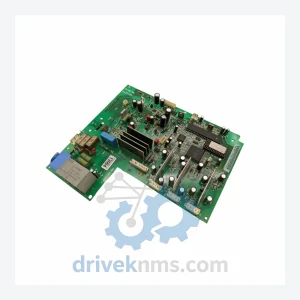
ABB SNAT-7120 Circuit Board – SNAZ7120J Series
ABB SNAT-7120 SNAZ 7120 J SNAZ7120J is listed for SNAZ7120J Series RFQ review. Confirm quantity, condition and destination before quotation.
RFQ-ready industrial model
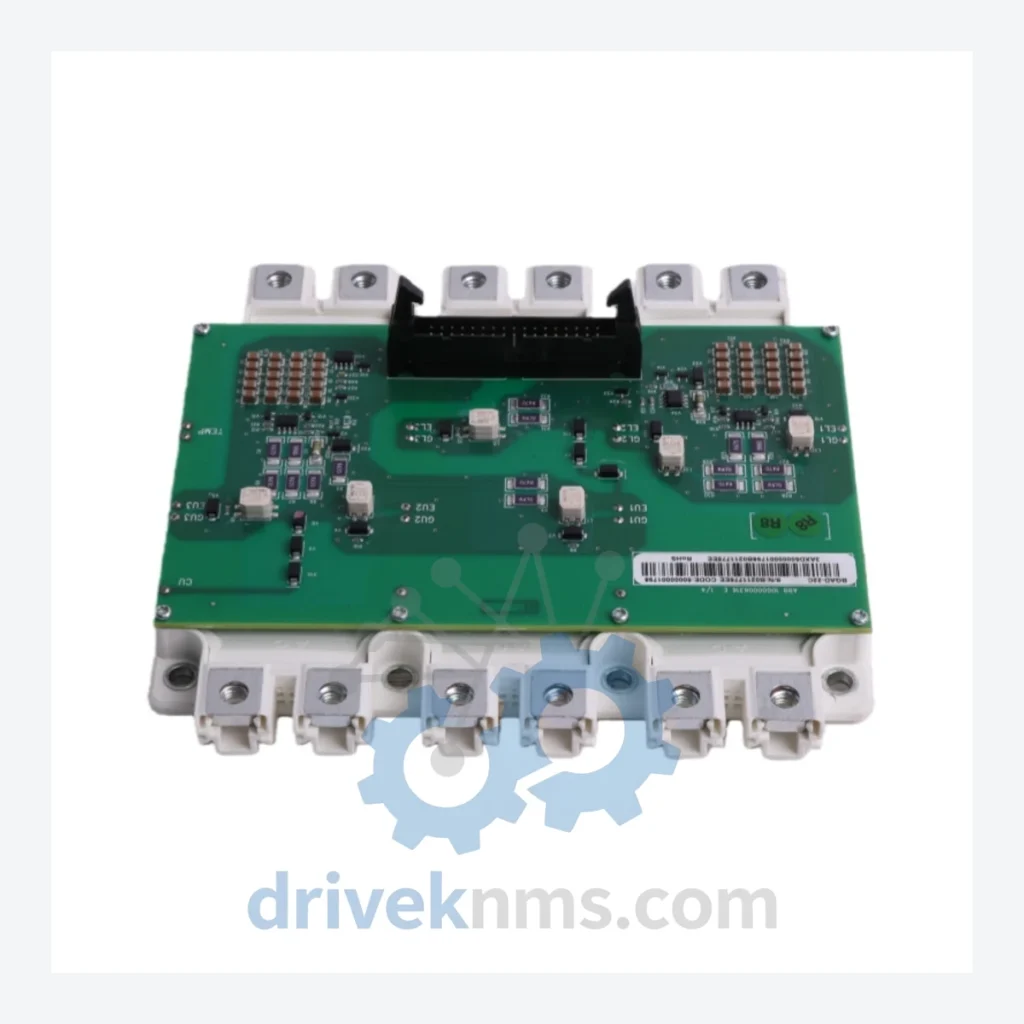
Model: BGAD-22C 3AXD50000007344
Product Overview
Commercial availability is handled through direct RFQ, model verification and export-oriented follow-up rather than public cart checkout.
Datasheet Preview
Use attached product manuals when available. If the manual is not public yet, request the full file directly through RFQ.
Commercial Path
Product pages on DRIVEKNMS are designed to verify model, brand and series first, then move the buyer into one clean quotation path.
Technical Dossier
RFQ support for obsolete parts: Send the model number, required quantity and destination so DriveKNMS can confirm sourcing options before quotation.
Note: Electrical parameters specific to individual drive frame sizes are not published here to prevent misapplication. Contact our technical team to confirm compatibility with your exact drive frame and firmware revision before ordering.
The ABB ACS800 drive series entered the market in the late 1990s and became one of the most widely deployed variable frequency drive platforms in heavy industry globally. Its direct torque control (DTC) algorithm, robust construction, and deep integration with process control systems — including ABB's own Advant and Symphony Plus DCS environments — made it the default choice for critical motor applications. That same deep integration is now the source of the problem.
Replacing an ACS800 drive is not a swap-out exercise. In most installations, the drive communicates via DDCS fiber-optic fieldbus with the plant DCS, has application-specific parameter sets built up over years of process tuning, and may be mechanically integrated into a drive cabinet that was engineered around its exact footprint. A full drive replacement project — including new hardware, engineering, cabinet modification, DCS reconfiguration, and recommissioning — typically requires 6 to 18 months of planning and budgets that range from USD 80,000 to well over USD 500,000 per drive, depending on power rating and site complexity.
The BGAD-22C gate driver board is the component that translates low-level control signals into the precise switching commands that drive the IGBT power modules. When this board degrades — through electrolytic capacitor aging, thermal cycling fatigue, or environmental contamination — the drive either trips on overcurrent faults or, in worst cases, causes uncontrolled IGBT switching that destroys the power stack. Replacing the BGAD-22C board at the first sign of gate driver anomalies is the lowest-cost intervention available. It preserves the entire drive investment and defers the system replacement decision to a planned capital cycle rather than a crisis response.
Factories that maintain a minimum of one spare BGAD-22C per installed ACS800 drive effectively extend the operational life of their automation assets by 5 to 10 years. The arithmetic is straightforward: a spare board costs a fraction of a percent of the total drive replacement cost, and it converts a potential multi-week production outage into a same-shift repair.
Every BGAD-22C unit processed by DriveKNMS passes a structured 5-stage inspection protocol before it is offered for sale. This protocol was developed specifically for discontinued power electronics where no new production baseline exists.
Stage 1 – Visual and Mechanical Inspection: Full board examination under magnification. Solder joint integrity, PCB delamination, component seating, and connector pin condition are assessed. Any unit with physical damage is rejected at this stage.
Stage 2 – Electrolytic Capacitor Assessment: Capacitors are the primary aging component in gate driver boards. ESR (equivalent series resistance) is measured on all electrolytic capacitors. Units showing elevated ESR or visible bulging are either recapped with equivalent-spec components or rejected.
Stage 3 – Firmware and Label Verification: The hardware revision marking and any embedded firmware identifiers are cross-referenced against ABB's published revision history to confirm the unit matches the specification for the target drive frame.
Stage 4 – Pin and Connector Inspection: All board connectors and edge pins are inspected for oxidation, corrosion, and mechanical deformation. Contact surfaces are cleaned where required.
Stage 5 – Functional Verification: Where test equipment permits, gate signal output characteristics are verified against reference parameters. Units that pass all five stages are classified as Ready-for-Installation and packaged in anti-static, moisture-barrier packaging for storage and shipment.
The BGAD-22C is a direct drop-in replacement for the original board position within the ACS800 drive. No firmware changes, no parameter re-entry, and no modifications to the drive cabinet or the connected DCS are required. The replacement procedure follows the standard ABB ACS800 hardware maintenance manual and is within the capability of any qualified drive service technician.
This matters operationally. Engineering-led system modifications carry their own risk: each change to a running process control system requires validation, documentation, and sign-off. A like-for-like board replacement avoids that entire workload. The drive returns to service with its existing parameter set intact, its DCS integration unchanged, and its process performance unaffected. There is no re-tuning, no re-commissioning, and no production trial period.
Can you supply other ACS800 spare parts?
Yes. DriveKNMS specializes in hard-to-find and discontinued spare parts for ABB drive systems, including other ACS800 series boards, power modules, and control units. Contact us with your full part number for availability.
Continue The Model Path
Move from this exact model into the matching system hub, brand archive, model-family archive or lifecycle sourcing route before sending a final RFQ list.
Related Paths
ABB SNAT-7120 SNAZ 7120 J SNAZ7120J is listed for SNAZ7120J Series RFQ review. Confirm quantity, condition and destination before quotation.
ABB PM564-TP-ETH 1SAP121100R0071 is listed for Servo Drives RFQ review. Confirm quantity, condition and destination before quotation.
ABB SCDCS-CON-4 is listed for CON-4 Control Board RFQ review. Confirm quantity, condition and destination before quotation.