
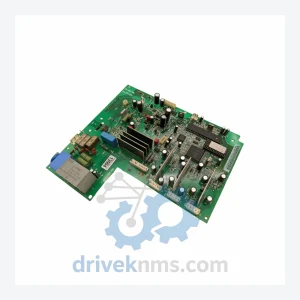
ABB SNAT-7120 Circuit Board – SNAZ7120J Series
ABB SNAT-7120 SNAZ 7120 J SNAZ7120J is listed for SNAZ7120J Series RFQ review. Confirm quantity, condition and destination before quotation.
RFQ-ready industrial model
Model: FS300R12KE3/AGDR-71C
Product Overview
Commercial availability is handled through direct RFQ, model verification and export-oriented follow-up rather than public cart checkout.
Datasheet Preview
Use attached product manuals when available. If the manual is not public yet, request the full file directly through RFQ.
Commercial Path
Product pages on DRIVEKNMS are designed to verify model, brand and series first, then move the buyer into one clean quotation path.
Technical Dossier
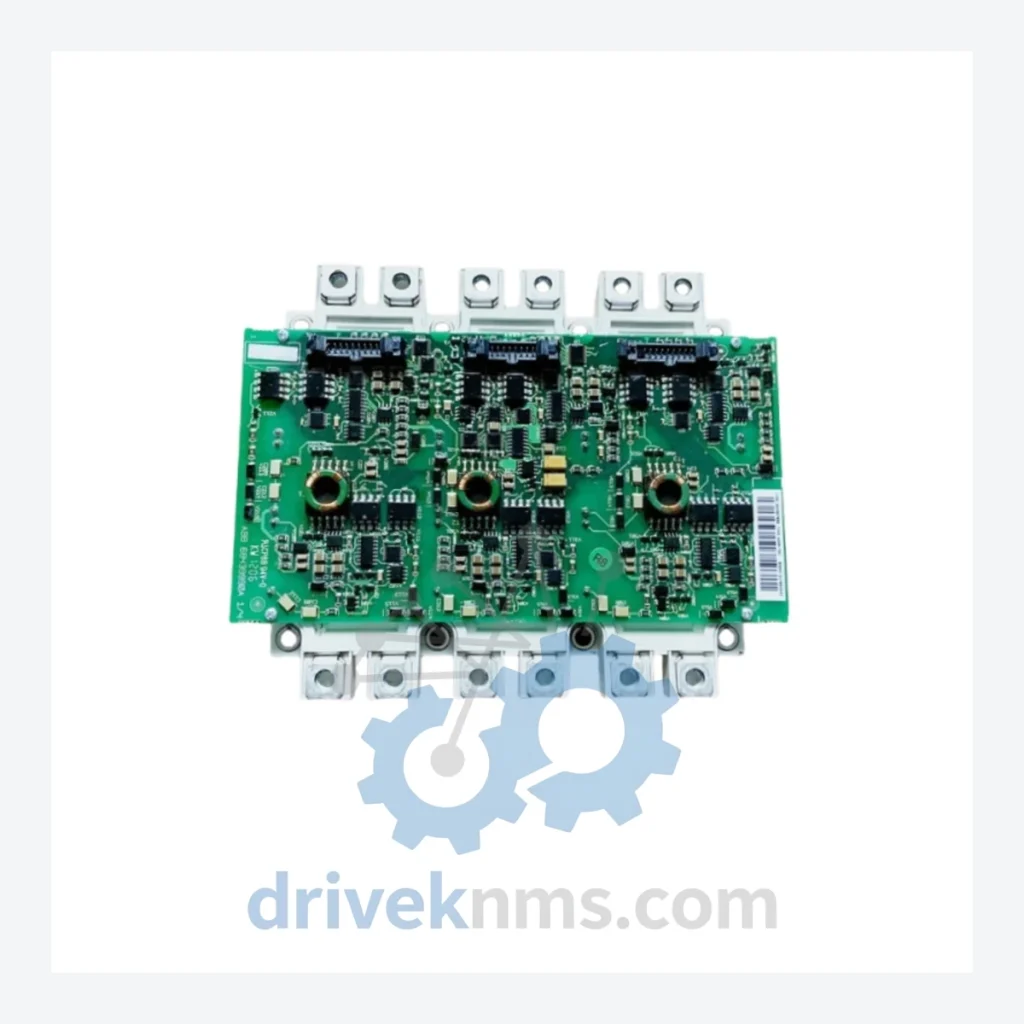
The ABB AGDR-71C is a dedicated gate driver board designed for use with high-power IGBT modules in ABB's ACS800, ACS600, and ACS1000 medium-voltage drive platforms. Deployed across global heavy industry — including petrochemical refineries, nuclear auxiliary systems, offshore platforms, and steel mill drives — the AGDR-71C series represents a mature, field-proven gate driver architecture with a documented installed base exceeding two decades of continuous operation. Its primary function is to provide isolated gate drive signals, desaturation fault detection, and DC bus voltage feedback to the main control board, making it a safety-critical component in high-power inverter stacks.
The AGDR-71C was introduced as part of ABB's second-generation gate driver platform for IGBT-based drives, succeeding earlier optocoupler-based designs used in the SAMI and ACS400 product lines. The board interfaces directly with Infineon (formerly Eupec) high-power IGBT modules — specifically the FS300R12KE3 (300A / 1200V) and related variants — via a standardized 24-pin gate connector and fiber optic command links.
Early revisions of the AGDR-71C (Rev A/B) used through-hole gate resistor networks and discrete bootstrap power supplies. Later revisions (Rev C onward) transitioned to SMD components, improved EMI shielding, and added enhanced short-circuit protection response times (<2µs). The board communicates with the AINT, RDCU, or RMIO control boards via DDCS fiber optic links at 5 Mbaud.
As ABB migrated its drive platform toward the ACS880 and ACS580 series (post-2012), the AGDR-71C entered a maintenance-only lifecycle. No direct pin-compatible successor exists; replacement in newer drives requires a full inverter stack redesign. This makes long-term spare parts availability the primary operational concern for plants running legacy ACS800 and ACS1000 installations.
The following SKUs represent the verified component range associated with the AGDR-71C gate driver platform and its paired IGBT modules. Classification follows functional role within the inverter stack.
Gate Driver Boards
Paired IGBT Power Modules (Infineon / Eupec)
Associated Control & Interface Boards
The AGDR-71C presents specific test challenges due to its fiber optic command interface, isolated gate drive outputs, and integrated desaturation detection circuitry. Standard bench power-on testing is insufficient to validate gate driver function without a representative IGBT load or a calibrated gate load simulator.
DriveKNMS applies the following test protocol to all AGDR-71C units: (1) Visual inspection of gate resistor networks, bootstrap capacitors, and fiber optic transceiver alignment. (2) Isolated power supply rail verification: +15V and -8V gate bias rails measured under load. (3) Gate pulse output verification using a calibrated gate load (10Ω / 100W) with oscilloscope capture of rise time, fall time, and pulse symmetry. (4) Desaturation detection threshold test: collector voltage injection to verify fault trip at the correct V_CE(sat) threshold. (5) Fiber optic loopback test to confirm DDCS transceiver integrity at 5 Mbaud. (6) Final thermal cycling: 10 cycles between 0°C and 55°C to screen for cold-solder joints on SMD gate resistor arrays. Units that fail any stage are quarantined and not returned to inventory.
Continue The Model Path
Move from this exact model into the matching system hub, brand archive, model-family archive or lifecycle sourcing route before sending a final RFQ list.
Related Paths
ABB SNAT-7120 SNAZ 7120 J SNAZ7120J is listed for SNAZ7120J Series RFQ review. Confirm quantity, condition and destination before quotation.
ABB PM564-TP-ETH 1SAP121100R0071 is listed for Servo Drives RFQ review. Confirm quantity, condition and destination before quotation.
ABB SCDCS-CON-4 is listed for CON-4 Control Board RFQ review. Confirm quantity, condition and destination before quotation.