
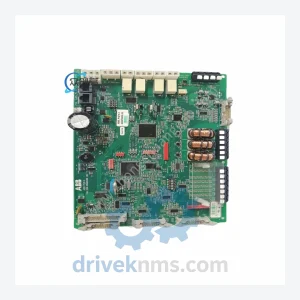
ABB ZPOW Series Power Modules ZPOW-7B1C
ABB ZPOW-7B1C is listed for ZPOW Series Power RFQ review. Confirm quantity, condition and destination before quotation.
RFQ-ready industrial model
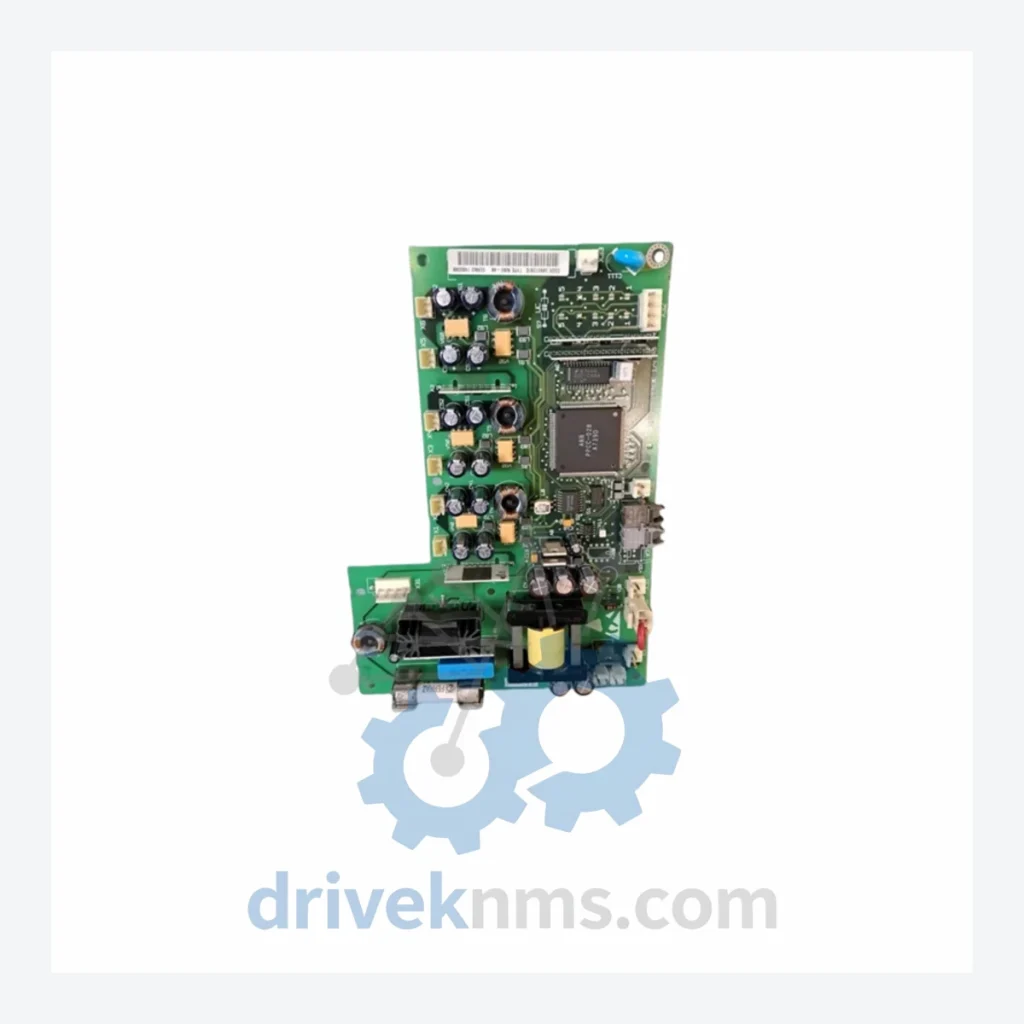
Model: NINT-46
Product Overview
Commercial availability is handled through direct RFQ, model verification and export-oriented follow-up rather than public cart checkout.
Datasheet Preview
Use attached product manuals when available. If the manual is not public yet, request the full file directly through RFQ.
Commercial Path
Product pages on DRIVEKNMS are designed to verify model, brand and series first, then move the buyer into one clean quotation path.
Technical Dossier
DriveKNMS maintains RFQ-reviewed sourcing status of the NINT-46. This is not a catalog listing. If it is listed, it is on the shelf.
RFQ support for obsolete parts: Send the model number, required quantity and destination so DriveKNMS can confirm sourcing options before quotation.
Note: Electrical parameters such as voltage ratings and communication protocol specifics vary by drive configuration. Confirm compatibility against your drive hardware manual before installation. DriveKNMS does not publish unverified specifications.
The NINT-46 serves as the communication and control bridge between the main circuit power section and the drive control board in ABB mid-generation AC and DC drive platforms. Its function is not decorative — it carries real-time feedback signals, gate firing commands, and fault status data that the drive processor depends on for every switching cycle. There is no software patch that compensates for a failed NINT-46. There is no firmware workaround. The board must be present and functional.
ABB formally discontinued the NINT-46 as part of its transition away from the ACS 600 and DCS 600 hardware platforms. Replacement drives exist, but they are not drop-in solutions. Migrating from an ACS 600 to a current ACS880 in a tightly integrated process line requires motor cable re-termination, control wiring adaptation, PLC I/O remapping, and in many cases, process parameter re-tuning by a qualified drive engineer. A conservative estimate for a single drive replacement in a complex application runs between USD 15,000 and USD 60,000 when all engineering and commissioning costs are included.
A replacement NINT-46 board, by contrast, restores the drive to full operation with no system-level changes. For plant managers operating under capital expenditure constraints, this is not a minor consideration — it is the difference between a maintenance budget line item and a capital project requiring board approval.
Plant managers facing pressure to retire legacy ABB drive systems often underestimate the viable service life remaining in well-maintained hardware. The following maintenance strategy has been applied in facilities that have extended ACS 600 and DCS 600 platform operation well beyond the manufacturer support window:
2. Electrolytic Capacitor Monitoring: DC bus capacitors and board-level electrolytics degrade over time regardless of operating hours. Capacitance measurement during annual maintenance identifies units approaching end of life before they fail in service.
3. Firmware Version Control: Document the firmware version installed on every drive in the facility. Do not update firmware on legacy drives without a tested rollback plan. Incompatible firmware updates have caused more legacy drive failures than component wear in some facilities.
4. Environmental Control: Drives installed in enclosures with inadequate cooling or filtration accumulate conductive dust on interface boards. Annual cleaning and inspection of cooling fans extends board life significantly.
5. Spare Parts Inventory Planning: Identify the board-level components in each drive that are both critical to operation and no longer manufactured. Secure at least one spare of each. The NINT-46 is on that list for every ACS 600 and DCS 600 installation. Waiting until failure to source obsolete parts means sourcing under time pressure, which increases both cost and the risk of receiving counterfeit or degraded components.
Facilities that apply this framework consistently report drive platform service lives of 20–25 years from initial installation — well beyond the 10–15 year horizon that most OEM support windows cover.
Every NINT-46 unit that leaves DriveKNMS has passed a five-stage inspection process developed specifically for obsolete industrial boards:
Stage 1 – Visual Inspection: Full board examination under magnification. Solder joint integrity, component seating, PCB trace condition, and connector pin condition are assessed. Units with evidence of arc damage, burn marks, or physical deformation are rejected.
Stage 2 – Electrolytic Capacitor Assessment: Board-level capacitors are tested for capacitance value and ESR. Capacitors showing degradation beyond acceptable tolerance are replaced with equivalent-specification components.
Stage 3 – Firmware Version Verification: Where applicable, firmware version is documented and confirmed against known-good reference data for the target drive platform.
Stage 4 – Pin and Connector Inspection: All connector pins are inspected for corrosion, deformation, and contact integrity. Corroded pins are treated or the unit is rejected depending on severity.
Stage 5 – Functional Verification: Units are tested in a controlled bench environment simulating drive operating conditions where test infrastructure permits. Test results are documented and accompany the shipment.
Units that do not pass all five stages are not sold.
Q: How do I know the unit is genuine ABB and not a counterfeit?
A: All units are sourced through established industrial surplus and OEM channels. Physical markings, board revision codes, and component configurations are verified against reference documentation during inspection. If a unit cannot be confirmed as genuine, it is not listed for sale.
Q: Can DriveKNMS source additional units if I need more than are currently listed?
A: Contact us directly. We maintain sourcing relationships across multiple regions and can often locate additional units not reflected in the public listing.
Continue The Model Path
Move from this exact model into the matching system hub, brand archive, model-family archive or lifecycle sourcing route before sending a final RFQ list.
Related Paths
ABB ZPOW-7B1C is listed for ZPOW Series Power RFQ review. Confirm quantity, condition and destination before quotation.
ABB P3LB HENF209568R0001 is listed for Monitoring Systems RFQ review. Confirm quantity, condition and destination before quotation.
ABB PM154-3BSE003645R1 is listed for Monitoring Systems RFQ review. Confirm quantity, condition and destination before quotation.