
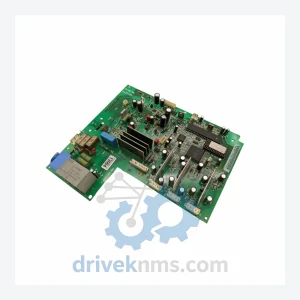
ABB SNAT-7120 Circuit Board – SNAZ7120J Series
ABB SNAT-7120 SNAZ 7120 J SNAZ7120J is listed for SNAZ7120J Series RFQ review. Confirm quantity, condition and destination before quotation.
RFQ-ready industrial model
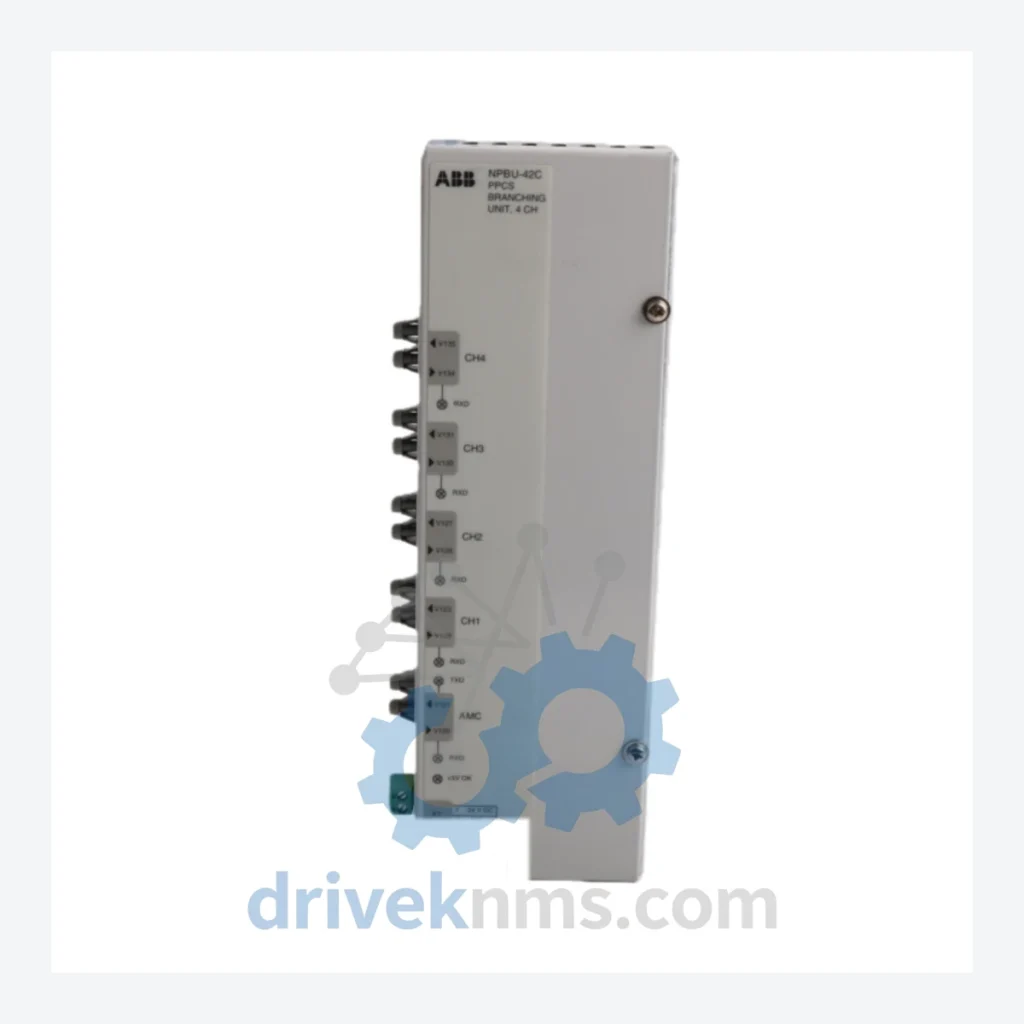
Model: NPBU-42C 64011821D
Product Overview
Commercial availability is handled through direct RFQ, model verification and export-oriented follow-up rather than public cart checkout.
Datasheet Preview
Use attached product manuals when available. If the manual is not public yet, request the full file directly through RFQ.
Commercial Path
Product pages on DRIVEKNMS are designed to verify model, brand and series first, then move the buyer into one clean quotation path.
Technical Dossier
The ABB NPBU (Node Processor Bus Unit / PPCS Branching Unit) series is a family of backplane communication and branching modules deployed within ABB's MOD 300 and Advant OCS distributed control system (DCS) platforms. These platforms have accumulated decades of installed base across global heavy industry sectors, including petrochemical refineries, nuclear power generation facilities, offshore oil & gas platforms, pulp and paper mills, and large-scale chemical processing plants.
The NPBU series functions as the physical and logical interconnect layer within the PPCS (Process Performance Communication System) bus architecture. Each module manages signal routing, bus arbitration, and node addressing between controller racks, I/O expansion racks, and communication adapters. The criticality of these modules to continuous process operation means that procurement of verified spare units — including obsolete and long-lead variants — is a primary concern for plant maintenance engineers worldwide.
The NPBU series traces its origin to ABB's acquisition and integration of Combustion Engineering's NETWORK 90 platform in the late 1980s, which evolved into the MOD 300 system and subsequently the Advant OCS family. The PPCS bus — a proprietary high-speed serial communication backbone — was the defining architectural element that the NPBU modules were designed to serve.
First Generation (MOD 300 era, late 1980s – mid 1990s): Early NPBU variants used parallel backplane addressing with limited node counts. These modules are identified by early revision suffixes (e.g., suffix codes ending in A or B) and are now fully obsolete with no OEM support. Compatibility is restricted to original MOD 300 rack configurations.
Second Generation (Advant OCS / Master, mid 1990s – 2000s): The NPBU-41 and NPBU-42 sub-series introduced enhanced PPCS bus speeds, increased node addressing capacity, and improved diagnostic LED arrays. These variants — including the NPBU-42C — became the dominant installed base across global refinery and power generation DCS installations. Firmware revision management became critical during this period, as incompatible firmware combinations between NPBU units and connected processor modules (e.g., DSPC series) could cause bus faults.
Compatibility note: NPBU modules are not interchangeable across all MOD 300 and Advant rack generations without firmware and hardware revision verification. Mixing incompatible revisions on a live PPCS bus segment can result in bus lockout conditions requiring full system restart.
The following SKUs represent verified, commonly traded units within the NPBU series. Each entry reflects the module's primary function within the PPCS bus architecture. Units are classified by functional role.
PPCS Branching Units (Primary Bus Interface)
Node Processor / Controller Modules (CPU & Processor)
Digital I/O Modules (DI / DO)
Analog I/O Modules (AI / AO)
Communication & Network Adapters
Power Supply Modules (PS)
ABB ceased volume production of NPBU series modules as part of the platform end-of-life transition to Symphony Plus and 800xA. OEM spare parts support for MOD 300 and Advant OCS has been formally discontinued. Plant operators running these systems face a constrained secondary market where unit availability is directly tied to decommissioning activity at peer facilities globally.
DriveKNMS operates a dedicated procurement and inventory function for ABB legacy DCS modules, with specific focus on the NPBU series. Our sourcing methodology includes:
The NPBU series presents specific quality verification challenges due to the complexity of its PPCS bus interface circuitry and the age profile of available secondary market units. DriveKNMS applies a structured test protocol to all NPBU modules prior to dispatch:
Units that fail any stage of this protocol are quarantined for component-level repair or scrapped. DriveKNMS does not ship untested or cosmetically graded-only units for safety-critical DCS applications.
Continue The Model Path
Move from this exact model into the matching system hub, brand archive, model-family archive or lifecycle sourcing route before sending a final RFQ list.
Related Paths
ABB SNAT-7120 SNAZ 7120 J SNAZ7120J is listed for SNAZ7120J Series RFQ review. Confirm quantity, condition and destination before quotation.
ABB PM564-TP-ETH 1SAP121100R0071 is listed for Servo Drives RFQ review. Confirm quantity, condition and destination before quotation.
ABB SCDCS-CON-4 is listed for CON-4 Control Board RFQ review. Confirm quantity, condition and destination before quotation.