
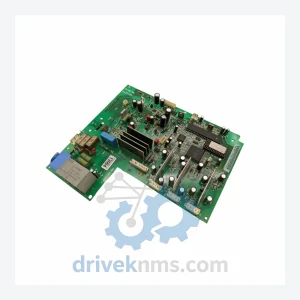
ABB SNAT-7120 Circuit Board – SNAZ7120J Series
ABB SNAT-7120 SNAZ 7120 J SNAZ7120J is listed for SNAZ7120J Series RFQ review. Confirm quantity, condition and destination before quotation.
RFQ-ready industrial model
Model: NRED-61-E
Product Overview
Commercial availability is handled through direct RFQ, model verification and export-oriented follow-up rather than public cart checkout.
Datasheet Preview
Use attached product manuals when available. If the manual is not public yet, request the full file directly through RFQ.
Commercial Path
Product pages on DRIVEKNMS are designed to verify model, brand and series first, then move the buyer into one clean quotation path.
Technical Dossier
The NRED-61-E is a relay output module from ABB's NRED series, designed for use in ABB's legacy protection relay and substation automation platforms. As ABB has progressively retired this product line, field replacements have become increasingly difficult to source through standard distribution channels. The units available through DriveKNMS have been individually inspected and are held in controlled storage to preserve long-term reliability.
RFQ support for obsolete parts: Send the model number, required quantity and destination so DriveKNMS can confirm sourcing options before quotation.
| Parameter | Detail |
|---|---|
| Part Number | NRED-61-E |
| Manufacturer | ABB |
| Series | NRED |
| Product Type | Relay Output Module |
| Discontinuation Status | Discontinued / Obsolete – no longer manufactured by ABB |
| Country of Origin | Germany |
| Typical Application | ABB legacy protection relay systems and substation automation platforms |
| Condition Available | New (sealed) / Refurbished (QA-certified) |
Note: Electrical parameters such as coil voltage, contact rating, and switching capacity are model-configuration-dependent. Confirmed specifications are provided upon request with unit verification. No parameters are stated here that have not been independently verified.
The ABB NRED-61-E relay module was engineered for integration into ABB's protection relay infrastructure — systems that remain operational in power utilities, industrial substations, and process plants worldwide. These installations were built for 30-year service lives, and the control logic, wiring, and protection schemes built around them represent decades of engineering investment that cannot be replicated cheaply.
When ABB discontinued the NRED series, it did not eliminate the installed base — it eliminated the supply chain. Facilities now face a growing gap between the operational lifespan of their assets and the availability of the components that keep them running. A single failed relay module, left unresolved, can force a protection system offline, triggering regulatory compliance issues, unplanned production shutdowns, or unsafe operating conditions.
The standard industry response — full system replacement — is often the wrong economic decision. A modern equivalent relay platform requires new IEDs, updated communication protocols, revised protection settings, factory acceptance testing, and site commissioning. For a mid-sized substation, this process typically takes 12 to 24 months and costs far more than a decade of spare part procurement. DriveKNMS exists to close this gap: we source, verify, and supply discontinued ABB components so that asset managers can make a deliberate, planned transition on their own timeline — not one forced by a component failure.
For plant managers and reliability engineers operating legacy ABB relay systems, the most cost-effective asset protection strategy is not replacement — it is structured spare parts inventory management. The following approach has been used by industrial operators to extend the productive life of discontinued relay platforms by five to ten years without major capital expenditure:
1. Failure Mode Mapping: Identify the relay modules and output cards within your system that have no modern equivalent and no cross-compatible replacement. The NRED-61-E is a prime example — its form factor, connector pinout, and firmware interface are specific to the ABB NRED platform. There is no drop-in modern substitute without system-level redesign.
2. Criticality-Based Stocking: Not every spare part carries equal risk. Modules that sit on the critical protection path — those whose failure would trip a line, isolate a bus, or disable a safety interlock — warrant a minimum of two to three units in on-site inventory. The NRED-61-E, as a relay output module, typically falls into this category.
3. Controlled Storage Protocol: Electromechanical relay modules degrade in storage if exposed to humidity, temperature cycling, or electrostatic discharge. Proper storage in anti-static packaging, at stable temperature and humidity, can preserve a spare unit for 10 or more years without functional degradation.
4. Scheduled Inspection Cycles: Even stored spares benefit from periodic bench testing. A relay module that has sat unused for five years should be functionally verified before it is placed into service on a live protection system.
5. Procurement Before Scarcity: The secondary market for discontinued ABB components tightens every year. Units that are available today at reasonable cost may be unavailable — or available only at significant premium — within 24 to 36 months. Procurement decisions made now, while inventory exists, are materially cheaper than emergency sourcing decisions made after a failure event.
Every NRED-61-E unit supplied by DriveKNMS passes a structured 5-step inspection protocol before dispatch. This process is designed specifically for electromechanical and mixed-signal relay modules from discontinued product lines, where age-related degradation is the primary reliability risk.
Step 1 – Electrolytic Capacitor Assessment: Capacitors are the most common failure point in aged relay modules. Each unit is inspected for capacitor bulging, electrolyte leakage, and ESR deviation. Units with any sign of capacitor degradation are rejected from the serviceable inventory.
Step 2 – Firmware Version Verification: Where applicable, the firmware or embedded configuration of the module is verified against the known compatible versions for the target ABB platform. Mismatched firmware versions can cause silent compatibility failures that are difficult to diagnose in the field.
Q: How are RFQ terms confirmed?
A: Quantity, required condition, documentation needs, destination and sourcing route are confirmed during RFQ review before quotation.
Step 4 – Functional Relay Test: Relay coil resistance, pull-in voltage, drop-out voltage, and contact continuity are measured and recorded. Results are compared against the original ABB specification envelope where documentation is available.
Step 5 – Packaging and ESD Protection: Cleared units are repackaged in anti-static bags with desiccant, labeled with inspection date and technician ID, and stored in a controlled environment pending dispatch.
Q: How do I confirm the unit is genuine ABB and not a counterfeit?
A: All units are sourced through verified industrial channels. Upon request, we provide traceability documentation including source records and inspection reports. We do not supply units that cannot be traced to a legitimate industrial origin.
Q: Can you support multi-unit or repeat RFQ requests?
A: Yes. Send the model list, target quantity and destination so DRIVEKNMS can review sourcing options and quote the requirement as a project RFQ.
Continue The Model Path
Move from this exact model into the matching system hub, brand archive, model-family archive or lifecycle sourcing route before sending a final RFQ list.
Related Paths
ABB SNAT-7120 SNAZ 7120 J SNAZ7120J is listed for SNAZ7120J Series RFQ review. Confirm quantity, condition and destination before quotation.
ABB PM564-TP-ETH 1SAP121100R0071 is listed for Servo Drives RFQ review. Confirm quantity, condition and destination before quotation.
ABB SCDCS-CON-4 is listed for CON-4 Control Board RFQ review. Confirm quantity, condition and destination before quotation.