
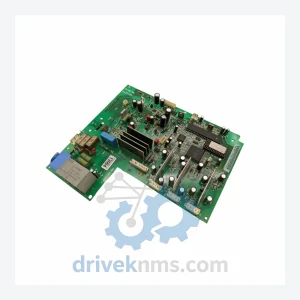
ABB SNAT-7120 Circuit Board – SNAZ7120J Series
ABB SNAT-7120 SNAZ 7120 J SNAZ7120J is listed for SNAZ7120J Series RFQ review. Confirm quantity, condition and destination before quotation.
RFQ-ready industrial model
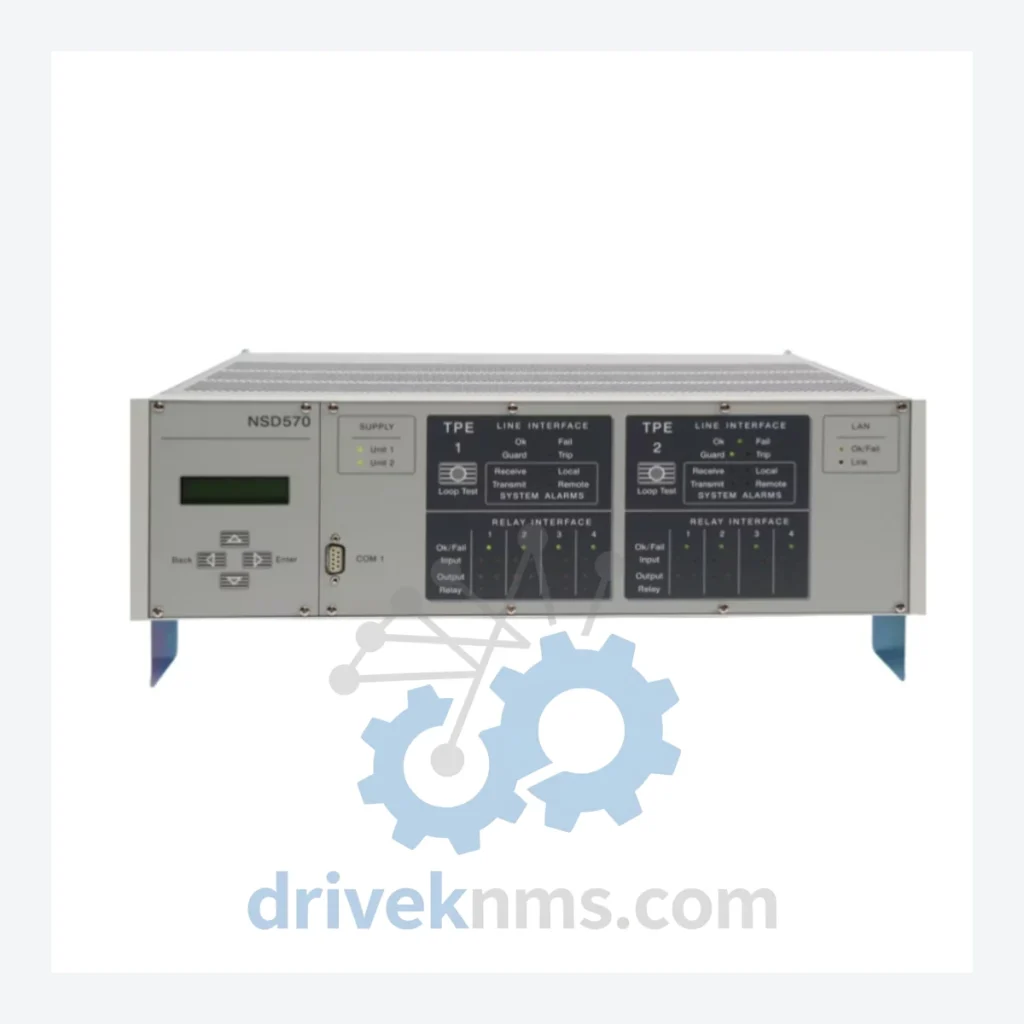
Model: NSD570
Product Overview
Commercial availability is handled through direct RFQ, model verification and export-oriented follow-up rather than public cart checkout.
Datasheet Preview
Use attached product manuals when available. If the manual is not public yet, request the full file directly through RFQ.
Commercial Path
Product pages on DRIVEKNMS are designed to verify model, brand and series first, then move the buyer into one clean quotation path.
Technical Dossier
Substation protection engineers and grid operations managers face a hard reality when an NSD570 unit fails: ABB discontinued this teleprotection platform years ago, and no direct factory replacement exists. A single failed NSD570 in a distance protection or differential protection scheme does not simply mean a repair job — it means the entire protection relay communication chain is broken. Restoring it through a full system migration to a modern teleprotection platform carries engineering costs, relay re-coordination, FAT/SAT testing, and substation outage windows that routinely exceed hundreds of thousands of dollars per site. DriveKNMS holds RFQ-reviewed sourcing status of the ABB NSD570. For grid operators and EPC contractors managing aging FOX-series infrastructure, this unit represents the lowest-risk, lowest-cost path to restoring protection channel integrity without touching the rest of the system.
RFQ support for obsolete parts: Send the model number, required quantity and destination so DriveKNMS can confirm sourcing options before quotation.
| Parameter | Detail |
|---|---|
| Manufacturer | ABB (Asea Brown Boveri) |
| Model / Part Number | NSD570 |
| Product Series | FOX Series Teleprotection |
| Function | Teleprotection command transmission over power line carrier (PLC), fiber optic, or pilot wire channels |
| Application | Distance protection, differential protection, and inter-trip schemes in HV/EHV substations |
| Communication Interfaces | Analog (PLC), fiber optic, E1/64 kbps digital channel (variant-dependent) |
| Discontinuation Status | Discontinued – no longer manufactured or supported by ABB |
| Country of Origin | Switzerland |
| Condition Available | New surplus / Tested refurbished (see QA section) |
Note: Detailed electrical parameters vary by sub-variant (NSD570A, NSD570E, NSD570F, etc.). Confirm your exact variant requirement when contacting us. No parameters are assumed or fabricated.
The ABB NSD570 was the backbone of teleprotection schemes across transmission networks in Europe, Asia, and the Middle East throughout the 1990s and 2000s. It was designed to operate within ABB's FOX family of multiplexers and communication platforms — a tightly integrated ecosystem. When the NSD570 reaches end-of-life in the field, the problem is not just the unit itself. The surrounding infrastructure — FOX515, FOX905, FOX20 multiplexers, existing relay coordination settings, channel delay calibrations — was engineered around the NSD570's specific command transmission characteristics and timing behavior.
Replacing the NSD570 with a modern teleprotection terminal from any vendor requires re-engineering the protection scheme from the channel interface outward. That means new relay settings studies, updated protection coordination documentation, revised FAT procedures, and in many jurisdictions, regulatory re-approval of the protection scheme. For a single substation, this process rarely costs less than USD 150,000 when engineering labor, outage costs, and testing are fully accounted for. Across a fleet of substations, the number scales linearly.
Transmission and substation managers operating legacy FOX-series infrastructure are under recurring pressure from asset management teams to justify continued operation rather than full system replacement. The financial case for extension is straightforward when the right spare parts strategy is in place.
3. Document firmware and configuration baselines. Before any NSD570 unit is placed in service or storage, capture the full configuration backup and firmware version. This eliminates re-commissioning uncertainty when a standby unit is activated under emergency conditions.
4. Schedule proactive bench testing of standby units. Electrolytic capacitor degradation is the primary failure mode in stored power electronics from this era. Annual bench power-up and functional verification of standby NSD570 units costs a fraction of emergency procurement under outage pressure.
5. Negotiate long-term supply agreements with specialist distributors. Spot-market procurement of obsolete parts under emergency conditions carries a significant price premium and delivery uncertainty. Establishing a supply relationship with a stocking distributor like DriveKNMS while units are available provides procurement certainty for the duration of the asset's operational life.
Every NSD570 unit processed through DriveKNMS undergoes a structured 5-step evaluation before it is offered for sale. This process is designed specifically for the failure modes common to power electronics hardware of this generation:
Step 1 – Visual and Mechanical Inspection: Full board-level inspection for physical damage, corrosion, pin oxidation, and connector integrity. Corroded or oxidized edge connectors are cleaned and verified against contact resistance specifications.
Step 2 – Electrolytic Capacitor Assessment: Capacitors in the power supply section and signal conditioning circuits are tested for ESR (equivalent series resistance) and capacitance drift. Units with out-of-tolerance capacitors are either recapped with equivalent-spec components or quarantined.
Step 3 – Firmware Version Verification: Where accessible, firmware version is documented and cross-referenced against known compatible versions for the target application. Version mismatches are flagged before dispatch review.
Step 4 – Functional Power-Up Test: Each unit is powered up on a test bench and verified for basic operational status, alarm output behavior, and communication port response.
Step 5 – Final Documentation: A condition report is issued with each unit, documenting inspection findings, test results, and any remediation performed. This report travels with the unit and supports the customer's incoming inspection and commissioning records.
Q: How are RFQ terms confirmed?
A: Quantity, required condition, documentation needs, destination and sourcing route are confirmed during RFQ review before quotation.
Continue The Model Path
Move from this exact model into the matching system hub, brand archive, model-family archive or lifecycle sourcing route before sending a final RFQ list.
Related Paths
ABB SNAT-7120 SNAZ 7120 J SNAZ7120J is listed for SNAZ7120J Series RFQ review. Confirm quantity, condition and destination before quotation.
ABB PM564-TP-ETH 1SAP121100R0071 is listed for Servo Drives RFQ review. Confirm quantity, condition and destination before quotation.
ABB SCDCS-CON-4 is listed for CON-4 Control Board RFQ review. Confirm quantity, condition and destination before quotation.