
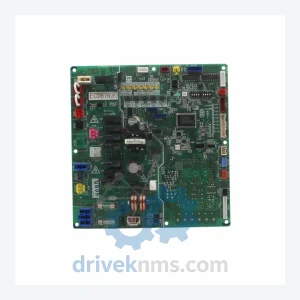
ABB YPQ103C I/O Module – Obsolete Advant Series Spare Part
ABB YPQ103C is listed for Advant Series RFQ review. Confirm quantity, condition and destination before quotation.
RFQ-ready industrial model
Model: PFPA201 3BSE022827R1
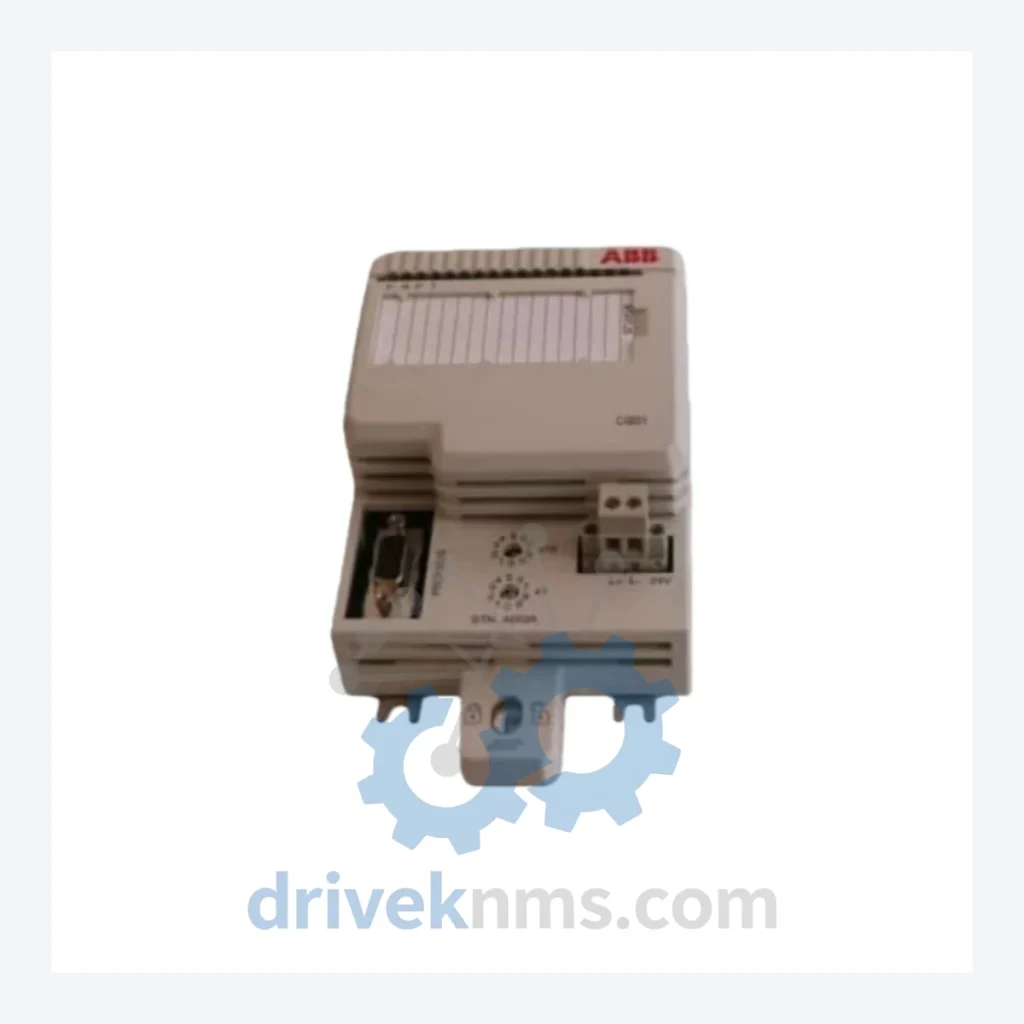
Product Overview
Commercial availability is handled through direct RFQ, model verification and export-oriented follow-up rather than public cart checkout.
Datasheet Preview
Use attached product manuals when available. If the manual is not public yet, request the full file directly through RFQ.
Commercial Path
Product pages on DRIVEKNMS are designed to verify model, brand and series first, then move the buyer into one clean quotation path.
Technical Dossier
When the ABB PFPA201 processing unit fails in a running plant, the consequences extend far beyond a single module replacement. This board is a core computational element within ABB's Advant OCS and MasterPiece 200 distributed control systems — platforms that remain operational in refineries, power generation facilities, and chemical processing plants worldwide, despite having been officially discontinued by ABB. A single failed PFPA201 can bring an entire process loop offline. Sourcing a replacement through OEM channels is no longer possible. The alternative — a full DCS migration — carries engineering, commissioning, and production-loss costs that routinely exceed USD 1–3 million per line. DriveKNMS holds RFQ-reviewed sourcing status of the PFPA201 3BSE022827R1. This is not a catalog listing. The unit is on the shelf.
RFQ support for obsolete parts: Send the model number, required quantity and destination so DriveKNMS can confirm sourcing options before quotation.
| Part Number | PFPA201 |
| Reference Number | 3BSE022827R1 |
| Manufacturer | ABB |
| Product Series | Advant OCS / MasterPiece 200 |
| Module Type | Processing Unit |
| Discontinuation Status | Officially discontinued by ABB. No OEM replacement or direct successor available. |
| Compatible Systems | ABB MasterPiece 200 (MP200), Advant OCS, Advant Controller 450 (AC450) |
| Country of Origin | Sweden |
| Condition Available | New surplus / Professionally refurbished |
Note: Electrical parameters are verified against physical units only. No parameters are published without confirmed hardware reference to ensure accuracy and equipment safety.
The ABB Advant and MasterPiece 200 control architecture was engineered for process-critical environments where stability over decades was the design priority. That same longevity is now the source of the procurement problem. ABB ceased active production and support for the PFPA201 and its associated Advant modules years ago. The installed base, however, did not disappear — it continued running in plants where the cost and risk of migration outweighed the operational inconvenience of aging hardware.
The PFPA201 functions as a processing unit within the Advant station architecture, handling local computation and communication tasks that are tightly integrated with the system's proprietary software environment. There is no plug-compatible modern substitute. Replacing it with a different module family requires re-engineering the I/O mapping, rewriting control logic, and re-qualifying the entire loop — a process measured in months and millions.
For plant managers operating under capital expenditure constraints, the calculus is straightforward: a verified spare PFPA201 purchased today extends the productive life of an existing, fully amortized DCS asset by 5 to 10 years. That is not a workaround. That is a defensible asset protection strategy. The engineering team already knows the system. The operators already know the HMI. The process is stable. The only variable is hardware availability — and that is precisely what DriveKNMS addresses.
Every PFPA201 unit processed by DriveKNMS undergoes a structured 5-step quality verification protocol before it is offered for sale. This process is designed specifically for legacy industrial modules where age-related degradation follows predictable failure patterns.
Step 1 – Electrolytic Capacitor Inspection: Capacitor aging is the primary failure mode in boards of this generation. Each unit is inspected for bulging, electrolyte leakage, and ESR deviation. Capacitors showing measurable degradation are replaced with specification-matched components.
Step 2 – Firmware Version Verification: The installed firmware version is confirmed and documented. Compatibility with the target system revision is verified prior to dispatch.
Step 3 – Pin and Connector Corrosion Assessment: All edge connectors and backplane pins are inspected under magnification. Oxidation is treated; any connector showing structural compromise is flagged and the unit is downgraded or rejected.
Step 4 – Functional Power-On Test: Where test infrastructure permits, units are powered and basic operational status is confirmed.
Step 5 – Documentation and Traceability: Each unit is assigned an internal inspection record. Condition grade (New Surplus or Refurbished) is declared on the shipping documentation.
The PFPA201 3BSE022827R1 is a direct hardware replacement for the original module position within the Advant station rack. Installation does not require modifications to the backplane, changes to the control software, or re-engineering of the I/O configuration. The module seats into the existing slot and the system recognizes it within the established hardware map.
This drop-in compatibility is the critical operational advantage. Maintenance teams can execute the replacement during a planned shutdown window without involving system integrators or ABB service engineers. There is no firmware re-flashing required at the system level, no loop re-qualification triggered by a hardware type change, and no risk of introducing configuration drift. The replacement is transparent to the control system above it.
For facilities managing multiple Advant or MasterPiece 200 stations, holding two to three PFPA201 units as cold spares is a standard risk mitigation practice. The cost of that inventory is a fraction of a single hour of unplanned production loss in most process industries.
Q: How are RFQ terms confirmed?
A: Quantity, required condition, documentation needs, destination and sourcing route are confirmed during RFQ review before quotation.
Continue The Model Path
Move from this exact model into the matching system hub, brand archive, model-family archive or lifecycle sourcing route before sending a final RFQ list.
Related Paths
ABB YPQ103C is listed for Advant Series RFQ review. Confirm quantity, condition and destination before quotation.
ABB HENF209736R0003 P4LQA is listed for Advant Series RFQ review. Confirm quantity, condition and destination before quotation.
ABB ASMC2177 IX1008 IX1006 is listed for Advant Series RFQ review. Confirm quantity, condition and destination before quotation.