Products / ABB / SAFT 171 Series
ABB SAFT 171 Series

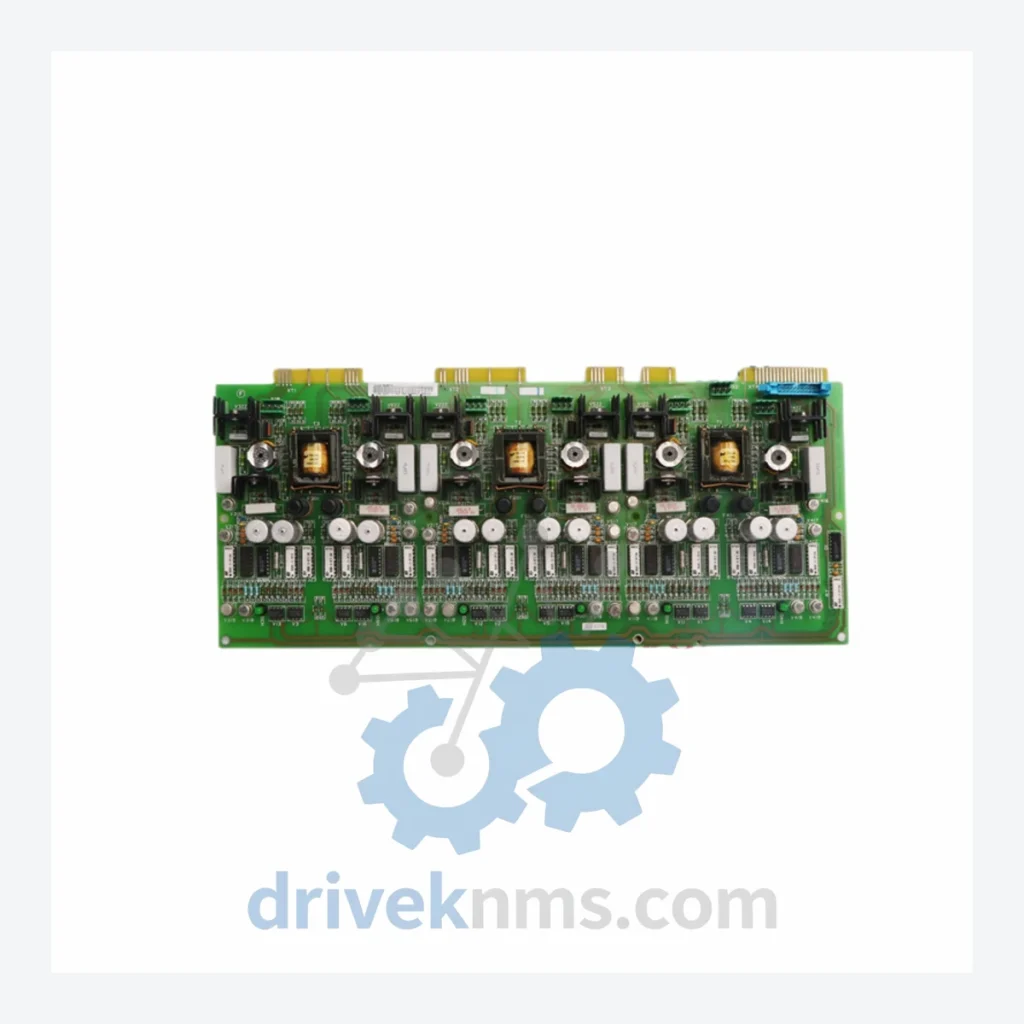
ABB SAFT 171 Series Modules: SAFT171PAC

Model: SAFT171PAC SAFT 171 PAC

Brand ABB
Series SAFT 171 Series
Model SAFT171PAC SAFT 171 PAC
RFQ-ready model route Obsolete and surplus sourcing Export follow-up by model list

Product Overview

Commercial availability is handled through direct RFQ, model verification and export-oriented follow-up rather than public cart checkout.

Datasheet Preview

Datasheet Preview

Use attached product manuals when available. If the manual is not public yet, request the full file directly through RFQ.

Request Full Manual

Commercial Path

Use This Page To Confirm The Model, Then Move To RFQ

Product pages on DRIVEKNMS are designed to verify model, brand and series first, then move the buyer into one clean quotation path.

Technical Dossier

Product Details And Specifications

ABB SAFT 171 Series: Comprehensive Module Range and Technical Overview

The ABB SAFT 171 series represents a foundational power electronics platform deployed across heavy industrial sectors worldwide — including petrochemical refineries, pulp and paper mills, offshore platforms, steel rolling mills, and municipal water treatment facilities. Introduced as part of ABB's SAMI and ACS series AC drive ecosystem, the SAFT 171 board set has accumulated decades of installed base across facilities that cannot afford unplanned downtime. Many of these installations remain in active production service, supported not by OEM channels — which have largely discontinued direct spare parts supply — but by specialist distributors with access to legacy inventory.

The SAFT 171 series encompasses power supply boards, gate driver boards, measurement boards, and interface cards designed to operate within ABB's classic variable frequency drive (VFD) cabinets. These boards interface directly with IGBT or GTO power stacks and are not interchangeable with modules from ABB's later ACS800 or ACS880 platforms without engineering redesign. For plant managers operating legacy ABB drives, sourcing genuine SAFT 171 boards remains the only viable path to maintaining system continuity without a full drive replacement program.

The Evolution of SAFT 171 Architecture

The SAFT 171 board family was developed in the late 1980s and early 1990s to serve ABB's SAMI GS, SAMI MV, and early ACS 600 drive platforms. The architecture is built around analog signal conditioning, discrete gate pulse generation, and optocoupler-isolated feedback loops — a design philosophy that prioritized robustness over digital flexibility.

Early SAFT 171 variants used through-hole component construction with ceramic capacitors and metal-film resistors rated for industrial temperature ranges. Later revisions introduced surface-mount components on select signal-path sections while retaining the original backplane connector pinout, preserving backward compatibility within the same drive cabinet generation.

The series reached end-of-active-production status as ABB transitioned its drive platform to the ACS800 and subsequently ACS880 families, which use entirely different control architectures (RDCO, RMIO, RINT board sets). There is no direct plug-in replacement from ABB's current catalog for SAFT 171 boards. Facilities that have not migrated to newer platforms must source from the secondary market or from distributors maintaining legacy stock.

Compatibility note: SAFT 171 boards are designed for specific drive frame sizes and power ratings. Cross-substitution between sub-variants requires verification of firmware revision, hardware revision suffix, and connector type before installation.

SAFT 171 Full Catalog & Functionalities (SKU List)

The following SKUs represent confirmed members of the ABB SAFT 171 board family, organized by functional category. Each entry reflects a distinct hardware role within the drive system.

Power Supply Boards

  • SAFT171PAC: Main auxiliary power supply board; generates regulated DC rails for control electronics within SAMI/ACS drive cabinets.
  • SAFT171CON: Control power conditioning board; filters and distributes internal logic supply voltages to downstream boards.
  • SAFT171PBC: Power bus interface board; manages DC bus voltage sensing and pre-charge circuit control.

Gate Driver & Firing Boards

  • SAFT171FIR: Firing pulse board; generates synchronized gate pulses for thyristor or IGBT power stacks.
  • SAFT171GDU: Gate drive unit board; provides isolated gate drive signals with short-circuit protection logic.
  • SAFT171PUL: Pulse amplifier board; amplifies gate trigger signals for high-power converter stages.

Measurement & Feedback Boards

  • SAFT171MEB: Measurement board; handles current transformer signal conditioning and DC bus voltage measurement.
  • SAFT171CUR: Current measurement interface board; processes hall-effect sensor outputs for overcurrent protection loops.
  • SAFT171VLT: Voltage measurement board; provides isolated analog voltage feedback to the main control board.
  • SAFT171TMP: Temperature monitoring board; reads NTC/PTC thermistor inputs from heatsink and transformer sensors.

Control & Interface Boards

  • SAFT171COB: Main control board; executes drive control algorithms and manages I/O communication with external PLC or DCS.
  • SAFT171IOM: I/O module board; provides analog and digital I/O terminals for process signal integration.
  • SAFT171SER: Serial communication board; supports RS-232/RS-485 fieldbus interface for supervisory control systems.
  • SAFT171PRO: Protection relay interface board; interfaces with external motor protection relays and trip circuits.

Auxiliary & Specialty Boards

  • SAFT171AUX: Auxiliary function board; manages fan control, door interlock, and auxiliary relay outputs.
  • SAFT171BRK: Brake chopper control board; controls dynamic braking resistor switching for overvoltage protection.
  • SAFT171SYN: Synchronization board; used in multi-drive or regenerative configurations requiring phase-locked operation.

Sourcing Hard-to-Find & Obsolete SAFT 171 Parts

ABB's official spare parts program for the SAFT 171 series has been progressively wound down as the platform aged out of active support. Lead times through OEM channels — where stock exists at all — routinely exceed 20–40 weeks, a timeline incompatible with production recovery requirements.

DriveKNMS maintains a dedicated inventory of SAFT 171 series boards sourced through controlled channels: decommissioned drive cabinets from plant closures, verified surplus from original equipment manufacturers, and long-term storage stock from industrial distributors. All units undergo condition assessment before listing.

For facilities managing a fleet of legacy ABB drives, DriveKNMS offers a standing spare parts reservation service. Rather than sourcing reactively after a failure event — when production loss costs accumulate by the hour — plant engineering teams can pre-position critical SAFT 171 boards against their installed drive inventory. This approach converts an unpredictable capital event into a managed maintenance cost, typically at a fraction of the expense of a full drive replacement program.

Extending the service life of an existing SAFT 171-based drive installation by five to ten years through proactive spare parts management is a documented strategy in facilities where the cost of process re-engineering or production interruption during a drive upgrade outweighs the cost of legacy board procurement. The calculation is straightforward: a single unplanned production stoppage in a continuous-process facility frequently exceeds the total cost of a multi-year spare parts reserve.

Quality Control for the SAFT 171 Range

SAFT 171 boards present specific reliability challenges associated with age and storage conditions. DriveKNMS applies a structured inspection protocol to all units before dispatch:

  • Electrolytic capacitor assessment: All electrolytic capacitors are inspected for physical deformation, electrolyte leakage, and ESR deviation. Boards with capacitors outside specification are either reconditioned with matched replacements or rejected from inventory.
  • Optocoupler integrity verification: Gate drive and feedback isolation circuits rely on optocouplers with defined current transfer ratio (CTR) ranges. Each unit is tested under load conditions to confirm CTR remains within the original design envelope.
  • Connector and pin inspection: Backplane connectors and edge connectors are inspected under magnification for pin corrosion, mechanical deformation, and contact plating integrity. Corroded contacts are a primary failure mode in boards removed from humid or coastal environments.
  • Functional power-up test: Where test fixtures are available for specific SAFT 171 variants, boards are powered up and output rail voltages are verified against documented specifications.
  • Firmware and hardware revision logging: Hardware revision suffixes are recorded and disclosed to the customer prior to shipment. Revision mismatches between boards in the same drive cabinet are flagged as a compatibility risk.
WhatsApp Prefilled Inquiry Email [email protected] Phone +86 18359293191 Top Back To Top