
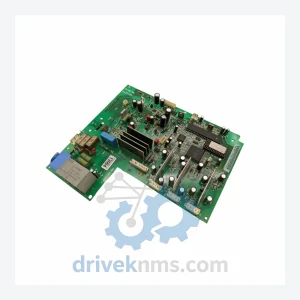
ABB SNAT-7120 Circuit Board – SNAZ7120J Series
ABB SNAT-7120 SNAZ 7120 J SNAZ7120J is listed for SNAZ7120J Series RFQ review. Confirm quantity, condition and destination before quotation.
RFQ-ready industrial model
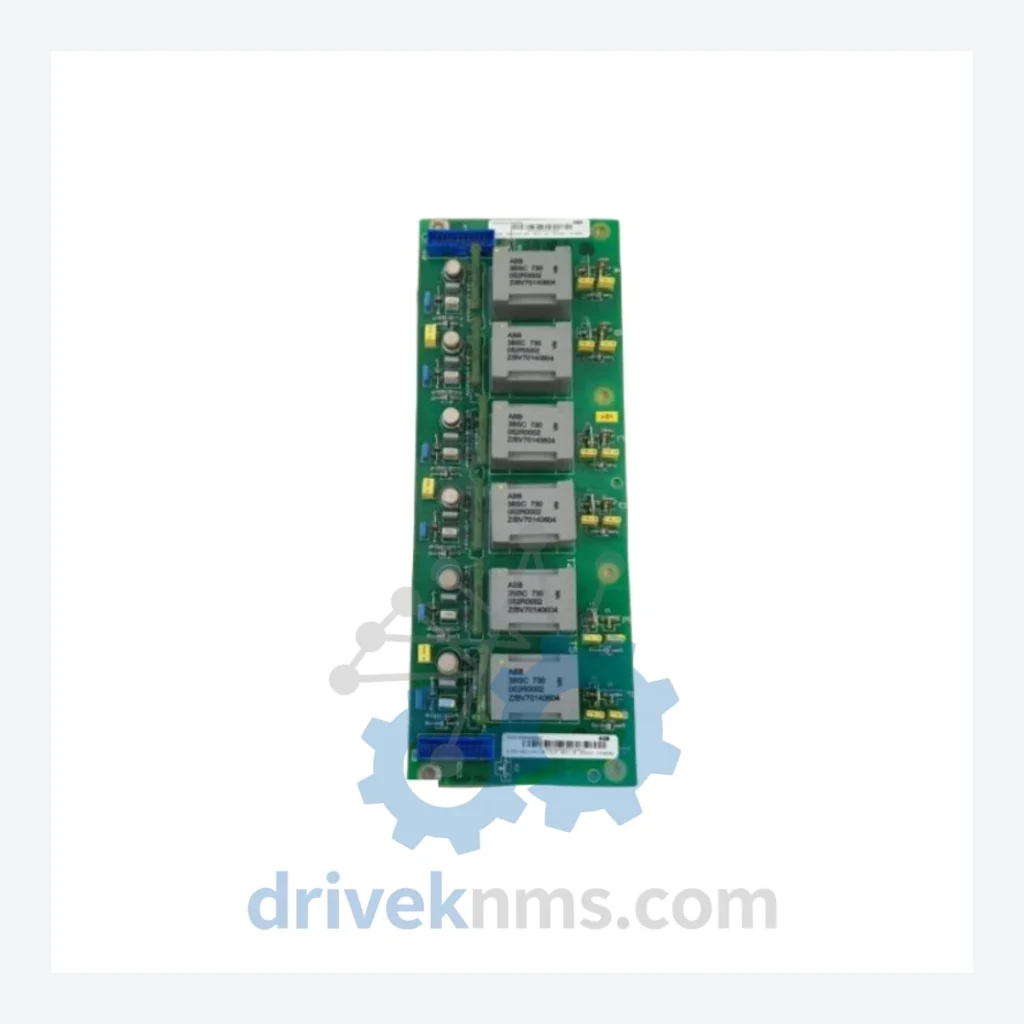
Model: SDCS-PIN-48 COAT 3ADT220090R0043
Product Overview
Commercial availability is handled through direct RFQ, model verification and export-oriented follow-up rather than public cart checkout.
Datasheet Preview
Use attached product manuals when available. If the manual is not public yet, request the full file directly through RFQ.
Commercial Path
Product pages on DRIVEKNMS are designed to verify model, brand and series first, then move the buyer into one clean quotation path.
Technical Dossier
The ABB SDCS (DC Drive Control System) series constitutes the core control electronics platform for ABB's DCS400, DCS500, and DCS800 family of DC drive systems. These drives are deployed across global heavy industry sectors including petrochemical refineries, nuclear power auxiliary systems, steel rolling mills, paper pulp lines, and offshore platform winch systems. The SDCS control board architecture provides closed-loop armature current regulation, field excitation control, encoder feedback processing, and fieldbus communication — all on a modular, rack-mounted backplane. Installed base estimates place SDCS-based drives in tens of thousands of units across EMEA, Asia-Pacific, and the Americas, making long-term spare parts availability a critical operational concern for plant maintenance engineers.
The SDCS platform was introduced in the mid-1990s as the successor to ABB's earlier SDCS-CON and SDCS-POW discrete control boards used in the DCS500 series. The original DCS500 architecture relied on separate analog signal conditioning boards (SDCS-PIN-3, SDCS-PIN-4) and a dedicated power interface board (SDCS-POW-1). As ABB transitioned to the DCS800 platform in the early 2000s, the SDCS board set was redesigned for higher integration density, introducing the SDCS-CON-4 as the primary CPU/control board and consolidating I/O functions onto the SDCS-IOB-3 and SDCS-PIN-48 interface boards. The COAT suffix (as in 3ADT220090R0043) denotes a conformal coating applied to the PCB for operation in high-humidity or corrosive-atmosphere environments — a specification common in coastal refineries and chemical processing plants. The DCS800 platform reached end-of-active-production around 2018–2020, transitioning to the ACS880 AC drive ecosystem, but the installed base of DCS800/DCS500 systems ensures continued demand for SDCS spare parts through at least 2035 under ABB's extended lifecycle support commitments.
The following SKUs represent the verified, commonly stocked modules within the ABB SDCS control board family. Each entry reflects a distinct functional role within the DCS400/DCS500/DCS800 drive architecture.
SDCS-PIN-48 COAT 3ADT220090R0043: Pulse transformer interface board, conformal coated, 48-channel gate pulse distribution for thyristor firing circuits.
SDCS-CON-4 3ADT313900R0001: Primary CPU/control board for DCS800; executes closed-loop speed and current regulation algorithms.
SDCS-CON-2B 3ADT309600R0001: Control board for DCS500B series; handles armature current loop and field weakening control.
SDCS-IOB-3 3ADT220090R0001: I/O expansion board; provides 8 DI, 4 DO, 4 AI, 2 AO for external signal interfacing.
SDCS-POW-1 3ADT220090R0002: Internal power supply board; generates ±15 V, +5 V, +24 V rails for SDCS control electronics.
SDCS-POW-4 3ADT220090R0004: Enhanced power supply board for DCS800; supports higher auxiliary current demand on large drive frames.
SDCS-FEX-2 3ADT220090R0010: Field excitation control board; regulates DC field current for separately excited DC motors.
SDCS-FEX-425 3ADT220090R0025: High-current field excitation module rated to 425 A; used on large mill motors and hoisting applications.
SDCS-AMC-DC-1 3ADT220090R0030: Application macro card; stores drive parameter sets and application-specific control macros in non-volatile memory.
SDCS-PIN-3 3ADT220090R0003: Pulse interface board for DCS500 thyristor bridges; earlier-generation gate pulse distribution.
SDCS-PIN-4 3ADT220090R0005: Upgraded pulse interface board; compatible with 6-pulse and 12-pulse thyristor converter configurations.
SDCS-COM-8 3ADT220090R0008: PROFIBUS-DP communication adapter; enables DCS800 integration into Siemens/ABB PROFIBUS networks.
SDCS-COM-81 3ADT220090R0081: PROFIBUS-DP V1 communication module with extended diagnostic telegram support.
SDCS-COM-9 3ADT220090R0009: DeviceNet communication adapter for DCS800 integration into Rockwell/Allen-Bradley control architectures.
SDCS-MEM-8 3ADT220090R0088: Memory expansion module; extends parameter storage and event log capacity on DCS800 CON-4 boards.
SDCS-DSL-4 3ADT220090R0044: Encoder/resolver interface board; processes incremental encoder signals for closed-loop speed feedback.
SDCS-PIN-205 3ADT220090R0205: Pulse interface board variant for 12-pulse converter configurations in high-power drive frames.
SDCS control boards present specific test challenges due to their multi-layer PCB construction, high-density SMD components, and backplane bus communication interfaces. DriveKNMS applies the following verification protocol to all SDCS modules: (1) Visual inspection under 10× magnification for PCB delamination, solder joint cracking, and component corrosion — critical on COAT-suffix boards where conformal coating can mask underlying damage. (2) In-circuit power-on test using a calibrated DCS800 drive test bench, verifying all supply rail voltages within ±2% tolerance. (3) Functional gate pulse output verification for SDCS-PIN series boards using an oscilloscope to confirm pulse timing, amplitude, and symmetry across all 48 channels. (4) Communication bus loopback test for SDCS-COM series modules, confirming PROFIBUS/DeviceNet frame integrity at rated baud rates. (5) Thermal cycling soak (–10°C to +55°C, 4 cycles) for modules destined for high-ambient-temperature applications. Each tested unit is issued a DriveKNMS QC certificate with technician ID, test date, and measured parameters.
Continue The Model Path
Move from this exact model into the matching system hub, brand archive, model-family archive or lifecycle sourcing route before sending a final RFQ list.
Related Paths
ABB SNAT-7120 SNAZ 7120 J SNAZ7120J is listed for SNAZ7120J Series RFQ review. Confirm quantity, condition and destination before quotation.
ABB PM564-TP-ETH 1SAP121100R0071 is listed for Servo Drives RFQ review. Confirm quantity, condition and destination before quotation.
ABB SCDCS-CON-4 is listed for CON-4 Control Board RFQ review. Confirm quantity, condition and destination before quotation.