
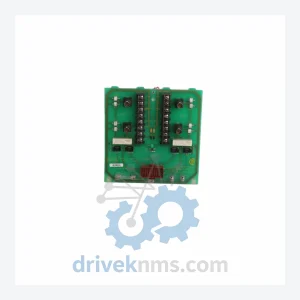
ABB NTCL01 Communication Termination Unit
ABB NTCL01 is listed for Communication Modules RFQ review. Confirm quantity, condition and destination before quotation.
RFQ-ready industrial model
Model: SNAT 0163 BDB
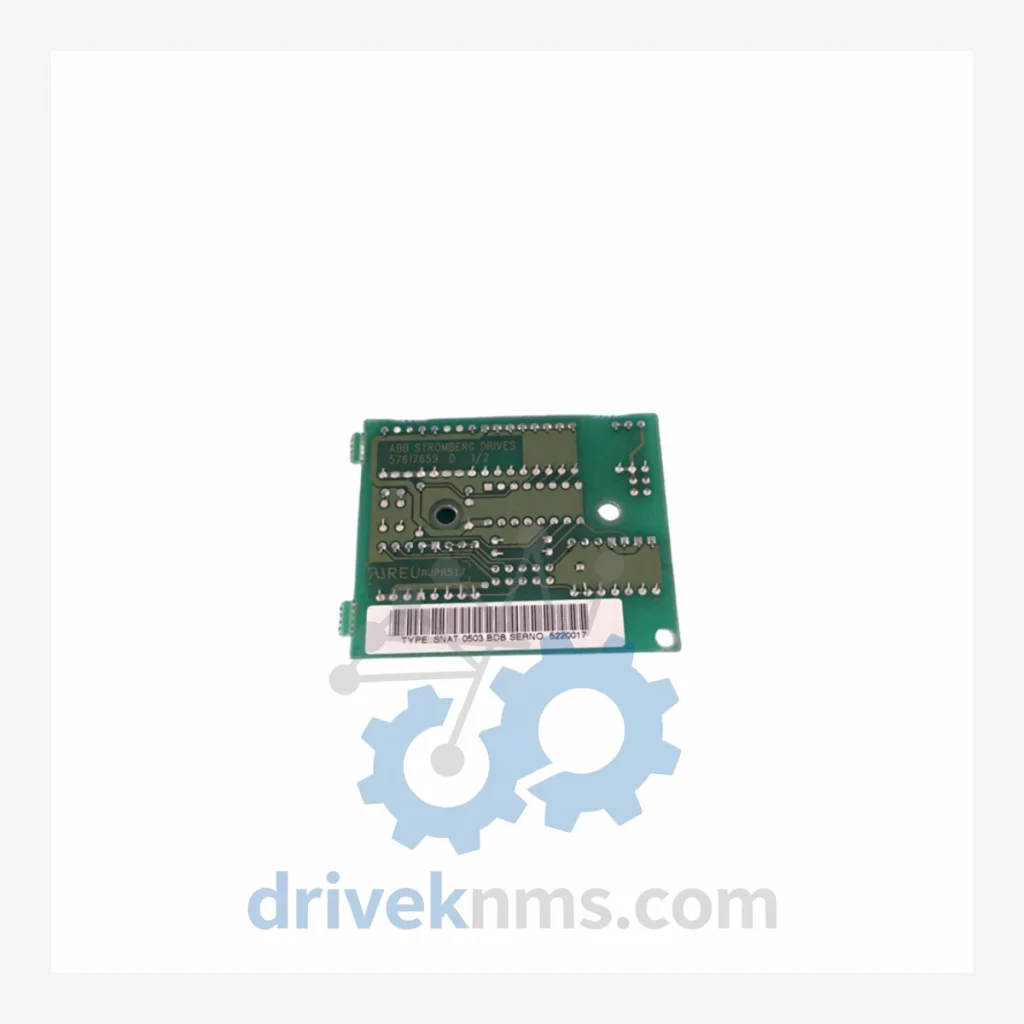
Product Overview
Commercial availability is handled through direct RFQ, model verification and export-oriented follow-up rather than public cart checkout.
Datasheet Preview
Use attached product manuals when available. If the manual is not public yet, request the full file directly through RFQ.
Commercial Path
Product pages on DRIVEKNMS are designed to verify model, brand and series first, then move the buyer into one clean quotation path.
Technical Dossier
The SNAT board family was introduced alongside the ACS600 platform in the early 1990s as ABB transitioned from relay-based drive control to fully digital IGBT inverter architectures. First-generation SNAT boards used parallel backplane communication with proprietary ABB DDCS (Distributed Drive Control System) fiber-optic links for inter-board signaling. This architecture allowed modular expansion of I/O and fieldbus capability without modifying the main inverter hardware.
With the introduction of the ACS800 platform in the late 1990s and early 2000s, ABB refined the SNAT form factor while maintaining backward-compatible DDCS communication protocols, enabling mixed-generation installations. The RMIO (Relay and Motor I/O) board family partially superseded certain SNAT functions in ACS800 configurations, but SNAT boards remained the standard for ACS600 installations and continued as optional expansion modules in ACS800 systems.
As of 2026, the ACS600 platform is fully discontinued and the ACS800 is in end-of-active-production status. Both platforms are in the mature/end-of-life phase. ABB's current generation ACS880 uses the BCON, BPOW, and AINT board families, which are not cross-compatible with SNAT hardware. For operators maintaining legacy ACS600/ACS800 installations, long-term spare parts availability from specialist distributors is the primary strategy for sustaining uptime.
The following SKUs represent verified, commonly sourced SNAT series modules. Each entry reflects the module's primary functional role within the ACS600/ACS800 drive architecture.
SNAT 0163 BDB: Interface board; backplane data bus bridge for ACS600 drive control communication.
SNAT 601 TAI: Analog input/output board; 6-channel AI/AO expansion for process signal conditioning.
SNAT 602 TAI: Extended analog I/O board; dual-channel differential analog input with 12-bit resolution.
SNAT 603 TAI: Analog I/O module; supports 4–20 mA and ±10 V signal ranges for field instrumentation.
SNAT 604 TAI: High-density analog input board; 8-channel configuration for multi-loop process control.
SNAT 605 TAI: Analog output expansion; 4-channel isolated AO for actuator and valve positioner control.
SNAT 6000 TAI: Universal analog I/O interface; configurable channel mapping for ACS600 system integration.
SNAT 601 TDI: Digital input board; 16-channel 24 VDC DI for discrete process signal acquisition.
SNAT 602 TDI: Digital input/output board; 8 DI + 8 DO relay outputs rated 250 VAC/2 A.
SNAT 603 TDI: High-speed digital I/O; supports encoder feedback and pulse train input for speed reference.
SNAT 601 TDP: Profibus-DP adapter board; enables ACS600 integration into Profibus DP fieldbus networks.
SNAT 602 TDP: Extended Profibus-DP module; supports GSD file-based configuration and cyclic data exchange.
SNAT 601 TDM: Modbus RTU/ASCII adapter; RS-485 interface for legacy SCADA and DCS integration.
SNAT 6000 BDB: Backplane data bus board; primary DDCS fiber-optic communication hub for ACS600 chassis.
SNAT 0163 TAI: Analog interface board variant; signal conditioning and isolation for ACS600 I/O expansion.
SNAT 601 TCF: ControlNet adapter board; supports ControlNet protocol for Rockwell-integrated plant environments.
SNAT 601 TDN: DeviceNet adapter; enables ACS600 participation in DeviceNet device-level networks.
SNAT 601 TFI: Fiber-optic interface board; DDCS master link for multi-drive chain configurations.
SNAT boards present specific testing challenges due to their reliance on ABB's proprietary DDCS fiber-optic backplane protocol and multi-layer PCB construction. DriveKNMS applies the following verification procedures to all SNAT modules prior to dispatch:
Visual and physical inspection: Component-level examination for capacitor degradation, relay contact wear, connector pin integrity, and conformal coating condition. Boards with evidence of thermal stress, corrosion, or mechanical damage are rejected at intake.
Powered functional test: Each board is energized using a controlled bench power supply matched to the module's rated voltage (typically 24 VDC auxiliary). Power rail stability, onboard LED status indicators, and watchdog timer behavior are verified against ABB technical documentation.
DDCS communication verification: For backplane and interface boards including the SNAT 0163 BDB, DDCS fiber-optic link integrity is tested using ABB-compatible test equipment to confirm data frame transmission, node addressing, and error-free cyclic communication.
I/O channel validation: Analog and digital I/O boards undergo channel-by-channel signal injection testing. AI channels are verified for linearity and offset accuracy; DO relay outputs are tested for switching continuity and contact resistance.
Burn-in and thermal cycling: Selected modules undergo extended powered operation at elevated ambient temperature to screen for latent component failures prior to shipment.
Continue The Model Path
Move from this exact model into the matching system hub, brand archive, model-family archive or lifecycle sourcing route before sending a final RFQ list.
Related Paths
ABB NTCL01 is listed for Communication Modules RFQ review. Confirm quantity, condition and destination before quotation.
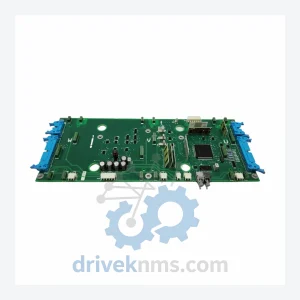
ABB NINT-73C is listed for Communication Modules RFQ review. Confirm quantity, condition and destination before quotation.
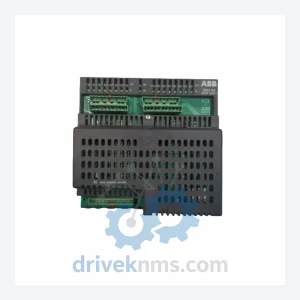
ABB SDCS-IOB-1 3BSE004084R1 is listed for Communication Modules RFQ review. Confirm quantity, condition and destination before quotation.