
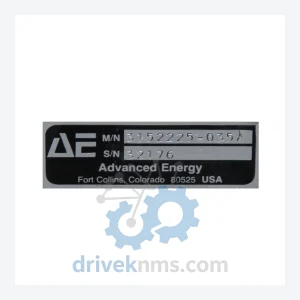
ADVANCED ENERGY 3152225-035A MDX-10K AP1415S 2PW MVE4 RF Generator – 3-Phase 415V
ADVANCED ENERGY 3152225-035A MDX-10K RF Generator: Global Sourcing Strategy & Asset Return Value The ADVANCED ENERGY MDX-10K series (P/N: 3152225-035A,…
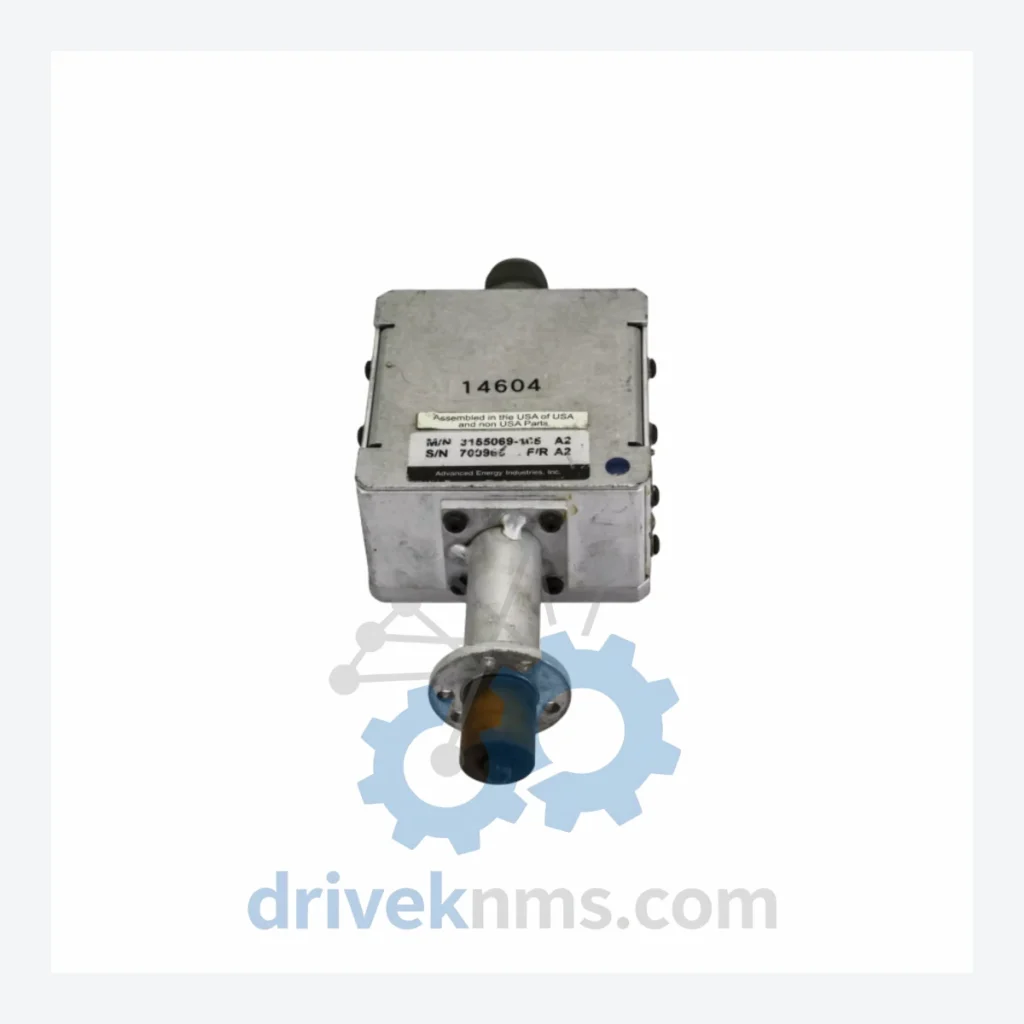
Model: APEX 6-J14 13.56 MHZ, 3155069-105 1110-00007 PC38-6 0020-36017
Product Overview
Commercial availability is handled through direct RFQ, model verification and export-oriented follow-up rather than public cart checkout.
Datasheet Preview
Use attached product manuals when available. If the manual is not public yet, request the full file directly through RFQ.
Commercial Path
Product pages on DRIVEKNMS are designed to verify model, brand and series first, then move the buyer into one clean quotation path.
Technical Dossier
The Advanced Energy APEX series represents one of the most widely deployed 13.56 MHz RF power delivery platforms in global heavy industry. Installed across semiconductor fabs, flat-panel display manufacturing lines, chemical vapor deposition (CVD) systems, physical vapor deposition (PVD) reactors, and industrial plasma processing equipment, the APEX platform has accumulated a multi-decade installed base that spans North America, Europe, Japan, South Korea, and Taiwan. Its presence in mission-critical environments — including petrochemical processing facilities, nuclear research installations, and continuous-operation refinery control systems — makes lifecycle support and spare parts availability a primary operational concern for maintenance engineers worldwide.
The APEX series is engineered for high-frequency RF power delivery at 13.56 MHz, the internationally designated ISM-band frequency for industrial plasma applications. Units in this series are characterized by their solid-state RF amplifier topology, integrated impedance matching networks (in select configurations), and deterministic power delivery control loops that interface directly with process controllers via analog and digital I/O.
The APEX platform was introduced by Advanced Energy Industries in the early 1990s as a successor to discrete RF amplifier assemblies that required manual tuning and offered limited process repeatability. The first-generation APEX units established the 13.56 MHz solid-state architecture that would define the product line, offering power outputs ranging from 300 W to 5 kW in a rack-mount form factor.
Second-generation APEX units introduced digital control interfaces, replacing analog potentiometer-based setpoint control with RS-232 and later DeviceNet communication protocols. This transition enabled integration with programmable logic controllers (PLCs) and distributed control systems (DCS), making the APEX a standard component in automated process chambers.
Third-generation variants — including the APEX 6 sub-series — incorporated enhanced arc detection and suppression circuitry, critical for reactive sputtering and PECVD processes where plasma instability events are frequent. The APEX 6-J14 (part numbers 3155069-105, 1110-00007, board assembly PC38-6, sub-assembly 0020-36017) represents a mature configuration within this generation, optimized for continuous-duty operation in high-throughput process environments.
As the semiconductor industry transitioned toward 300 mm wafer processing and advanced node geometries, newer platforms such as the Advanced Energy Paramount and Ascent series began displacing APEX in leading-edge fabs. However, the APEX series remains in active service across legacy process nodes, research institutions, and industrial plasma applications where the cost of platform migration outweighs the benefits of newer technology. This positions the APEX series firmly in the mature/extended-lifecycle phase, making long-term maintenance support and obsolete-part sourcing the dominant procurement driver.
The following catalog covers verified APEX series part numbers organized by functional category. Each entry reflects a distinct hardware configuration within the APEX platform.
RF Power Generators — 13.56 MHz
Integrated Matching Network Configurations
Board-Level Assemblies & Sub-Assemblies
Advanced Energy has progressively transitioned APEX series units to end-of-life (EOL) status as the Paramount and Ascent platforms have become the primary product lines for new installations. For facilities operating APEX-equipped process chambers, this creates a sourcing challenge: OEM repair and replacement support is reduced, lead times for new-build units are extended or unavailable, and field-refurbished units from qualified distributors represent the primary supply channel.
DriveKNMS maintains a dedicated inventory of APEX series generators, board-level assemblies, and sub-components sourced from decommissioned equipment, factory overstock, and controlled refurbishment programs. All units are cataloged by full part number — including sub-assembly and board revision codes — to ensure exact-match replacement for installed equipment. For EOL configurations such as the APEX 6-J14 (3155069-105), DriveKNMS provides cross-reference verification against the installed unit's serial number and firmware revision to confirm compatibility before shipment.
Lifecycle extension services available for the APEX series include: board-level component replacement, RF output stage recalibration, arc detection threshold re-characterization, and communication interface verification. These services are documented and traceable, supporting the quality management requirements of ISO 9001-certified manufacturing facilities.
RF power generators present specific test challenges that differ from standard electronic equipment. The APEX series, with its high-frequency output stage and integrated control electronics, requires a structured test protocol that validates both RF performance and control system integrity.
DriveKNMS applies the following test sequence to all APEX series units prior to shipment:
Test records are retained and available upon request for quality audit purposes.
Related Paths
ADVANCED ENERGY 3152225-035A MDX-10K RF Generator: Global Sourcing Strategy & Asset Return Value The ADVANCED ENERGY MDX-10K series (P/N: 3152225-035A,…
Advanced Energy 2305227-C 0620-01727 0620-02245 Control: Sourcing Strategy & Asset ROI in a Constrained Supply Chain The Advanced Energy 2305227-C…
Advanced Energy 2301350-A PCB Inverter Drive – Securing Your Pinnacle Series Assets Against Obsolescence When a single PCB module failure…