Technical Dossier
Product Details And Specifications
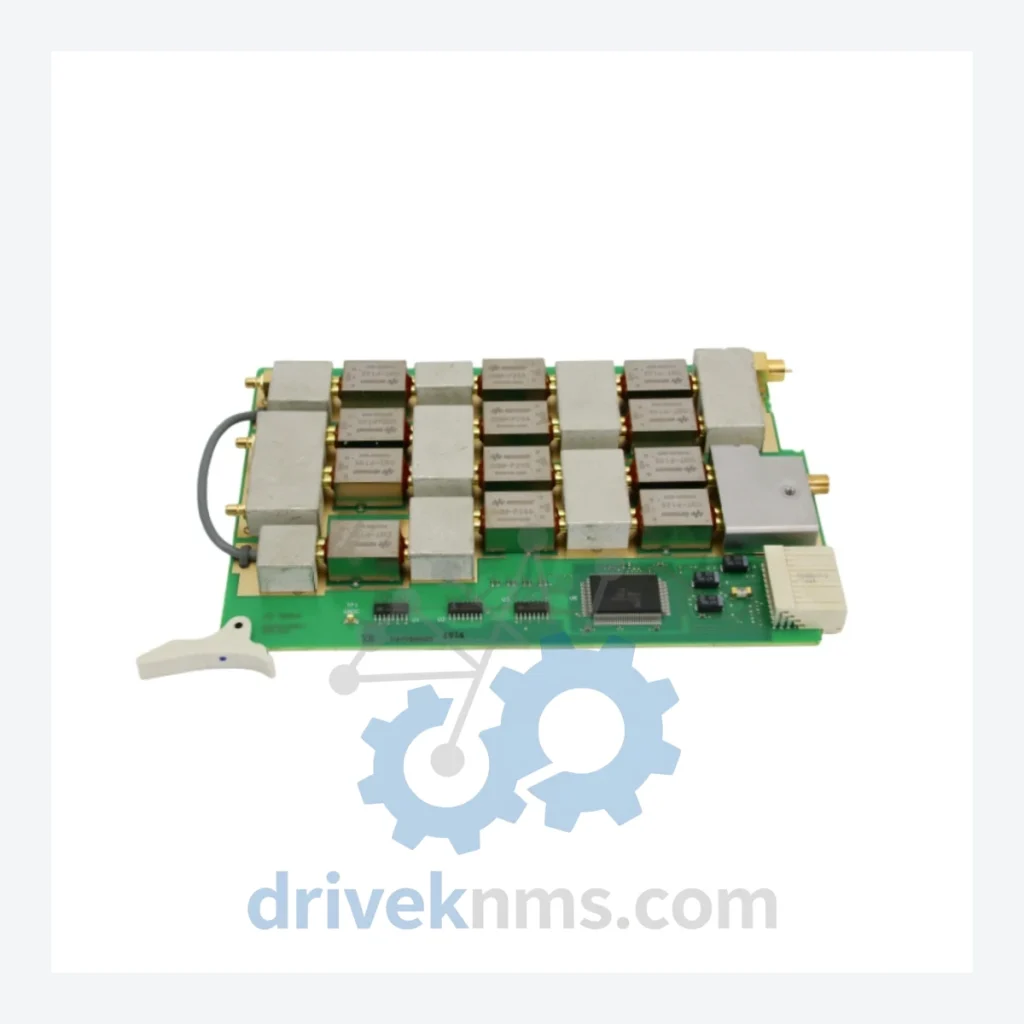
Agilent 33-5013 PIN Board – Obsolete ATE Spare Part
Cross-reference part numbers: E3126-26611 | E3126-66611 | 8300D | 0090-00012 | 0040-21367
RFQ support for obsolete parts: Send the model number, required quantity and destination so DriveKNMS can confirm sourcing options before quotation.
Technical Specifications
| Manufacturer | Agilent Technologies (formerly Hewlett-Packard) |
| Part Number | 33-5013 |
| Cross-Reference | E3126-26611 / E3126-66611 / 8300D / 0090-00012 / 0040-21367 |
| Component Type | PIN Board / Interface Board |
| Product Status | Discontinued / Obsolete |
| Country of Origin | United States |
| Typical Application | Automated Test Equipment (ATE) — semiconductor and electronics functional test |
| Compatible Systems | Agilent / HP 3070 Series Board Test Systems; legacy HP ATE platforms |
Note: Electrical parameters are not published for this board-level assembly. Specifications are confirmed against original Agilent service documentation upon request.
Solving the Discontinued Hardware Crisis
The Agilent HP 3070 Series in-circuit test (ICT) platform was deployed across semiconductor fabs, contract electronics manufacturers, and defense electronics facilities throughout the 1990s and 2000s. Many of these systems remain in active production use today — not because operators are unaware of newer alternatives, but because the cost and risk of migration outweigh any efficiency gain on stable, high-volume lines.
Sourcing a verified replacement from DriveKNMS eliminates that exposure. Facilities that maintain a one- or two-unit buffer of critical interface boards like the 33-5013 consistently report test cell availability rates above 99% — without any capital expenditure on platform upgrades.
For plant managers operating under asset-life-extension mandates, the arithmetic is straightforward: a spare board at current market price versus a multi-million-dollar system replacement. The 33-5013 is the kind of part that justifies a strategic spares inventory policy.
Condition & Reliability Assurance
Obsolete boards sourced from secondary markets carry real risk if not properly evaluated. DriveKNMS applies a 5-step inspection protocol to every unit before dispatch review:
- Step 1 – Visual and mechanical inspection: Board surface, connector pins, and PCB traces examined under magnification for corrosion, mechanical damage, and solder joint integrity.
- Step 2 – Electrolytic capacitor assessment: Aging electrolytic capacitors are the primary failure mode in boards of this era. Each capacitor is checked for ESR deviation and physical signs of electrolyte leakage or bulging.
- Step 3 – Pin corrosion and contact resistance check: All interface pins and edge connectors are cleaned and tested for contact resistance. Oxidized contacts are the most common cause of intermittent faults in legacy interface boards.
- Step 4 – Firmware and configuration verification: Where applicable, onboard firmware version and DIP switch or jumper configuration are documented and confirmed against known-good reference data.
- Step 5 – Functional burn-in: Units are powered and exercised under controlled conditions prior to packaging. Only boards that pass all five stages are released for sale.
Q: How are RFQ terms confirmed?
A: Quantity, required condition, documentation needs, destination and sourcing route are confirmed during RFQ review before quotation.
Extending Automation Asset Life by 5–10 Years: A Practical Framework
1. Criticality mapping: Identify every board and module in the test system that has no current-production equivalent. The 33-5013 is one such component. Build a bill of materials for the entire system's obsolete content.
2. Failure mode prioritization: Interface boards, power supply modules, and backplane connectors carry the highest failure probability in systems of this age. Prioritize spares procurement for these categories first.
5. Supplier qualification: Not all secondary-market sources apply consistent inspection standards. Establish a qualified supplier relationship with a specialist like DriveKNMS before a failure event occurs, not after. Emergency sourcing under production pressure increases the risk of receiving substandard parts.
Facilities that implement this framework consistently defer platform replacement by 5 to 10 years while maintaining test cell availability above 98%. The capital preserved during that period funds genuine technology upgrades on a planned schedule, rather than forced emergency replacements.
Q: How is condition confirmed before quotation?
A: Available condition, photos, test records and documentation are checked according to the requested model and sourcing channel before a formal RFQ response.
Q: How do I know the unit is genuine Agilent and not a counterfeit?
A: All units are inspected against original Agilent documentation. Board markings, PCB revision codes, and component population are verified against known-authentic references. A condition and authenticity report is provided with each shipment.
Q: Can you supply multiple units for a long-term spares program?
A: Contact us with your quantity requirement. For strategic spares procurement, we can discuss allocation agreements and staged delivery schedules to support multi-year maintenance programs.