
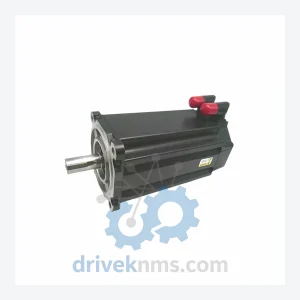
Allen-Bradley MPL-B540K-MJ74AA Servo Motor – Obsolete MPL Series Spare Part
Allen-Bradley MPL-B540K-MJ74AA is listed for Servo Drives RFQ review. Confirm quantity, condition and destination before quotation.
RFQ-ready industrial model
Model: 150-C43NBD
Product Overview
Commercial availability is handled through direct RFQ, model verification and export-oriented follow-up rather than public cart checkout.
Datasheet Preview
Use attached product manuals when available. If the manual is not public yet, request the full file directly through RFQ.
Commercial Path
Product pages on DRIVEKNMS are designed to verify model, brand and series first, then move the buyer into one clean quotation path.
Technical Dossier
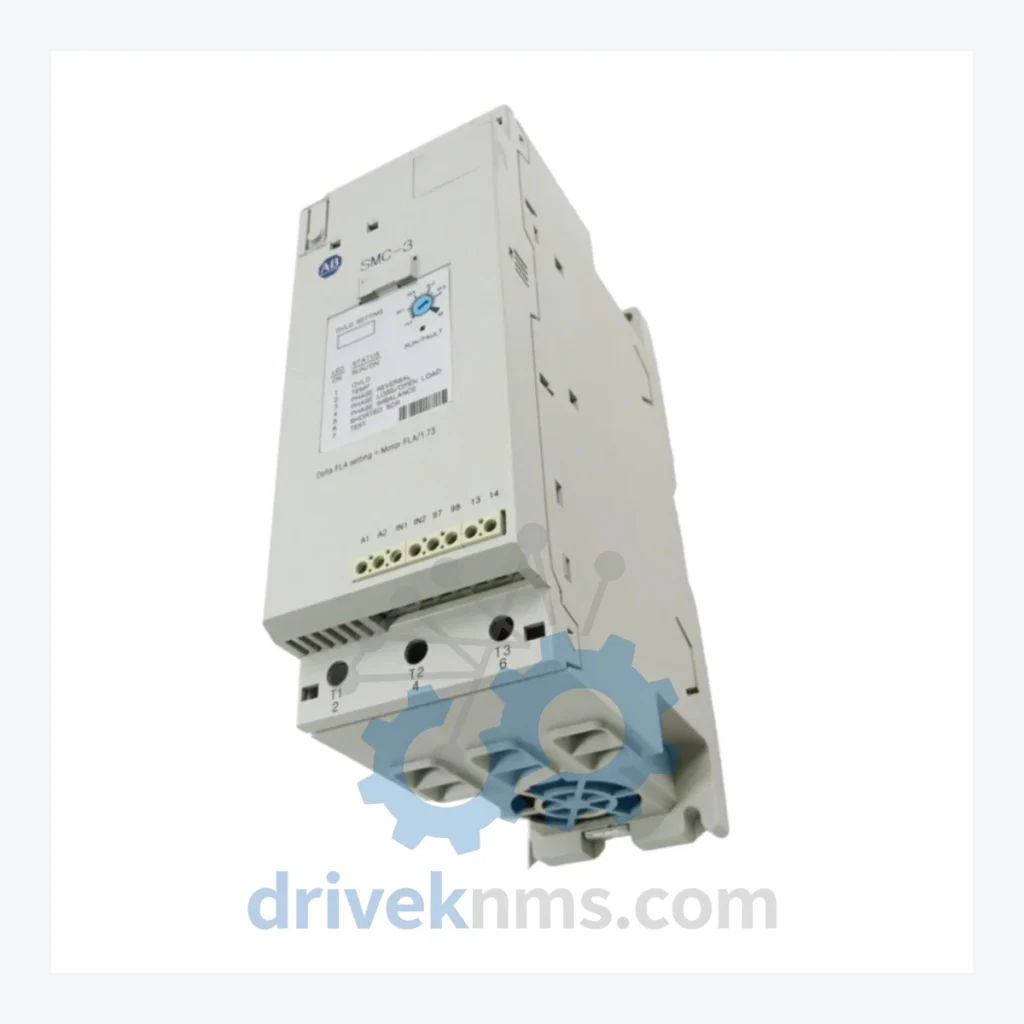
When a 150-C43NBD fails on the production floor, the immediate question is not whether to repair it — it is whether a replacement unit can be sourced before the line goes cold. Allen-Bradley's Bulletin 150 SMC (Smart Motor Controller) series has been discontinued by Rockwell Automation, and OEM supply channels have been closed for years. A single unplanned motor control failure in a facility still running SLC 500 or PLC-5 architecture can trigger a forced system-wide migration. Conservative estimates place the cost of such a migration — including engineering hours, new hardware, rewiring, recommissioning, and lost production — at several hundred thousand to over one million USD. Against that backdrop, securing a verified spare 150-C43NBD from existing inventory is not a procurement decision; it is an asset protection decision.
DriveKNMS maintains a carefully managed inventory of hard-to-find industrial automation components, including the 150-C43NBD. Each unit passes through a structured inspection protocol before it is offered for sale.
RFQ support for obsolete parts: Send the model number, required quantity and destination so DriveKNMS can confirm sourcing options before quotation.
| Parameter | Value |
|---|---|
| Manufacturer | Allen-Bradley / Rockwell Automation |
| Part Number | 150-C43NBD |
| Series | Bulletin 150 SMC Smart Motor Controller |
| Product Status | Discontinued / Obsolete (OEM production ceased) |
| Rated Current | 43 A |
| Supply Voltage | 200–480 V AC, 3-Phase |
| Control Voltage | 110–120 V AC (suffix "N") / 220–240 V AC (suffix "D" variant) |
| Communication | DeviceNet (suffix "D") |
| Enclosure | Open Type (panel mount) |
| Compatible Systems | Allen-Bradley SLC 500, PLC-5, early ControlLogix with DeviceNet scanner |
| Country of Origin | United States |
| Condition Available | New surplus / Professionally refurbished |
Note: Electrical parameters are provided based on published Rockwell Automation documentation for the Bulletin 150-C43NBD. Parameters not listed here have not been independently verified and are intentionally omitted to preserve data integrity.
The Allen-Bradley Bulletin 150 SMC series was a cornerstone of motor control in process industries throughout the 1990s and 2000s. Installed in food and beverage lines, water treatment facilities, mining conveyors, and chemical processing plants worldwide, these controllers were engineered for long service lives — and many are still performing their original function today.
For plants operating SLC 500 or PLC-5 based control architectures, the second option is rarely straightforward. These systems are deeply integrated into process logic, HMI configurations, and safety interlocks built over decades. Replacing the motor controller in isolation is a contained, low-risk repair. Replacing the entire control system to accommodate a modern SMC is a capital project that can take 12–24 months to plan, fund, and execute — during which the production asset sits idle or operates under risk.
How to extend the service life of automation assets by 5–10 years through strategic spare parts management:
Factory management teams facing system retirement pressure often underestimate the leverage that a well-maintained spare parts inventory provides. The following approach has been used by maintenance engineers across heavy industry to defer costly system migrations without compromising operational reliability:
1. Identify the single points of failure. In any legacy control system, certain components — motor controllers, I/O modules, power supplies — have no modern drop-in equivalent. The 150-C43NBD is one such component. A failure here cannot be bridged with a workaround; it stops the motor. Mapping these components is the first step in any asset longevity strategy.
Q: How are RFQ terms confirmed?
A: Quantity, required condition, documentation needs, destination and sourcing route are confirmed during RFQ review before quotation.
4. Document firmware and configuration baselines. For DeviceNet-enabled units like the 150-C43NBD, maintaining a documented record of node addresses, EDS files, and parameter settings ensures that a replacement unit can be commissioned without engineering intervention.
5. Negotiate long-term supply agreements with secondary market specialists. The availability of obsolete components on the secondary market is not static. Units that are available today may not be available in 18 months. Facilities that have committed to a 5–10 year asset extension strategy should secure their spare parts inventory now, while supply exists.
Sourcing obsolete industrial components from the secondary market carries inherent risk. DriveKNMS addresses this through a structured 5-step inspection protocol applied to every 150-C43NBD unit before it is offered for sale.
Step 1 – Visual and Mechanical Inspection: Each unit is examined for physical damage, housing integrity, terminal block condition, and evidence of prior field modifications or unauthorized repairs.
Step 2 – Electrolytic Capacitor Assessment: Bulletin 150 SMC units of this vintage use electrolytic capacitors in the control board power supply and gate drive circuits. These components have a finite service life and are a primary failure mode in aged units. Each unit is assessed for capacitor condition; units showing evidence of electrolyte leakage, bulging, or excessive ESR are either recapped or removed from inventory.
Step 3 – Firmware Version Verification: Where accessible, the firmware revision is documented and cross-referenced against known compatibility requirements for SLC 500 and PLC-5 DeviceNet scanner modules. Units with unverifiable firmware are flagged accordingly.
The 150-C43NBD is a direct, drop-in replacement for any failed unit of the same part number within an existing Bulletin 150 installation. No hardware modifications to the motor control center are required. No changes to the SLC 500 or PLC-5 program are necessary. No re-engineering of the DeviceNet network topology is needed, provided the replacement unit is configured to the same node address and parameters as the original.
For facilities that have invested in Allen-Bradley motor control infrastructure, maintaining access to verified 150-C43NBD spare units is the lowest-cost, lowest-risk strategy for protecting that investment.
Q: Can you support multi-unit or repeat RFQ requests?
A: Yes. Send the model list, target quantity and destination so DRIVEKNMS can review sourcing options and quote the requirement as a project RFQ.
Q: Can you source other Bulletin 150 variants or related Allen-Bradley obsolete parts?
A: Yes. DriveKNMS specializes in hard-to-find Allen-Bradley components across multiple discontinued product lines, including Bulletin 150, 1336, 1305, and SLC 500 I/O modules. Contact us with your full bill of materials for a consolidated sourcing assessment.
Continue The Model Path
Move from this exact model into the matching system hub, brand archive, model-family archive or lifecycle sourcing route before sending a final RFQ list.
Related Paths
Allen-Bradley MPL-B540K-MJ74AA is listed for Servo Drives RFQ review. Confirm quantity, condition and destination before quotation.
Allen-Bradley 1756-L85E is listed for ControlLogix RFQ review. Confirm quantity, condition and destination before quotation.
Allen-Bradley 1394C-AM07 is listed for Servo Drives RFQ review. Confirm quantity, condition and destination before quotation.