
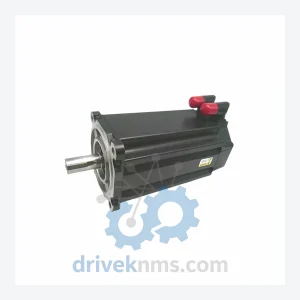
Allen-Bradley MPL-B540K-MJ74AA Servo Motor – Obsolete MPL Series Spare Part
Allen-Bradley MPL-B540K-MJ74AA is listed for Servo Drives RFQ review. Confirm quantity, condition and destination before quotation.
RFQ-ready industrial model
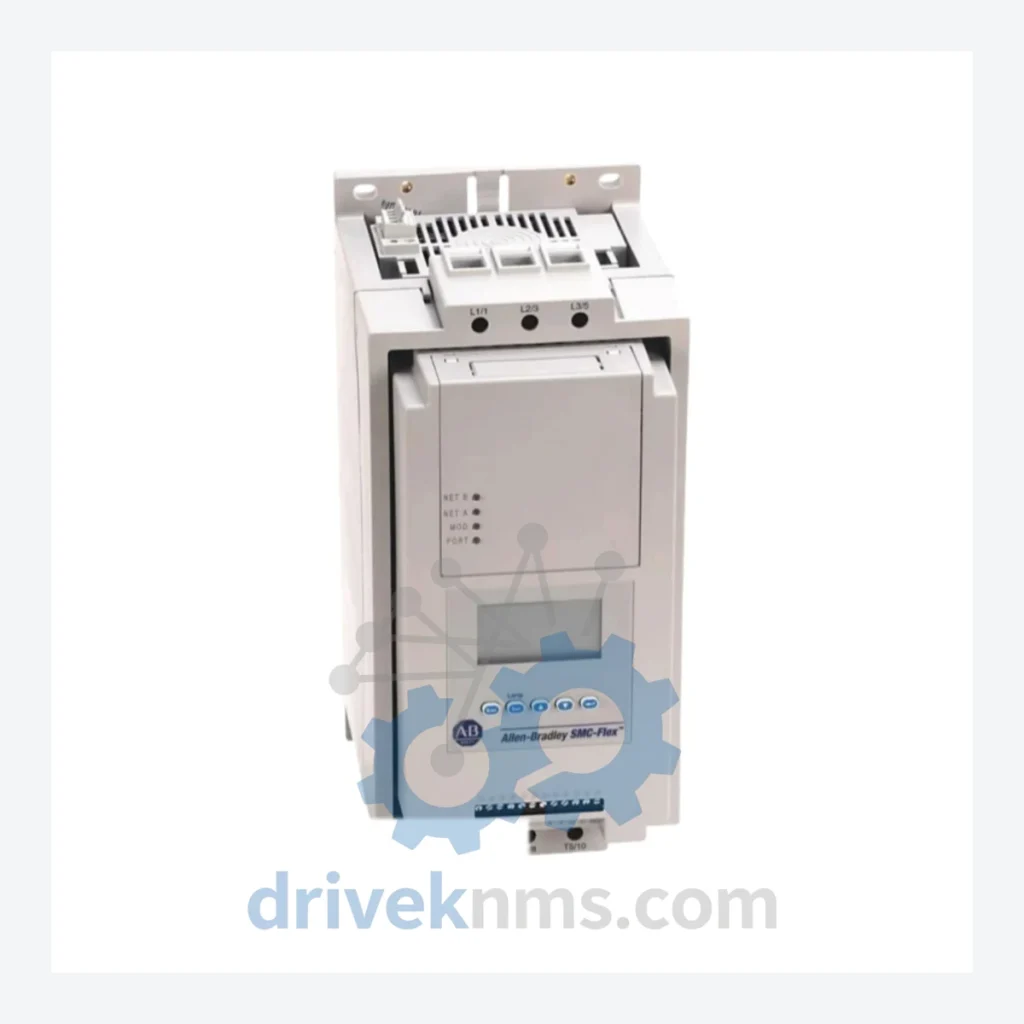
Model: 150-F201NBDD
Product Overview
Commercial availability is handled through direct RFQ, model verification and export-oriented follow-up rather than public cart checkout.
Datasheet Preview
Use attached product manuals when available. If the manual is not public yet, request the full file directly through RFQ.
Commercial Path
Product pages on DRIVEKNMS are designed to verify model, brand and series first, then move the buyer into one clean quotation path.
Technical Dossier
When the Allen-Bradley 150-F201NBDD fails on the production floor, the clock starts immediately. This unit is a core component of the Rockwell Automation 150 SMC (Smart Motor Controller) series — a platform that has been discontinued and is no longer manufactured. Replacing it is not a matter of ordering from a distributor catalog. It requires locating RFQ-reviewed sourcing status from a specialist source.
The cost of a full control system upgrade — new drives, new PLCs, new wiring, new commissioning, new operator training — routinely runs into the hundreds of thousands of dollars, and in complex multi-line facilities, into the millions. A single verified spare part, sourced and installed correctly, eliminates that expenditure entirely. DriveKNMS maintains sourcing status of hard-to-find industrial automation components precisely for this scenario.
RFQ support for obsolete parts: Send the model number, required quantity and destination so DriveKNMS can confirm sourcing options before quotation.
Note: Electrical parameters (voltage rating, current rating, horsepower range) for this specific suffix configuration are not published in current documentation. DriveKNMS will provide verified datasheet confirmation upon inquiry. No parameters are assumed or fabricated.
The Allen-Bradley 150 SMC series was widely deployed across North American and international manufacturing facilities throughout the 1990s and 2000s. These units were integrated into Motor Control Centers (MCCs) designed around specific physical footprints, communication protocols, and control wiring schemes. The 150-F201NBDD is not a generic soft starter — it is a dimensionally and electrically specific module built to occupy a defined slot in an existing MCC bucket.
When this module fails, the facility manager faces a decision that is rarely straightforward. The MCC cabinet itself may be structurally sound and electrically compliant for another decade. The motor loads it controls may be running reliably. The only failure point is this one module. Yet without a direct replacement, the entire MCC section — and potentially the entire lineup — faces forced retirement.
Sourcing a verified replacement unit from DriveKNMS eliminates that forced decision. It restores the system to operational status without any modification to the existing cabinet, wiring, or control logic.
For plant managers and maintenance engineers operating facilities with legacy automation infrastructure, the following approach has been applied successfully across multiple industries to defer system replacement costs while maintaining production reliability.
1. Identify single-point-of-failure components. In any legacy MCC or drive system, certain modules — soft starters, overload relays, communication adapters — have no modern drop-in equivalent. These are the components that, if they fail without a spare on hand, force an emergency sourcing event or a system redesign. The 150-F201NBDD is one such component in Allen-Bradley SMC-based systems.
3. Document the installed base. A complete inventory of discontinued modules currently in service — part numbers, installation locations, firmware versions where applicable — gives maintenance teams the information needed to prioritize procurement. Without this documentation, the first failure is also the first discovery of the sourcing problem.
4. Verify compatibility before installation. In the 150 SMC series, suffix codes carry specific configuration information. The -F201NBDD suffix denotes a particular current rating, enclosure type, and feature set. Installing an incorrect suffix variant can result in equipment damage or nuisance tripping. DriveKNMS provides compatibility verification as part of the sourcing process.
5. Treat spare parts as capital asset protection, not as maintenance expense. The cost of a verified 150-F201NBDD spare is a fraction of the cost of an unplanned production stoppage, an emergency MCC replacement, or a forced system upgrade. Framed correctly in a capital budget, this expenditure protects an existing asset that may have years of remaining service life.
DriveKNMS applies a structured 5-step quality process to all discontinued and legacy components before dispatch review.
Step 1 – Visual and Physical Inspection: Each unit is examined for physical damage, corrosion on terminals and bus bars, and evidence of prior thermal events. Units with compromised enclosures or visible arc damage are rejected at this stage.
Step 2 – Electrolytic Capacitor Assessment: Soft starters and motor controllers of this generation rely on electrolytic capacitors that degrade over time regardless of usage. Capacitor condition is assessed for bulging, leakage, and ESR (equivalent series resistance) where test equipment permits. Units with aged capacitor banks are flagged for disclosure.
Step 3 – Firmware and Configuration Verification: Where the unit carries onboard firmware or DIP-switch configuration, the version and settings are documented and disclosed to the buyer. This is particularly relevant for units that may have been previously programmed for a specific application.
Step 4 – Terminal and Pin Integrity Check: Control wiring terminals, power terminals, and communication ports are inspected for corrosion, deformation, and mechanical integrity. Corroded or damaged terminals are a common failure point in stored legacy components.
The 150-F201NBDD is a direct, drop-in replacement for the same part number in any existing Allen-Bradley SMC installation. No modifications to the MCC cabinet are required. No changes to control wiring are required. No PLC reprogramming is required. The replacement unit occupies the same physical space, connects to the same terminal points, and operates under the same control signals as the original.
This matters because the alternative — adapting a different soft starter model to fit an existing MCC bucket — requires engineering time, potential cabinet modification, revised wiring diagrams, updated documentation, and in some jurisdictions, re-certification of the modified equipment. The total cost of that process routinely exceeds the cost of sourcing the correct original part by a significant margin.
For facilities where production continuity is the primary constraint, the drop-in replacement approach is the only option that restores operation without introducing new variables into a system that was previously validated and running.
Continue The Model Path
Move from this exact model into the matching system hub, brand archive, model-family archive or lifecycle sourcing route before sending a final RFQ list.
Related Paths
Allen-Bradley MPL-B540K-MJ74AA is listed for Servo Drives RFQ review. Confirm quantity, condition and destination before quotation.
Allen-Bradley 1756-L85E is listed for ControlLogix RFQ review. Confirm quantity, condition and destination before quotation.
Allen-Bradley 1394C-AM07 is listed for Servo Drives RFQ review. Confirm quantity, condition and destination before quotation.