
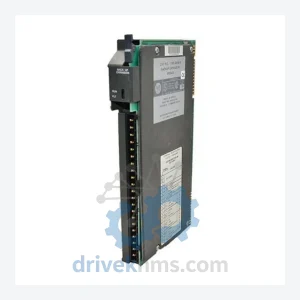
Allen-Bradley 1785-BEM Backup Communications Expansion Module – PLC-5 Series
Allen-Bradley 1785-BEM is listed for PLC-5 RFQ review. Confirm quantity, condition and destination before quotation.
RFQ-ready industrial model
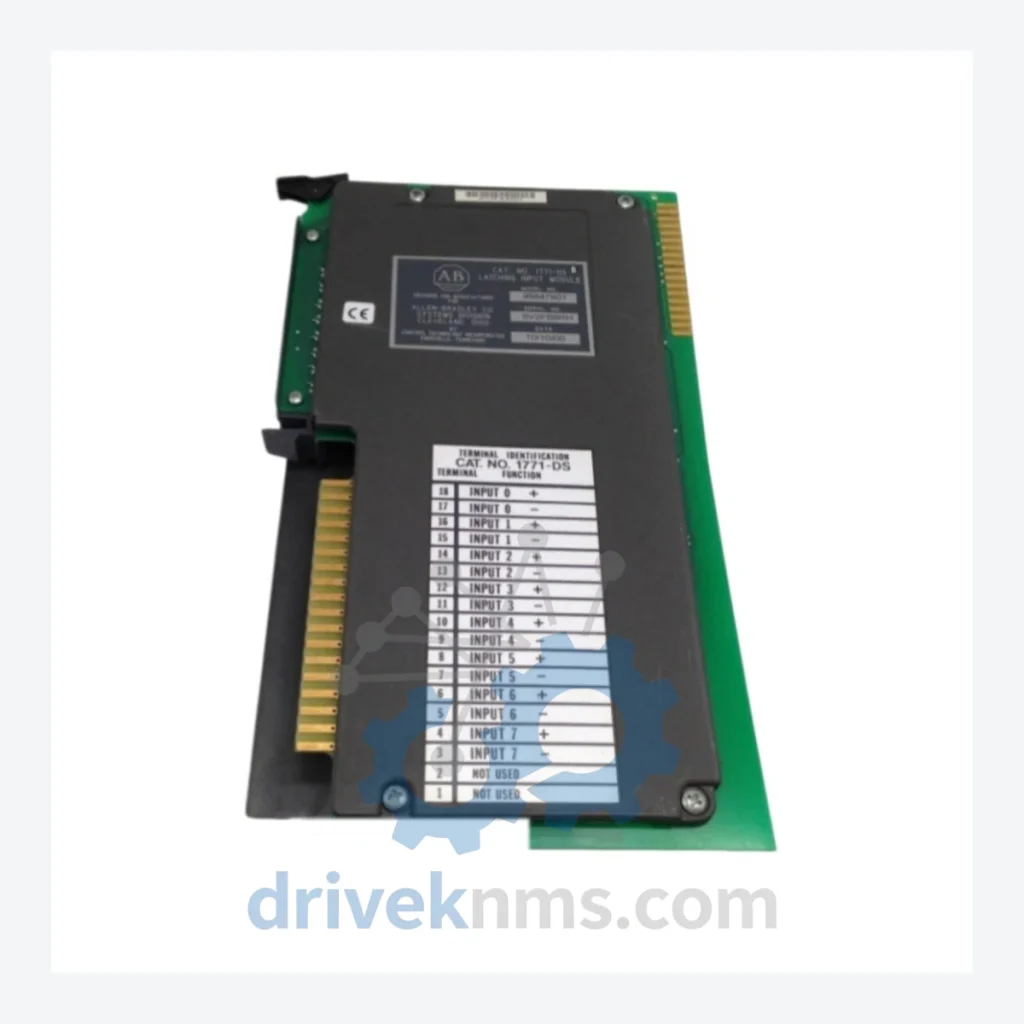
Model: 1771-DS
Product Overview
Commercial availability is handled through direct RFQ, model verification and export-oriented follow-up rather than public cart checkout.
Datasheet Preview
Use attached product manuals when available. If the manual is not public yet, request the full file directly through RFQ.
Commercial Path
Product pages on DRIVEKNMS are designed to verify model, brand and series first, then move the buyer into one clean quotation path.
Technical Dossier
RFQ support for obsolete parts: Send the model number, required quantity and destination so DriveKNMS can confirm sourcing options before quotation.
| Attribute | Detail |
|---|---|
| Manufacturer | Allen-Bradley (Rockwell Automation) |
| Part Number | 1771-DS |
| Series | 1771 I/O (PLC-5 Platform) |
| Module Type | Discrete Input Module |
| Compatible Platform | Allen-Bradley PLC-5 (1771 I/O Chassis) |
| Backplane Interface | 1771 I/O Chassis (A, B, C, D chassis compatible) |
| Discontinuation Status | Officially discontinued by Rockwell Automation. No longer in production. No OEM support available. |
| Country of Origin | United States |
Note: Electrical parameters such as input voltage range and channel count are confirmed upon request with unit documentation to ensure accuracy.
The Allen-Bradley PLC-5 platform, built around the 1771 I/O chassis, served as the control backbone across petrochemical, automotive, food processing, water treatment, and utilities sectors for over two decades. Rockwell Automation's end-of-life declaration for the PLC-5 line placed thousands of facilities in a difficult operational position: the control logic is proven, the process is stable, the engineering team knows the system — but replacement I/O modules are no longer available through standard distribution channels.
The 1771-DS discrete input module sits at the field interface layer of these systems. It reads the on/off status of field devices — limit switches, proximity sensors, pushbuttons — and passes that data to the PLC-5 processor. When this module degrades or fails, the processor loses visibility into field conditions. Depending on the process, this triggers a controlled shutdown or, in worst cases, an undetected fault condition with downstream consequences.
Facilities that have attempted mid-lifecycle migration away from PLC-5 consistently report that the true cost is underestimated at the planning stage. Hidden costs include re-engineering of ladder logic to structured text or function block diagrams, re-validation of safety-critical sequences, recalibration of analog loops tied to the I/O chassis, and the productivity loss during the transition window. For a plant running three shifts, even a four-week migration window represents a material revenue impact that rarely appears in the initial project budget.
Sourcing discontinued industrial modules from the secondary market carries real risk. DriveKNMS applies a structured 5-step qualification process to every 1771-DS unit before it leaves our facility:
Q: How do I know the unit is genuine Allen-Bradley and not a counterfeit?
A: All units sourced by DriveKNMS are verified against Rockwell Automation's catalog documentation. We provide the unit's catalog label, revision marking, and — where available — original packaging. We do not source from unverified brokers. Customers may request pre-shipment photos of the specific unit prior to payment.
Q: Can you source other 1771 series modules?
A: Yes. DriveKNMS specializes in the full Allen-Bradley 1771 I/O range as well as other discontinued Rockwell Automation, Honeywell, ABB, Siemens, and GE Fanuc legacy hardware. Contact us with your full bill of materials.
Continue The Model Path
Move from this exact model into the matching system hub, brand archive, model-family archive or lifecycle sourcing route before sending a final RFQ list.
Related Paths
Allen-Bradley 1785-BEM is listed for PLC-5 RFQ review. Confirm quantity, condition and destination before quotation.
Allen-Bradley 1771-DMC is listed for PLC-5 RFQ review. Confirm quantity, condition and destination before quotation.
Allen-Bradley 1771-OM is listed for PLC-5 RFQ review. Confirm quantity, condition and destination before quotation.