
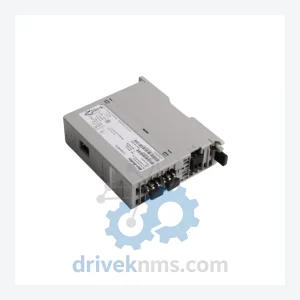
Allen-Bradley 1783-NATR: Stratix NAT Router
Allen-Bradley 1783-NATR is listed for 1783 Series RFQ review. Confirm quantity, condition and destination before quotation.
RFQ-ready industrial model
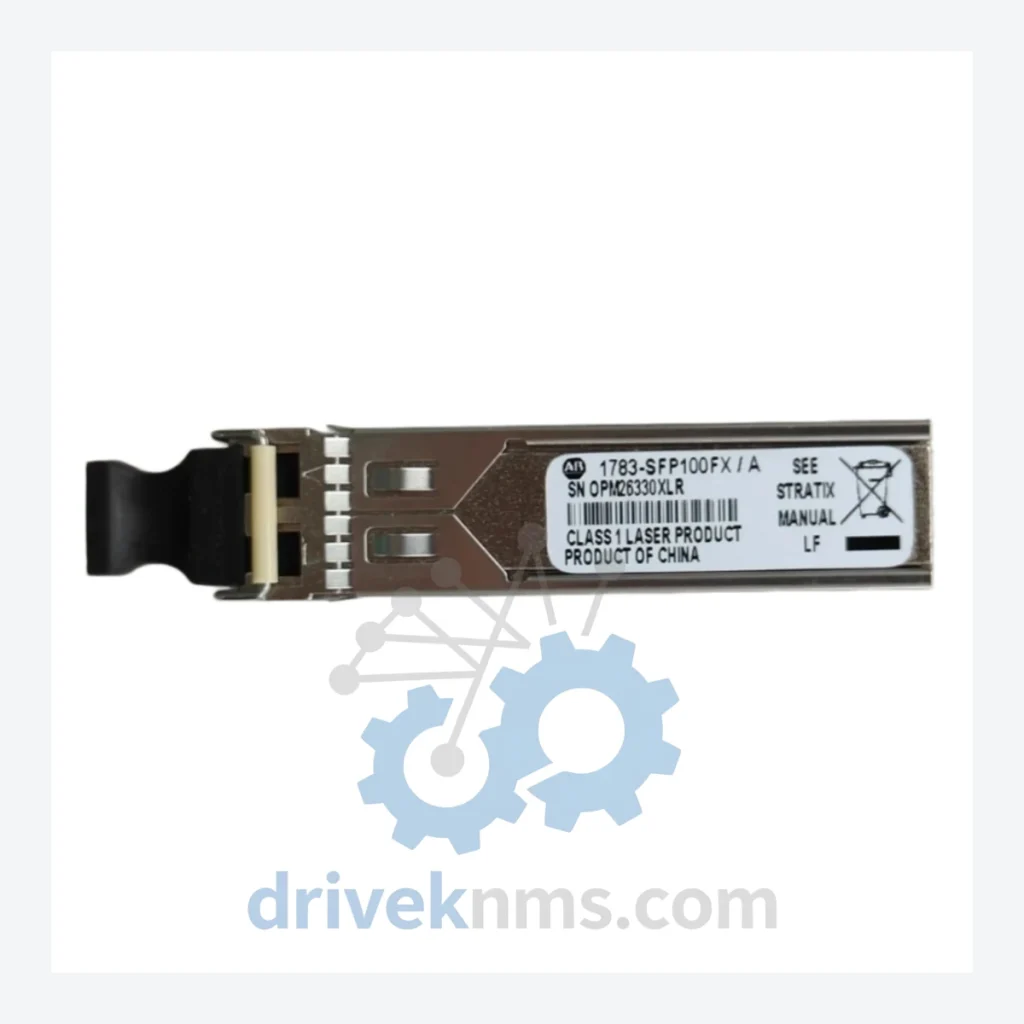
Model: 1783-SFP100FX
Product Overview
Commercial availability is handled through direct RFQ, model verification and export-oriented follow-up rather than public cart checkout.
Datasheet Preview
Use attached product manuals when available. If the manual is not public yet, request the full file directly through RFQ.
Commercial Path
Product pages on DRIVEKNMS are designed to verify model, brand and series first, then move the buyer into one clean quotation path.
Technical Dossier
Stratix switches are designed to integrate natively with Rockwell's Studio 5000 Logix Designer and FactoryTalk software ecosystem, enabling unified network management from within the PLC programming environment. The series spans unmanaged, managed Layer 2, and managed Layer 3 switches, as well as SFP (Small Form-factor Pluggable) transceiver modules, wireless access points, and network security appliances. Installed base figures across Fortune 500 process industries confirm the 1783 series as one of the most widely deployed industrial Ethernet switch families globally.
The 1783 series has undergone four distinct architectural generations since its introduction in the mid-2000s:
Generation 1 — Stratix 2000 / Early Unmanaged (2005–2010): The earliest 1783-designated products were unmanaged Fast Ethernet switches targeting simple device-level ring (DLR) topologies. These units lacked IGMP snooping and offered no integration with RSLogix or Studio 5000. Many of these early SKUs — including the 1783-US5T and 1783-US8T — are now fully discontinued, with no manufacturer support. Replacement parts must be sourced from the secondary market.
Generation 2 — Stratix 5700 / Managed Layer 2 (2010–2015): The introduction of the 1783-BMS series (Stratix 5700) marked a significant architectural shift. These managed switches introduced Cisco IOS-based firmware, PROFINET compatibility, and native EtherNet/IP integration. The 1783-BMS10CGL and related SKUs became the standard for mid-size control panel installations. This generation introduced SFP uplink ports, enabling fiber backbone connectivity — the foundation for the SFP transceiver sub-family including the 1783-SFP100FX.
Generation 3 — Stratix 5400 / Layer 3 Routing (2015–2020): The 1783-HMS series (Stratix 5400) introduced Layer 3 routing capabilities, VLAN segmentation, and enhanced cybersecurity features aligned with IEC 62443. This generation is the current production standard for large-scale DCS and SCADA network architectures.
Generation 4 — Stratix 5200 / SD-WAN Ready (2020–Present): The most recent generation introduces software-defined networking (SDN) readiness, enhanced NAT/firewall capabilities, and cloud-managed options via FactoryTalk Network Manager. Legacy SFP modules from Generation 2 onward remain physically compatible with Generation 4 switch uplink ports, preserving fiber infrastructure investments.
Compatibility note: SFP transceivers such as the 1783-SFP100FX (100BASE-FX, multimode, 1310 nm, LC connector, 2 km reach) are cross-compatible across Stratix 5700, 5400, and 5200 platforms, provided the host switch port is configured for the correct speed and fiber type.
SFP Transceiver Modules
Stratix 5700 Managed Layer 2 Switches (1783-BMS Series)
Stratix 5400 Managed Layer 3 Switches (1783-HMS Series)
Stratix 2000 Unmanaged Switches (Legacy / EOL)
Network Security / Firewall Appliances
DriveKNMS maintains a dedicated inventory of tested, pull-from-service, and new-surplus 1783 series components to support facilities operating legacy Stratix infrastructure. Our sourcing network spans certified industrial surplus dealers, decommissioned plant equipment, and manufacturer-authorized refurbishment channels across North America, Europe, and Asia-Pacific.
SFP transceiver modules including the 1783-SFP100FX, 1783-SFP100FXS, and 1783-SFP1GSX are stocked as high-priority items given their role as single points of failure in fiber uplink paths. These modules are subject to accelerated wear in high-vibration and high-temperature environments and are among the most frequently requested replacement components in the 1783 series.
All 1783 series modules processed by DriveKNMS undergo a structured inspection and functional verification protocol prior to dispatch. The procedure is adapted to the specific module type:
SFP Transceiver Modules (1783-SFPxxx): Each unit is tested using a calibrated optical power meter to verify transmit power output (Tx) and receive sensitivity (Rx) against the published datasheet specification. Wavelength accuracy is confirmed via optical spectrum analysis. LC connector ferrule condition is inspected under 200× magnification. DOM (Digital Optical Monitoring) data is read via I²C interface to verify internal diagnostics are functional.
Managed Switches (1783-BMS / 1783-HMS): Units are powered on and booted to verify firmware integrity. All copper ports are tested at 10/100/1000 Mbps using a dedicated Ethernet port tester. SFP cages are tested with known-good reference transceivers. IGMP snooping, VLAN configuration, and EtherNet/IP CIP messaging are verified via a test PLC connection. PoE output is measured on PoE-capable models. Backplane and DIN-rail mounting hardware is inspected for mechanical integrity.
Unmanaged Legacy Switches (1783-US Series): All ports are tested for link establishment and traffic forwarding. Power supply input voltage range is verified. Thermal performance is assessed after 30-minute burn-in at rated load.
Continue The Model Path
Move from this exact model into the matching system hub, brand archive, model-family archive or lifecycle sourcing route before sending a final RFQ list.
Related Paths
Allen-Bradley 1783-NATR is listed for 1783 Series RFQ review. Confirm quantity, condition and destination before quotation.
Allen-Bradley 1783-CMS10DP is listed for 1783 Series RFQ review. Confirm quantity, condition and destination before quotation.
Allen-Bradley XM-360 1440-TPR06-00RE is listed for Monitoring Systems RFQ review. Confirm quantity, condition and destination before quotation.