
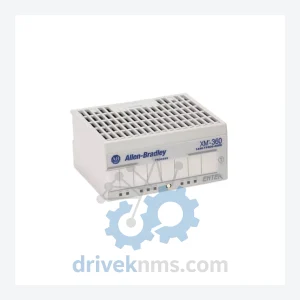
Allen-Bradley XM-360 Modules 1440-TPR06-00RE
Allen-Bradley XM-360 1440-TPR06-00RE is listed for Monitoring Systems RFQ review. Confirm quantity, condition and destination before quotation.
RFQ-ready industrial model
Model: 150-F108NBD
Product Overview
Commercial availability is handled through direct RFQ, model verification and export-oriented follow-up rather than public cart checkout.
Datasheet Preview
Use attached product manuals when available. If the manual is not public yet, request the full file directly through RFQ.
Commercial Path
Product pages on DRIVEKNMS are designed to verify model, brand and series first, then move the buyer into one clean quotation path.
Technical Dossier
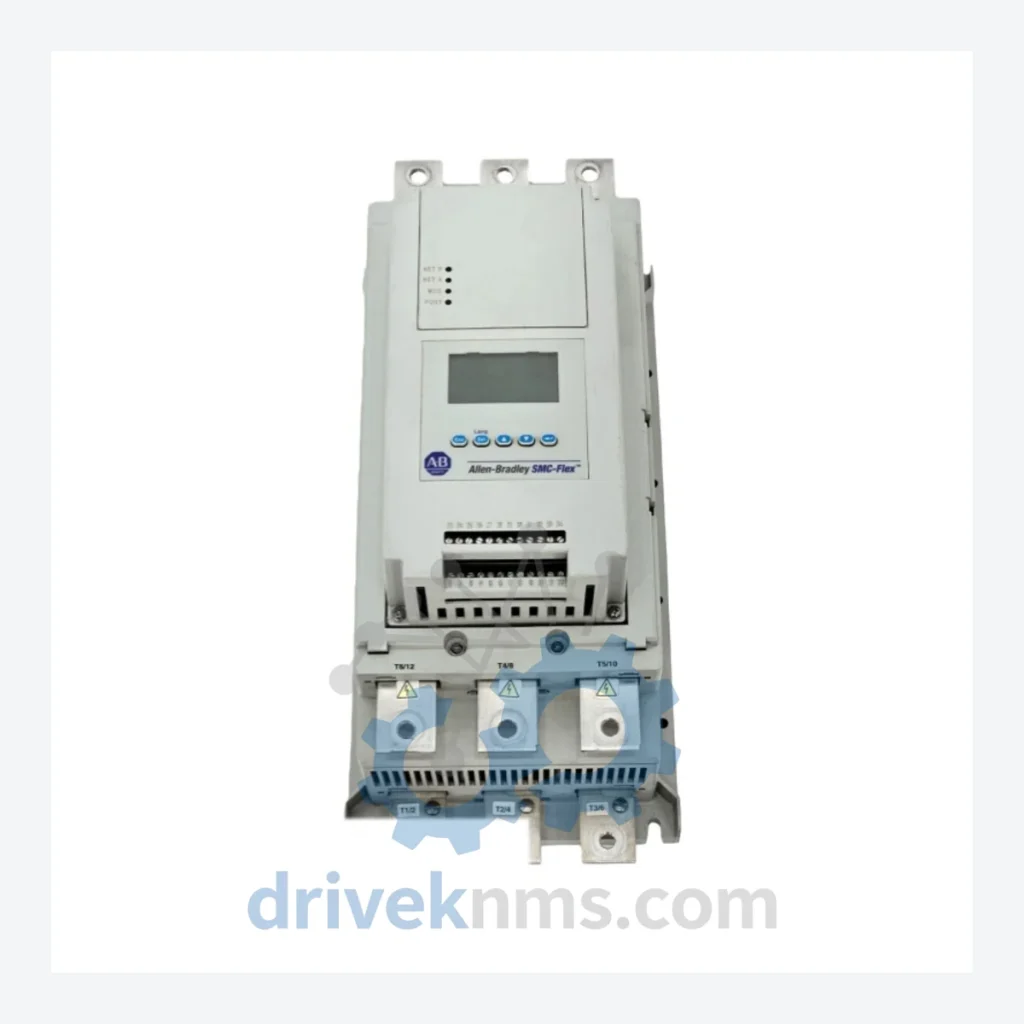
The Allen-Bradley (Rockwell Automation) Bulletin 150 Smart Motor Controller (SMC) series is a reduced-voltage solid-state motor starting platform deployed across global heavy industry. Installations span petrochemical complexes, nuclear auxiliary systems, crude oil refineries, pulp and paper mills, and municipal water treatment facilities. The Bulletin 150 line occupies a defined position in Rockwell's motor control hierarchy: above direct-on-line starters and below full variable-frequency drives, providing controlled acceleration, deceleration, and protection without the harmonic distortion profile of a VFD. Its DIN-rail and panel-mount form factors, combined with DeviceNet and hardwired I/O options, made it a standard specification item in MCC (Motor Control Center) lineups from the mid-1990s through the 2010s. Installed base density is highest in North American and Southeast Asian process industries, where Allen-Bradley MCC infrastructure is predominant.
The Bulletin 150 platform progressed through three distinct hardware generations. The first generation (SMC-1, early 1990s) used analog control circuitry with fixed ramp profiles and no fieldbus connectivity. The second generation (SMC-2 / SMC Dialog Plus) introduced digital parameter storage, operator interface modules, and optional DeviceNet adapters, enabling integration into Allen-Bradley's PLC-5 and SLC 500 control architectures. The third generation (SMC-3 / SMC Flex, Bulletin 150 and 150-C) added programmable current-limit starting, electronic overload protection, soft-stop, and pump control algorithms. The 150-F and 150-C sub-families represent the mature phase of this architecture, supporting 200–600 V AC systems across a current range from 3 A to 1250 A.
Compatibility constraints are a primary maintenance concern. First-generation modules are not firmware-compatible with third-generation bypass contactors or communication adapters. Replacement of an SMC-1 unit with an SMC Flex requires re-engineering of the control wiring and, in DeviceNet installations, re-commissioning of the network node. DriveKNMS maintains cross-reference documentation for all three generations to support like-for-like and upgrade-path replacements.
The following SKUs represent verified, commonly stocked models within the Allen-Bradley Bulletin 150 Smart Motor Controller family. Units are classified by functional role within a motor control system.
Smart Motor Controllers — Full-Voltage & Reduced-Voltage
Communication & Option Modules
The Bulletin 150 SMC platform presents specific test requirements due to its SCR (silicon controlled rectifier) power stage, integrated bypass contactor, and DeviceNet communication interface. Standard continuity or insulation resistance testing is insufficient to validate functional integrity.
DriveKNMS applies the following test protocol to all Bulletin 150 units prior to dispatch: (1) SCR firing symmetry test under resistive load at rated current, verifying balanced phase conduction across all six thyristors; (2) bypass contactor pull-in and drop-out voltage verification against OEM specification; (3) DeviceNet node commissioning test using a live network segment to confirm MAC ID assignment, I/O polling response, and explicit messaging; (4) electronic overload trip-point calibration at 115% and 150% of rated current; (5) soft-start ramp linearity check across the full 1–30 second ramp range; (6) thermal imaging of the power stage under 80% load for a minimum 15-minute soak period to identify latent SCR degradation. Units failing any single test criterion are quarantined and not offered for sale.
Continue The Model Path
Move from this exact model into the matching system hub, brand archive, model-family archive or lifecycle sourcing route before sending a final RFQ list.
Related Paths
Allen-Bradley XM-360 1440-TPR06-00RE is listed for Monitoring Systems RFQ review. Confirm quantity, condition and destination before quotation.
Allen-Bradley XM-120 1440-VST02-01RA is listed for XM Series RFQ review. Confirm quantity, condition and destination before quotation.
Allen-Bradley 6176M-19PT is listed for Monitoring Systems RFQ review. Confirm quantity, condition and destination before quotation.