
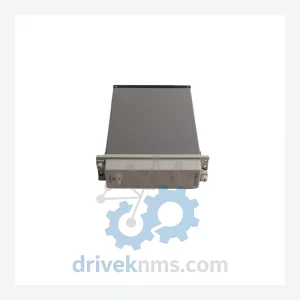
Alstom EPICIII EP3-E-4-A Controller Module – EPIC III Series
Alstom EPICIII EP3-E-4-A is listed for EPIC III Series RFQ review. Confirm quantity, condition and destination before quotation.
RFQ-ready industrial model
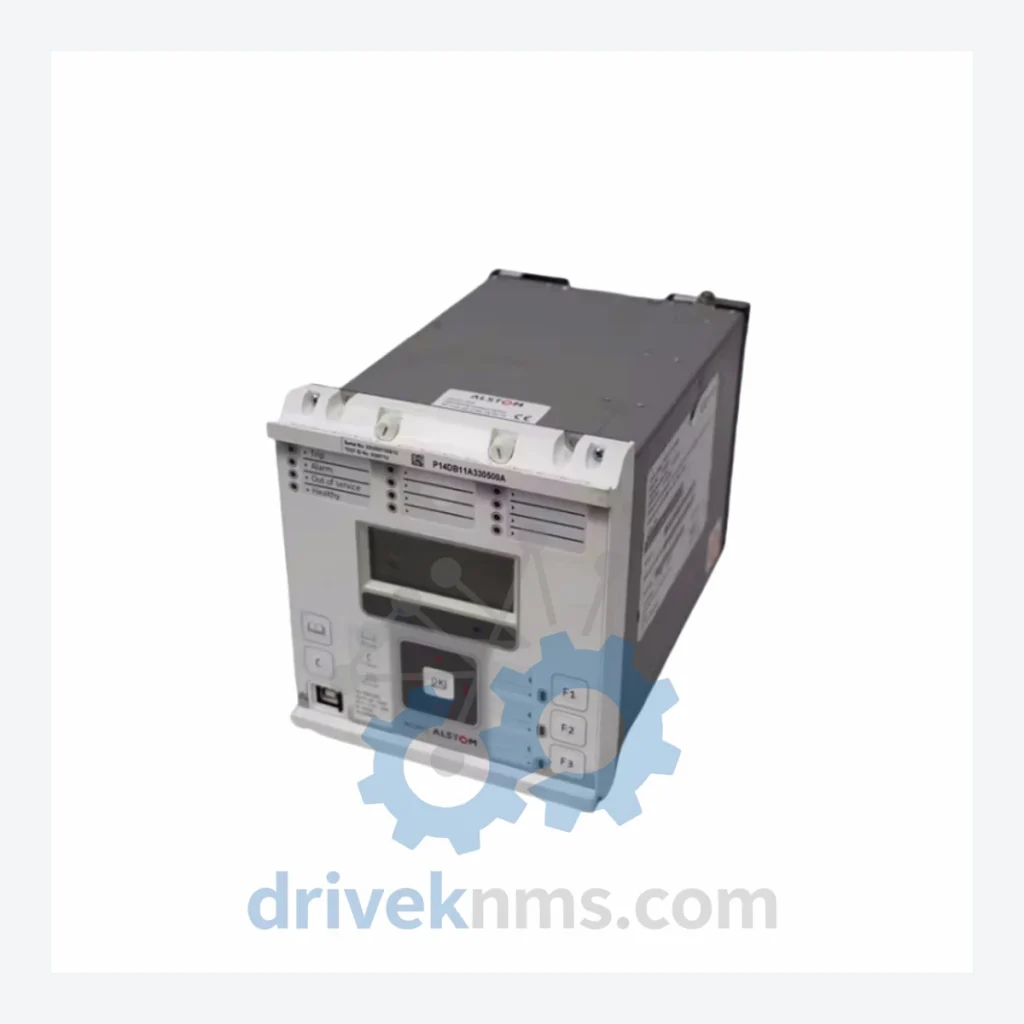
Model: P14DB11A330500A
Product Overview
Commercial availability is handled through direct RFQ, model verification and export-oriented follow-up rather than public cart checkout.
Datasheet Preview
Use attached product manuals when available. If the manual is not public yet, request the full file directly through RFQ.
Commercial Path
Product pages on DRIVEKNMS are designed to verify model, brand and series first, then move the buyer into one clean quotation path.
Technical Dossier
The P14D series was introduced by ALSTOM Grid (formerly GEC Alsthom, later absorbed into GE Grid Solutions) as a successor to the analogue LFZP and MHOP relay families. First-generation P14D units used a modular card-cage design with separate CPU, I/O, and communication boards interconnected via a proprietary backplane bus. This architecture allowed field replacement of individual function cards without full relay withdrawal, a significant operational advantage in live substation environments.
Compatibility considerations: P14D relays using legacy K-bus or Courier protocol require protocol converters when integrated with IEC 61850 substations. Firmware versions below 0x20 are not compatible with current ALSTOM MiCOM S1 Agile configuration software and require legacy MiCOM S1 Studio v6.x. Hardware variants with suffix codes A, B, and C denote different binary input/output counts and power supply voltage ranges (24–48 V DC, 48–110 V DC, 110–250 V DC).
The following SKUs represent verified models within the ALSTOM P14D protection relay family, classified by functional role and hardware configuration:
Distance Protection Controllers
P14DB11A330500A: 5-zone distance relay, 8BI/8BO, 110–250 V DC supply, IEC 61850 Ed.2, standard I/O configuration for 110–220 kV line protection.
P14DB11A330500B: Identical functional spec to P14DB11A330500A; variant B denotes extended binary output relay contacts rated to 10 A continuous.
P14DB11A330500C: 5-zone distance relay with enhanced power swing detection algorithm; suffix C indicates conformal coating for high-humidity environments.
P14DB21A330500A: Dual-redundant Ethernet port variant; supports HSR/PRP ring topology for IEC 61850 process bus applications.
P14DB31A330500A: Extended I/O version with 16 binary inputs and 16 binary outputs; used in complex busbar protection schemes requiring high contact density.
P14NB11A330500A: Numerical distance relay with integrated line differential protection function; requires fibre-optic or IEEE C37.94 communication channel to remote end.
P14NB21A330500A: Line differential variant with dual redundant communication channels; supports 64 kbps to 2 Mbps channel rates.
P14CB11A330500A: Compact chassis variant for space-constrained panel installations; 4U rack height, reduced I/O count (6BI/6BO).
P14CB21A330500A: Compact chassis with IEC 61850 GOOSE and sampled values (SV) support; designed for digital substation (IEC 61869-9) integration.
P14DB11A220500A: 48–110 V DC power supply variant of the standard P14DB platform; specified for older substation DC systems with lower battery voltage.
P14DB11A110500A: 24–48 V DC power supply variant; used in telecom-standard DC distribution environments and remote switching stations.
P14DB11A330600A: Enhanced distance relay with integrated voltage transformer supervision (VTS) and current transformer supervision (CTS) algorithms.
P14DB11A330700A: Variant with integrated synchrophasor (PMU) output compliant with IEEE C37.118.1-2011; used in wide-area monitoring systems.
P14DB11A330800A: High-impedance fault detection variant; includes sensitive earth fault element for resistive ground fault detection on compensated networks.
P14DB11A330900A: Firmware variant with NERC CIP cybersecurity hardening; includes role-based access control, audit logging, and encrypted Modbus TCP.
P14DB11A331000A: Latest production variant with IEC 62351-8 role-based access control and IEC 61850 Edition 2.1 schema support.
The P14D series has entered the mature-to-declining phase of its product lifecycle. ALSTOM Grid was acquired by GE in 2015, and subsequent rebranding to GE Grid Solutions has resulted in discontinuation notices for several P14D hardware variants. Firmware support for pre-2015 hardware revisions has been formally ended by GE Grid Solutions, and replacement parts through OEM channels are no longer available for suffix-A and suffix-B hardware generations.
P14D relays present specific test challenges due to their multi-function protection architecture and backplane-dependent communication between internal modules. DriveKNMS applies the following test protocol to all P14D units processed through its facility:
Power supply verification: DC input range tested at minimum, nominal, and maximum voltage per nameplate specification. Ripple rejection and output regulation measured under full load.
Protection function testing: Each distance zone (Z1–Z5) tested using a three-phase relay test set (Omicron CMC 356 or equivalent) injecting fault voltages and currents at zone boundary impedances. Trip time measured against IEC 60255-121 accuracy class requirements.
Binary I/O functional test: All binary inputs verified for threshold voltage and pickup/dropout timing. All binary output contacts tested for continuity, contact resistance (<100 mΩ), and rated current interruption.
Communication port test: IEC 61850 GOOSE subscription and publication verified using a protocol analyser. Modbus RTU register map validated against factory documentation. Ethernet port tested for 100BASE-TX link integrity and packet error rate.
Backplane bus integrity: Internal communication between CPU, I/O, and communication modules verified by full self-test execution and event log review. Any module reporting CRC errors or bus timeout faults is quarantined for board-level repair.
Final burn-in: Units operated at 40°C ambient for 48 hours under simulated load conditions prior to shipment.
Continue The Model Path
Move from this exact model into the matching system hub, brand archive, model-family archive or lifecycle sourcing route before sending a final RFQ list.
Related Paths
Alstom EPICIII EP3-E-4-A is listed for EPIC III Series RFQ review. Confirm quantity, condition and destination before quotation.
Alstom EP3-E-4-EN is listed for EpicIII Series RFQ review. Confirm quantity, condition and destination before quotation.
Alstom EP3-G-4-A-EN is listed for PLC Modules RFQ review. Confirm quantity, condition and destination before quotation.