
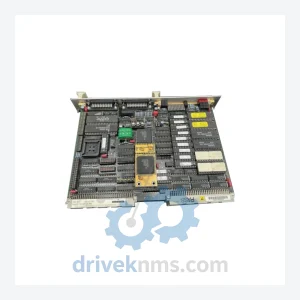
Alston CBK 132.1 029.210 753 Serial I/O Module – Modnet 1/D
Alston 132.1 029.210 753 is listed for Servo Drives RFQ review. Confirm quantity, condition and destination before quotation.
RFQ-ready industrial model
Model: 132.08 590.037498
Product Overview
Commercial availability is handled through direct RFQ, model verification and export-oriented follow-up rather than public cart checkout.
Datasheet Preview
Use attached product manuals when available. If the manual is not public yet, request the full file directly through RFQ.
Commercial Path
Product pages on DRIVEKNMS are designed to verify model, brand and series first, then move the buyer into one clean quotation path.
Technical Dossier
RFQ support for obsolete parts: Send the model number, required quantity and destination so DriveKNMS can confirm sourcing options before quotation.
| Parameter | Detail |
|---|---|
| Manufacturer | Alston |
| Part Number | 132.08 590.037498 |
| Module Type | 32-Bit Central Control Unit (CCU) |
| Series | CCU / 590 Series |
| Discontinuation Status | Confirmed Obsolete – No longer in OEM production |
| Form Factor | Rack-mount module (verify slot compatibility with your chassis revision) |
| Origin | Germany |
Q: How are RFQ terms confirmed?
A: Quantity, required condition, documentation needs, destination and sourcing route are confirmed during RFQ review before quotation.
The Alston CCU 132.08 590.037498 was designed for deterministic real-time control tasks in industrial environments where cycle-time precision and bus synchronization are non-negotiable. In legacy distributed control architectures — particularly those built around Alston's 590 platform — this module handles central processing tasks that cannot be reassigned to a generic modern controller without substantial re-engineering of the control layer.
The strategic answer is not to wait for failure. Procurement of one or two verified spare units — held in controlled storage — converts a potential production crisis into a scheduled maintenance event. For a facility running three shifts, the cost of a single unplanned shutdown day typically exceeds the cost of a spare module by a factor of ten or more. That arithmetic does not require a consultant to validate.
For operations management facing board-level pressure to defer capital expenditure on automation infrastructure, the following approach has been applied successfully across process, automotive, and energy facilities operating legacy Alston and comparable 590-series control platforms:
1. Critical Spare Identification: Audit the control architecture and identify every module with no current OEM source. The CCU is typically the highest-risk single point of failure — one unit controls the logic that governs the entire cell or line segment.
2. RFQ-reviewed sourcing status Procurement: Source from suppliers who can provide traceability documentation and functional test records. Avoid untested pulls from decommissioned equipment without QA validation.
3. Controlled Storage Protocol: Store spare modules in anti-static packaging, at stable temperature (15–25°C), away from humidity and magnetic fields. Electrolytic capacitor degradation accelerates in poor storage conditions.
4. Firmware Version Control: Before shelving a spare, confirm the firmware revision matches the installed base. A version mismatch on a CCU can cause bus communication failures that are difficult to diagnose under pressure.
5. Scheduled Preventive Inspection: Every 18–24 months, rotate spares through a bench test cycle. Capacitor ESR measurement and bus interface verification take less than two hours and confirm the unit remains serviceable.
This approach has allowed facilities to operate legacy Alston control systems reliably for 7–12 years beyond the OEM's stated end-of-life date, without a platform migration project.
DriveKNMS applies a 5-step QA protocol to all obsolete control modules before they are offered for sale:
Step 1 – Visual and Mechanical Inspection: Full board inspection for physical damage, connector pin corrosion, and PCB delamination. Units with compromised connectors are rejected at this stage.
Step 2 – Electrolytic Capacitor Assessment: Capacitor aging is the primary failure mode in modules of this generation. ESR (Equivalent Series Resistance) is measured on all electrolytic capacitors. Units showing elevated ESR are flagged for recapping before sale or rejected outright.
Step 4 – Functional Bench Test: Where test fixtures are available for the platform, the module is powered and its communication interfaces are verified. Results are logged.
Step 5 – Packaging and Traceability: Units are repackaged in anti-static materials with a condition report. Serial number and test date are recorded for full traceability.
The Alston CCU 132.08 590.037498 is a direct hardware replacement for the same part number installed in your system. There is no firmware re-flashing required for same-revision units, no re-engineering of control logic, and no modification to the existing rack or backplane wiring. Installation follows the original OEM procedure.
This drop-in replacement characteristic is the core financial argument for sourcing a verified spare rather than initiating a platform migration. Engineering hours for a migration project — scoping, design, FAT, SAT, and commissioning — represent a cost that a spare module purchase eliminates entirely for the duration of the asset's remaining operational life.
Q: How do I know the unit is new or quality-refurbished, not a failed pull?
A: Every unit sold by DriveKNMS is accompanied by a condition report generated during our QA process. We do not sell untested pulls. If a unit is refurbished, that status is disclosed explicitly before purchase.
Q: Can you source other Alston 590-series modules?
A: Yes. Contact our team with your full BOM of required spares. We maintain sourcing networks for the broader Alston 590 platform and related legacy control hardware.
Continue The Model Path
Move from this exact model into the matching system hub, brand archive, model-family archive or lifecycle sourcing route before sending a final RFQ list.
Related Paths
Alston 132.1 029.210 753 is listed for Servo Drives RFQ review. Confirm quantity, condition and destination before quotation.
Alstom MVAJ105RA0802A is listed for MiCOM Series RFQ review. Confirm quantity, condition and destination before quotation.
Moore 16137-174 is listed for Servo Drives RFQ review. Confirm quantity, condition and destination before quotation.