Technical Dossier
Product Details And Specifications
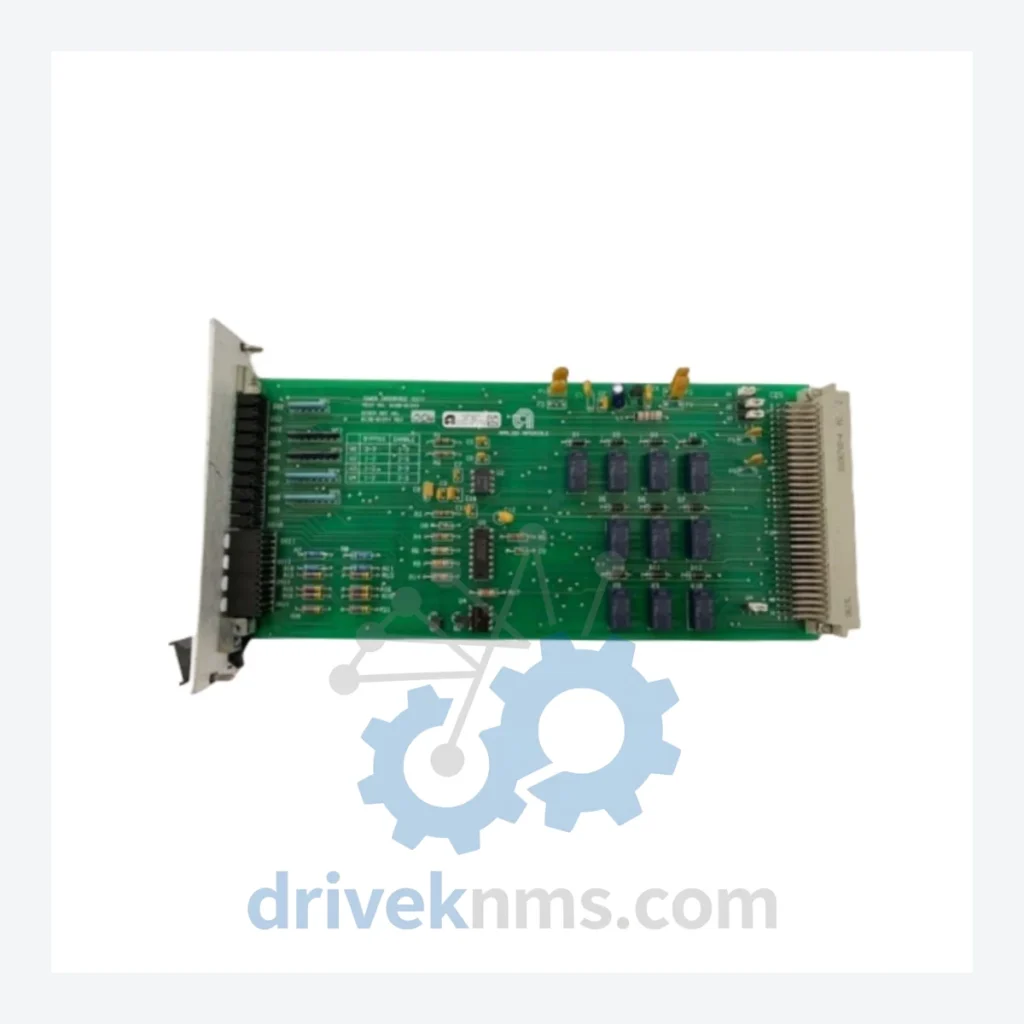
Applied Materials 0100-01944 Tower Interface Board – Obsolete HVL-100 Spare Part
DriveKNMS reviews sourcing status and documentation for this model during RFQ handling before quotation.
RFQ support for obsolete parts: Send the model number, required quantity and destination so DriveKNMS can confirm sourcing options before quotation.
Technical Specifications
| Part Number | 0100-01944 |
| Assembly / Alt P/N | 0190-60306 |
| Board Dimension | 41CM (length) |
| Series | HVL-100 |
| Manufacturer | Applied Materials (AMAT) |
| Form Factor | Tower Interface PCB |
| OEM Status | Discontinued – No longer available through AMAT OEM channels |
| Compatible Systems | AMAT HVL-100 platform; legacy CVD and etch process tool architectures |
| Country of Origin | United States |
Note: Electrical parameters (voltage rails, signal specifications) are not published here to prevent misapplication. Contact our technical team for system-specific verification before ordering.
Solving the Discontinued Hardware Crisis
The AMAT 0100-01944 Tower Interface Board sits at the communication backbone of its host system. It manages signal routing between the process chamber, the tower assembly, and the system controller. There is no generic substitute — the board's physical form factor, connector pinout, and firmware handshake are specific to this platform.
Fabs that have attempted to migrate away from HVL-100-based tools without a validated replacement path have encountered qualification timelines of 6 to 18 months, plus the engineering cost of rewriting process recipes. For high-mix, low-volume production environments, or for nodes where the HVL-100 tool handles a process step with no qualified alternative, the math is straightforward: sourcing a spare interface board at a fraction of a percent of tool replacement cost is not a procurement decision — it is a risk management decision.
The broader strategic reality for plant managers and equipment engineers: legacy AMAT platforms running stable, qualified processes represent sunk capital that continues to generate yield. Protecting that capital requires a proactive spare parts strategy, not a reactive one. A single unplanned tool-down event on a critical process step costs more in lost wafer starts than a full shelf of critical spare boards.
How to extend expensive automation assets by 5–10 years through targeted spare parts procurement:
Condition & Reliability Assurance
Sourcing obsolete PCBs from the secondary market carries real risk. DriveKNMS applies a structured 5-step inspection protocol to every board before it is offered for sale:
- Visual and mechanical inspection — Full board examination for physical damage, solder joint integrity, and connector condition. Boards with bent pins, cracked substrates, or evidence of field repair are rejected at this stage.
- Electrolytic capacitor assessment — Capacitors are the primary age-related failure point on boards of this vintage. Each unit is evaluated for bulging, leakage, and ESR deviation. Boards with suspect capacitors are either recapped or removed from inventory.
- Firmware version verification — Where applicable, firmware revision is confirmed and documented. Mismatched firmware versions are a known cause of intermittent faults on AMAT platforms.
- Pin and connector corrosion check — Edge connectors and board-to-board connectors are inspected and cleaned. Oxidation on signal pins is a common cause of intermittent communication faults that are difficult to diagnose in the field.
- Functional burn-in (where test fixtures are available) — Boards are powered and exercised under controlled conditions prior to shipment. Test results are documented and available on request.
Key Features for System Maintenance
- Drop-in replacement — The 0100-01944 is a direct form-fit-function replacement for the original installed board. No mechanical modification to the host system is required.
- No reprogramming required — The board does not require system-level reprogramming on installation. Existing process recipes and system configurations remain intact.
- Avoids engineering re-qualification costs — A direct replacement board preserves the qualified process state of the tool. There is no need to re-run qualification wafers or re-certify the process step, which can cost tens of thousands of dollars in engineering time and material.
- Preserves tool certification status — For regulated production environments, maintaining the original hardware configuration avoids triggering a change control review that a platform migration would require.
Q: How do I know the board is genuine and not a counterfeit?
A: All units are sourced from decommissioned AMAT systems or verified distributor channels. Boards carry original AMAT part markings. Inspection documentation is available on request. We do not source from unverified brokers.